
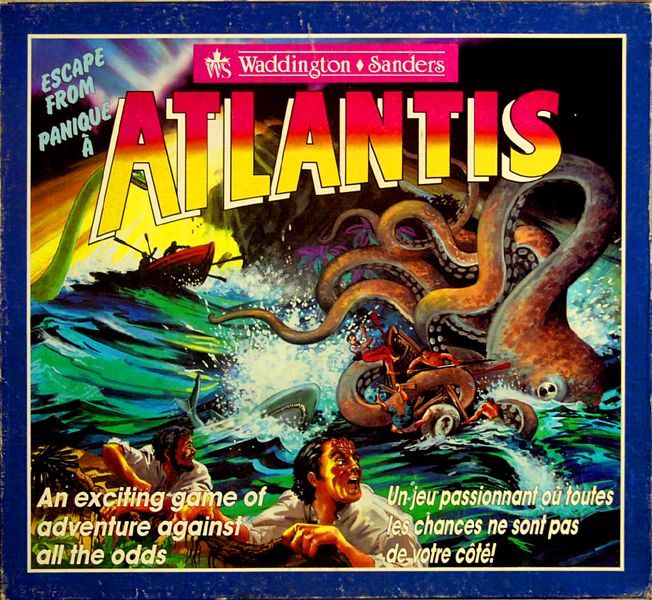
Buckle up—there were boat thieves, plastic monsters, and plenty of loud arguments. Let’s see if Atlantis is worth braving the floods for!
How It Plays
Setting up
Lay out the board to make a path of island tiles leading from Atlantis to the safe islands. Everyone takes some brave meeples (people) and plops them on Atlantis. Put sea monsters and boats nearby—just waiting to ruin your day.
Gameplay
On your turn, move your meeples toward safety using boats or by swimming (bad idea, trust me). Each turn, you remove a tile from the island, which could reveal a friendly dolphin, a hungry shark, or something even worse. You can also move sea monsters to mess with your friends. Betrayal is not just allowed—it’s encouraged!
Winning the game
Once Atlantis has sunk completely, count up which of your meeples reached the safe islands. Only the ones who made it out alive (and with the most points) matter. Highest score wins, and probably loses a few friends for a week or two.
Want to know more? Read our extensive strategy guide for Atlantis.
Game Mechanics and Player Interaction in Atlantis: The Good, The Bad and The Soggy
Alright, let’s talk nuts and bolts—Atlantis has some wild mechanics that will have you cursing your friends and plotting their doom while shouting, “Who let the bridge collapse?!” The game is all about moving your adventurers from the crumbling island of Atlantis to the safe mainland while the path falls away with every turn. It sounds simple, until someone steals that last boat and leaves your people treading water like panicked rubber ducks.
The movement rules are pretty clear—move one meeple, grab a tile, and sometimes face the wrath of a sea monster. The twist is, you never entirely know what’s underneath those tiles until you pick them up, and usually it’s something nasty, like whirlpools or sea monsters. That randomness gives a fun, push-your-luck feeling, but sometimes it’s a bit too much luck for my taste. I once watched my buddy chase a boat that vanished right when he needed it, and honestly, I couldn’t stop laughing—but he didn’t find it funny at all! There’s a bit of take-that, with players sending monsters after each other, but it’s all in the spirit of cutthroat fun.
Interaction is, let’s just say, ‘spicy’. If you like friendly games, prepare for some betrayal. Blocking routes, sabotaging boats, and monster attacks are the main dishes on this menu. That keeps everyone watching the board and plotting their next big move. Sometimes it feels a bit unfair if all the bad luck piles on one person, but hey, that’s Atlantis for you—sink or swim!
Next up: Let’s see if Atlantis’s art and theme make you want to swim to safety or jump overboard before the dolphins even start laughing.
Themes and Artwork in Atlantis: Sinking in Style
Right from the get-go, Atlantis hurls you into a world of ancient cities, panicked people, and that sinking feeling you get when your boat is three tiles away from a giant sea serpent. The game’s theme is as dramatic as my attempts to parallel park—utter chaos! The story is simple but fun: Atlantis is going under, and you’re trying to ferry your people to safety before they become shark snacks.
The artwork really stands out. The board gives you this cool bird’s-eye view of Atlantis, surrounded by the sea. The tiles, bursting with color, make you want to save the city even if you’re dead last in points. Each monster (shark, sea serpent, and the adorable but deadly whale) is a chunky, detailed piece that feels satisfying in your hand. My friend Dave gave the whale a name, and then watched in horror as it ate his last token. That’s just how much the pieces come alive!
Sure, the humans all look kind of like weird, plastic pancakes. But honestly, I don’t mind. It’s hard to hold a grudge when you’re too busy laughing at people’s misfortune or running from dolphins. The bright, simple style makes the game easy to understand for newcomers. And let’s face it, when you’re yelling about Krakens, you don’t need fancy miniatures. You need sturdy ones you can throw across the room in defeat.
Atlantis pulls you in with wild art and theme—just like a whirlpool, but with more laughter and slightly fewer injuries. Next up: will luck or clever plans keep your survivors afloat? Let’s find out if Atlantis rewards brains or just sheer good fortune!
Luck vs. Strategy: Can You Outsmart Atlantis?
Let’s get one thing straight—Atlantis is not for the chess crowd. If you love plotting twenty moves ahead, you’re going to look like that guy who brings a notepad to a water park. In Atlantis, luck is almost a cheeky co-pilot who grabs the wheel when you least expect it. Yes, you get to plan your moves and choose which of your survivors to move, but then the sea monsters show up, boats set sail without you, and some goofball flips over a whirlpool tile.
The main mechanic that makes luck such a big deal is the way tiles are revealed as you run for safety. Some tiles are great—a secret boat, a dolphin who gives you a boost. Some tiles are pure chaos, like a whirlpool that sends everyone to Davy Jones’ locker. Even with the best planning, one bad spin of the sea monster spinner and your high-value survivor becomes fish food. I’ve seen my friend Dave lose his cool when his big-scoring meeple got eaten by a shark, the poor guy.
There is strategy, I promise. Timing matters, and knowing when to abandon a boat (or a friend) can change everything. But if you hate randomness ruining your plans, Atlantis might drive you bonkers. For me, a little chaos makes the whole thing hilarious—but don’t expect to win just because you’re smart.
Buckle up, because up next I’ll tell you if Atlantis is the kind of game you’ll want to play all night, or if it’s more of a one-and-done deal!
How Many Times Can You Flee Sinking Atlantis? Replay Value and Game Length
Alright, let’s talk replay value and game length for Atlantis. After all, nobody wants a board game that ends up dustier than my uncle Stan’s collection of snow globes. I’ve played Atlantis with my regular group enough times to know this game isn’t just a one-and-done. Every playthrough gives us a new story—sometimes it’s about noble escapes, other times it’s about someone’s dad yelling, “I just wanted ONE swimmer to survive!” as sea serpents eat his last meeple.
First, the replay value. Atlantis changes up the board every game since you randomize the hex tiles. Sometimes the shortest path to safety is a breeze, other times, it’s a death trap filled with sharks and whales. You never quite know if you’re going to end up taking the scenic route—or get eaten by a dolphin (okay, that’s not in the rules, but it feels like it). Variable setup keeps the game fresh and unpredictable. Plus, the social part is wild—people get personal and the table talk is top notch. Want to see friendships tested? Atlantis does the job.
Now, the game length. Atlantis doesn’t overstay its welcome. Most games last 45 minutes to an hour, unless you play with someone who spends ten minutes plotting every swimmer’s moves (looking at you, Carl). That length is perfect: it’s long enough for tables to turn, but short enough to play again (and again). Also, it’s pretty easy to teach, so I’ve brought newbies onboard without a fuss.
So, do I recommend Atlantis? If you’re after a quick, replayable game that gets the table laughing (and sometimes shouting), then yes! Just don’t blame me when your friends turn into sea monsters.
Conclusion
Alright, that’s my review wrapped up tighter than my game group’s strategy discussions! Atlantis is a wild ride: you get frantic escapes, boat-stealing, and the joy of sending someone’s meeple to meet a very unhappy sea monster. The art is cheerful, the theme hits home, and every round is unpredictable. If you love luck and laughter more than deep planning, Atlantis does the trick—though beware, serious strategists might want to look elsewhere. For the rest of us, it’s easy to replay, quick to finish, and always good for chaos. Just remember not to sit next to the sore loser! That ends my take—good luck escaping Atlantis!