
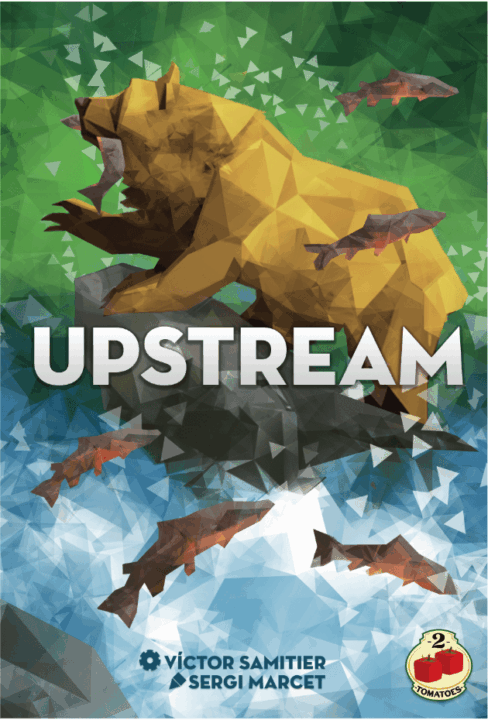
Upstream is a lively river race where salmon scramble against the current, hunt for food, and try not to become lunch. Every move matters, but the river never makes life easy. Players must read the water, grow their salmon, and sometimes block a rival with all the grace of a wet sock. This review looks at movement, survival, player interaction, and how much luck gets to boss you around.
How It Plays
Setting up
Build the river from its tiles, then place the salmon and food tokens. Each player takes a salmon colour and gets ready to race upstream.
Gameplay
On your turn, move your salmon through the river. Swim past hazards, leap waterfalls, and grab food when you can. You can also use your movement to slow rivals or block the best route. The river gets tighter as the salmon push upstream, so timing matters more than simply charging ahead like a fish with a grudge.
Winning the game
Reach the spawning grounds with your salmon and score points for distance, food, and survival. When the game ends, the player with the most points wins. Getting upstream helps, but arriving battered and hungry may leave you playing second-fish.
Want to know more? Read our extensive strategy guide for Upstream.
River Movement and Timing in Upstream
In Upstream, every player guides a salmon token through a twisting river toward the sea. The board looks calm, but each turn asks you to read the water. Current arrows show the main route, while rocks, bends, and narrow channels create small puzzles. I often planned a neat move, then spotted that the river would carry my fish somewhere quite rude. Nature can be a bit of a bully.
Reading the Current
Movement feels smooth because salmon travel with the flow, but timing gives the system its bite. You can move a fish a good distance now, or wait for a better position later. Waiting sounds safe. It rarely is. Other players may fill the open spaces, block a useful path, or grab a food spot before your turn returns. He called it strategy. We called it Tuesday.
The best turns balance speed with patience. You want to move far enough to reach strong feeding areas, yet not rush into a dead end. The river also rewards players who watch the whole board instead of staring at their own fish like proud parents. A small change near the top can affect everyone downstream. That shared flow creates tension without making the game feel mean. You can interfere, but the river still makes the final call.
My main complaint comes from a few moments when the current feels too restrictive. A poor opening position can leave you scrambling while another player gets a clear lane. Still, good planning usually fixes the problem, and the movement rules stay easy to teach. Next, we will see whether clever timing helps salmon grow strong enough to survive the journey.
Salmon Growth and Survival: More Than Just a Big Fish in Upstream
Small fish, big river problems
In Upstream, each salmon begins as a tiny fish with a huge job ahead. It must grow strong enough to fight the river, dodge danger, and reach the spawning grounds. That simple goal gives the game its heart. You are not just pushing a token along a board; you are raising a living creature that can turn into a prize fish if you protect it well.
Growth brings real risks
Growth feels rewarding because it changes what your salmon can survive. A larger fish handles rougher water and shrugs off some hazards that would finish a smaller one. The catch is that growth needs food and safe chances. Every choice asks you to weigh progress against risk. Do you spend a turn feeding and become stronger, or push onward before another player grabs the best spot?
The system makes survival feel earned rather than random. We groaned when a runt met a hazard because someone gambled on speed. Those moments created stories, not math. Still, the game can punish a start hard. If your fish misses food, it may struggle to catch up, and that gap can feel bigger than it should.
Food creates survival choices
Food placement adds a layer. You want growth to survive, but you cannot feed everyone. A salmon looks tempting to rivals, so success can paint a target on its fins. I like that pressure because it keeps growth from becoming a upgrade track. The moments came when a friend celebrated a fish, then watched a player claim the food needed. Next, Player interaction and blocking will turn these hungry fish into a fin-flapping fight for space.
Upstream Player Interaction: Blocking, Bargains, and River Rivalry
Shared Water, Shared Trouble
Upstream looks peaceful until three salmon crowd the same narrow stretch of river. Then everyone starts acting like a tiny, finned traffic cop. I called it rude. She called it “good salmon manners.” I still owe her a grudge. This gentle squeeze creates Upstream’s best player moments: nobody attacks you directly, yet one well-placed body can spoil a perfect plan. The board feels like a shared puzzle, but each player keeps trying to solve it first. That tension keeps the table lively without turning mean. Mostly. Unless you play with my cousin, who treats every blocked space like a personal insult.
Smart blocking takes timing, not brute force. You want to claim a useful resting place, close off a rival’s easy choice, or force them to spend effort on a less tasty option. The trick involves spotting pressure points before the other salmon reaches them. A block can help you, but it can also trap your own fish if you forget the wider board. I made that mistake twice, then blamed the river. The river accepted no apology. Because players share tight spaces, table talk matters too. A quick deal can open a lane: “You take that perch, I’ll leave your pool alone.” Such deals rarely last, but they add fun and make each round feel personal.
Still, blocking can feel too strong when one player gets ahead early. Our four-player games felt best, since extra salmon created more routes around trouble. With two, the board felt cramped. Next, we’ll see whether luck, strategy, and replayability keep race fresh.
Upstream Board Game Review: Luck, Strategy, and Replayability
Luck Has a Small Paddle
Upstream gives luck a seat at the table, but it does not hand luck the keys. Random draws can change your plans, which keeps each turn fresh. In one game, I found a perfect card at just the right moment. In the next, my hand looked like it had been sorted by a sleepy raccoon. Still, I never felt doomed by a bad draw.
Smart Choices Matter More
The best part of Upstream comes from making good choices with imperfect information. You must weigh safe gains against bigger rewards, then decide when to take a chance. Naturally, they called this “boring.” I called it winning.
Luck can help, but it rarely fixes poor planning. A player who thinks ahead will usually beat someone who simply hopes for a lucky turn. That balance makes the game feel fair, and fairness matters a lot to me. I have quit games that felt like expensive coin flips. Upstream avoids that nasty trap.
Fresh Games, Same Good Fight
Replayability stays strong because players value choices in new ways each time. Different goals, changing card options, and varied table moods create fresh puzzles. The next night, we made wild plans and laughed when nearly all of them collapsed. The game also works well with different groups, though new players may need one round to spot its better paths.
I recommend Upstream for players who enjoy thoughtful choices, mild luck, and replayable games that reward skill without feeling dry.
Conclusion
This concludes my review of Upstream. Reading the river, growing your salmon, and choosing when to push past rivals create plenty of tense moments. Blocking feels cheeky without ruining the game, and the luck stays fair enough to reward smart play. The game does ask you to accept a few rough turns, especially when the river refuses to help, but strong choices usually keep you in the fight. Upstream works best with players who enjoy planning, gentle spite, and watching a tiny fish have a very stressful day. I happily recommend it to families and strategy fans who want a quick game with real bite.