
If you ever dreamed of outsmarting your loud cousin Marco with grapes, cheese, and a board game, you’re in the right place.
How It Plays
Setting up
First, put the Toscana board out. Shuffle the tiles and lay them in stacks. Everyone grabs their own set of colored markers and a player aid. Pick a starting player—flip a coin, arm wrestle, or argue for ten minutes like we did.
Gameplay
On your turn, take a tile and place it on the board, trying to connect and claim areas with your markers. You can block others, but trust me: they’ll remember it next round. Each tile needs clever thinking, and you need to watch what your friends are plotting. The biggest thing is balancing expansion with sneaky moves. My buddy Dave tried to double-bluff us, but he just ended up blocking himself. Classic Dave.
Winning the Game
The game ends when all tiles are played. Count up your regions and scores for completed areas. If you have the most points, you win. If you have the least, you’ll probably want to try again and ‘fix’ your strategy (or blame your friends for ganging up on you).
Want to know more? Read our extensive strategy guide for Toscana.
Gameplay Flow and Player Interaction in Toscana
Toscana is one of those games that looks simple, but once you start playing, you realise you need to give your brain a bit of a workout. The gameplay flow is smoother than the olive oil Nonna puts on her bread. Each player takes their turn picking tiles and placing them in their little slice of Italian countryside, and the pace stays brisk because everyone’s always planning their next move (and secretly wishing your friend would stop humming that song from The Godfather).
What really shines in Toscana is how much you watch the other players. My friend Tony, who never pays attention to anything unless there’s pizza involved, was suddenly all-in, calculating every move, and trying to block me from building a dream vineyard. The interaction here isn’t “choose who to attack” drama. Instead, you have to keep an eye on what everyone else builds. You can snatch a perfect tile away from another player – not out of spite (ok, sometimes out of spite), but because it helps you and it wrecks their set. This is pure, undiluted tactical fun that rewards paying attention, not just hoping for a lucky roll. No dice here, thank goodness. If you lose, you can only blame your own tile-laying skills (or, in my case, lack of them).
Turns are quick, so there’s not much downtime. The game feels fair – everyone has the same tools and chances, and it’s up to you to make those tiles work. Next up, we’ll talk about why Toscana’s looks make it the only board game I’d ever hang on my kitchen wall!
The Charm and Colors of Toscana: Theme and Visual Appeal
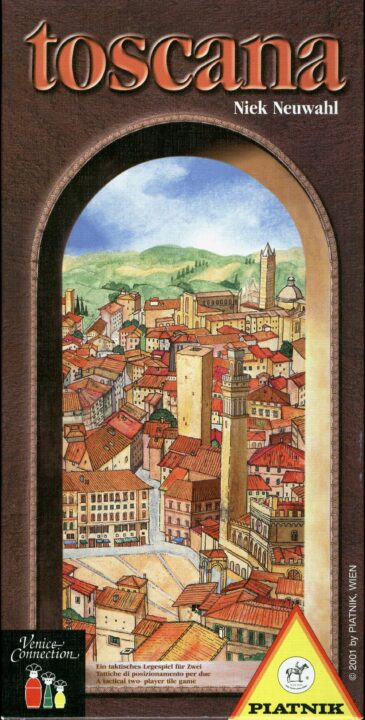
One look at Toscana and my stomach started rumbling. Seriously, this game oozes Italian countryside like olive oil on fresh bread. The board is all rolling hills and sunny colors—you half expect to see a little Nonna waving from the corner. Someone even tried to eat a piece (don’t worry, we stopped them in time).
The bits and bobs in Toscana really add to the mood. The tiles look like fields ready for harvest, and the little wooden tokens could pass for mini cheese wheels if you squint. Everything feels sturdy, so I wasn’t afraid to get a bit animated with my moves (which is good, because I tend to knock over things if they’re flimsy). Even the box has a bright, inviting look that yells, “play me and maybe pour a glass of Chianti.”
What’s nice is that the theme isn’t just glued on. As you play, you really do feel like you’re building out a chunk of Tuscany, right down to blocking someone’s perfect plot with a sneaky tile. The artwork and components work together so the whole game just feels…well, Italian. It’s not going to teach you to make pasta, but it’ll definitely put you in the mood for it.
Next up, I’ll talk about something every gamer argues over at the table: is Toscana a battle of brains, or will the luck gods decide your fate? Stay tuned for some juicy details!
Luck vs Strategy: Does Toscana Keep It Fair?
Let’s talk about something that keeps me up at night—luck versus strategy. If you’ve ever flipped a table because you lost to a wild dice roll, I feel you. Good news: Toscana is mostly about brains, not luck. You don’t need to wear your lucky socks when you play.
Toscana gives you a clear set of choices every turn. You see the tiles on the board and you plan around what your opponents might do. It’s a bit like chess with breadsticks. Yes, sometimes the exact tile you want isn’t there, but nobody’s pulling rabbits out of hats here. The decisions you make have a real impact, and you can actually get better by playing more.
Every single game, the winner felt earned. No one blamed random chance. Okay, maybe Dave did, but that’s classic Dave. The only random element is the order in which tiles appear, but that’s equal for everyone and part of the challenge. If you lose, it’s probably because someone outplayed you, not because a fairy sprinkled magic dust on their tiles.
If you want a game where you can outthink your friends rather than outluck them, Toscana hits the spot. Next, I’ll tell you whether you’ll want to play it over and over—or if it’s a one-slice wonder.
Is Toscana Fun Every Time? Replayability and Game Length Tested
If you’re like me, you hate games that feel like eating the same cold pizza slice again and again. Good news: Toscana isn’t one of those games. The replayability here comes from player interaction. Who you play with really changes how the game feels. I crashed my friend Steve’s winning streak three times in a row, just because he blinked. It’s all about reading people and plotting sneaky moves.
The board setup stays the same, but strategies don’t. This keeps everyone on their toes every session. Sure, if you memorize every move possible, it might get a bit samey after a dozen plays, but you’d have to play like you’re prepping for the Toscana Olympics. Most folks will enjoy the variety for a long time.
Game length is a sweet spot too. We finished most games in about 30 minutes. That’s fast enough for a rematch, but your brain still gets a workout. There’s no dragging or long pauses—unless your uncle takes forever thinking (you know who you are, Dave). This makes it a great option for weeknights or squeezing in a round before dinner.
So, do I recommend Toscana? If you want a short, thinky game with solid replay value, this one’s as fresh as a new loaf of focaccia. I say give it a go, unless you hate fun. In that case, maybe try solitaire.
Conclusion
This game looks good, plays quick, and lets you feel smart (or very silly) with every move. I liked the balance of strategy and fun; luck barely has a say, which is just how I like my games. It isn’t perfect—if you play with someone who takes forever, you might start eyeing the pizza menu halfway through. But that’s on them, not the game! Toscana is a keeper for folks who like to think and aren’t afraid of a little friendly blocking.