
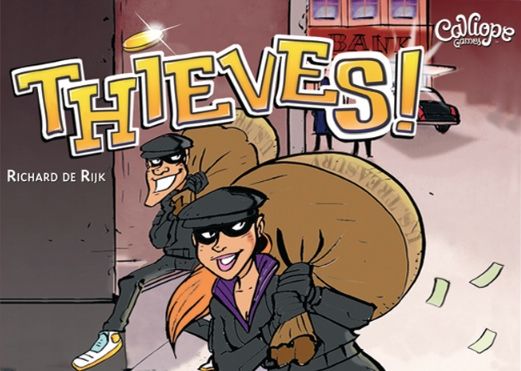
Ever wanted to sneak around like a pro, pinch some loot from your pals, and argue over who stole what? Well, you’re in luck, because today I’m reviewing a game that lets you do all that without risking jail time: thieves!. Grab your friends, your best poker face, and a snack or two—let’s see if this little box of chaos should sneak onto your shelf!
How It Plays
Setting up
Hand out the cards, shuffle the loot, and make sure everyone has a spot at the table. It takes about two minutes, unless your mate Dave insists on shuffling cards like a wizard.
Gameplay
You take turns being either the thief, the lookout, or the poor sap about to lose their loot. Play cards to snatch treasure or to stop others from pinching yours. Accuse, bluff, and point fingers wildly. Arguments are half the fun, especially when someone gets caught ‘borrowing’ a coin or two.
Winning the game
The winner is the player with the most loot at the end. Simple. Just try not to make everyone else mad at you on the way—unless you like taking your victory lap alone.
Want to know more? Read our extensive strategy guide for Thieves!.
Game Mechanics and Player Interaction in Thieves!
Let me tell you, when I first opened thieves! with my mildly competitive group of friends, I didn’t expect chaos, but that’s exactly what I got. The game wastes no time getting your head spinning. The core mechanic is all about snatching loot from the table—or even from each other—while keeping a sharp eye on the guards. Think of it as a friendship tester with cards instead of baseball bats.
Each round, everyone decides in secret if they’ll make a grab for the valuables or play it safe. If too many players go for the loot at once, those who get greedy walk away empty-handed, while the cautious ones smirk in the corner. There’s a classic prisoner’s dilemma vibe, which basically means my pal Dave and I argued for ten minutes about who’s more trustworthy. (It’s definitely not Dave.)
Player interaction here is top-notch. You’re never just playing your own hand—you have to read everyone else, psych them out, and sometimes throw your own plans out the window at the last second. Calling out bluffs, making alliances that last all of about twelve seconds, and trying to keep a straight face while you totally betray your friends? All in a day’s work for a budding board game criminal.
I really liked how the rules force players to pay attention to each other. If you tune out, you lose. Simple as that. But is it skill, luck, or blind hope that gets you the most loot? Grab some popcorn, because in the next section, we’re tackling the epic showdown: Luck vs. Skill Balance!
Luck vs. Skill in thieves!: Who’s Really Winning Here?
If you’ve ever played thieves!, you know it’s the kind of game where you can feel like a genius one round and a complete fool the next. You might think you’re the world’s stealthiest mastermind, clutching onto your loot, only for Great Aunt Marge to swoop in, roll a lucky six, and snatch victory from right under your nose. I mean, she barely knew the rules fifteen minutes ago, but there she is, counting coins like she robbed Fort Knox.
thieves! makes you believe you have control. You pick your targets, you plan your moves, and you brace for impact. But here’s the thing: Lady Luck is always right there at the table, and she’s got sticky fingers. Dice rolls decide so much. One unlucky turn can send your hard-earned stash flying into someone else’s hands. If you like board games where you can outsmart your friends and plan for every scenario, thieves! will drive you a little crazy. Skill matters, but not enough. I’ve pulled off some clever heists and lost anyway because I rolled a one instead of a five. That’s just how it goes.
On the flip side, this chaos makes thieves! fun for new players. No one feels outclassed, which is great when you’re trying to keep the peace at family game night. But if you want a game where the better player always wins, you won’t find it here. Next, let’s see how this wild luck and trickery works out when you try thieves! with different crowds—will the game steal everyone’s hearts or end up locked away in the closet?
How Many Times Can You Play Thieves! Before Losing Friends?
Let’s face it, some board games collect dust after the first round, but thieves! does better than most in that department. I’ve tested this with several groups, including my cranky uncle (who still owes me three bucks from 1998) and my professional board game nemesis, Cheryl. The result? People actually wanted another game.
Replay value in thieves! comes from the wild mix of table talk, bluffing, and sudden betrayals. It’s a game that lives and breathes through player interaction. Play once with your nice friends, it’s giggles and fake apologies. Play a second time with the cutthroat crowd, suddenly you’re plotting alliances and suspecting everyone is out to rob your imaginary wallet. It somehow makes every group of people feel like a completely new game. Cheryl will always betray me, my uncle will always sulk, and I will, as always, accidentally help someone else win. But every time, it’s different chaos.
If I have one quibble, it’s that after a few rounds with the same group, people start to remember your dirty tricks. Suddenly your usual strategies are as see-through as a pair of granddad’s reading glasses. Luckily, mix in a new player or two and bam, the unpredictable fun returns. It’s not a game for deep strategy fans, but if you like a social, fast-paced experience that changes vibe with every group, thieves! delivers. Bonus points if you play with people who don’t mind playful accusations and exaggerated groans!
Now, hold onto your wallets – next up, I’ll chat about the component quality and artwork, which may or may not include a rant about card thickness!
How Does Thieves! Stack Up for Component Quality and Artwork?
I have also played games so fancy you worry about getting butter fingers on the cards. Thieves! lands… somewhere in the middle, like the lukewarm soup of board game production.
The box for Thieves! is sturdy enough to double as a makeshift coaster, which is more useful than you might think after three rounds of gaming and two spilled sodas. The cards feel pretty standard – no linen finish, so don’t expect them to survive a dog attack or a clumsy friend with barbecue sauce fingers. The tokens? Plastic, not heavy, not cheap, just sort of there. You won’t be using them as currency when society collapses, but you won’t yell at them either.
Where Thieves! shines is in its charming artwork. Cartoon crooks and sneaky scenes are all over, giving the game a lighthearted feel. My five-year-old nephew pointed at the burglar art and giggled, which means something is working. The design is clear; you won’t mix up the “I steal from you” card with the “Oops I got caught!” card unless you’ve had three too many root beers.
But here’s the kicker – if you want epic miniatures or artwork worthy of an art museum, Thieves! isn’t it. But if you like your games easy on the eyes and as drama-free as a game about crime can be, you’ll be satisfied.
Do I recommend it? If you want simple fun and some giggles, yes. If you want a display piece, maybe look elsewhere!
Conclusion
If you want a board game that’s easy to learn, chaotic, and full of laughs, thieves! might just swipe a spot on your shelf. The artwork is charming, the pieces survive snack attacks, and the quick pace means nobody falls asleep waiting for their turn. Just don’t expect deep strategy – luck and wild guesses rule the night. It’s best with friends who don’t take things too seriously. I can’t say it’s perfect, but it’s a fun time for the right group. And with that, I officially end my thieves! review. May your loot be plenty, and your friends forgiving!