
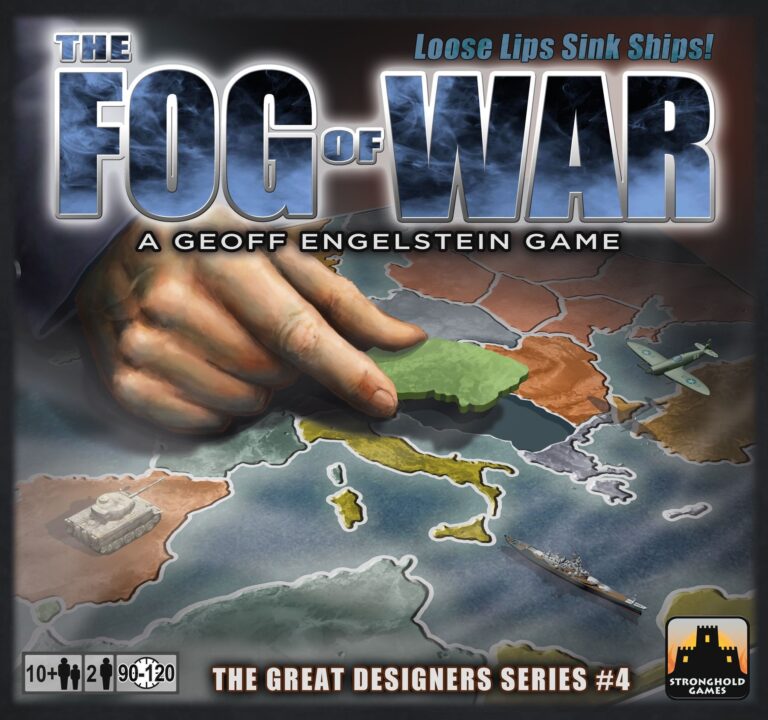
The Fog of War is a tense strategy game where hidden plans, careful choices, and a little table talk shape every battle. In this review, I look at its bluffing, strategic depth, player balance, and rules. Bring snacks, trust nobody, and maybe hide your best poker face.
How It Plays
Setting up
Each player chooses a side, takes its units, cards, and markers, then sets up the board as shown in the rulebook. Keep some information hidden, because nobody enjoys showing the enemy their whole plan before the first turn.
Gameplay
Players take turns drawing cards, moving forces, gathering intelligence, and launching attacks. Units and plans stay partly hidden, so you must read the board, guess your rival’s aims, and decide when to risk an attack. Cards add fresh options, but smart timing matters more than blind luck.
Winning the game
You win by completing your side’s objectives and gaining control of key areas before your opponent can stop you. The player who manages their forces best, protects their plans, and makes the most of each opening takes the game.
Want to know more? Read our extensive strategy guide for The Fog of War.
Hidden Information and Bluffing in The Fog of War
The Fog of War earns its name by keeping key facts behind a curtain. A quiet move could mean a clever trap, or it could mean someone had simply forgotten to reload their cards.
Bluffing works best when players can send mixed signals. I once placed a weak unit near a tempting route, hoping my mate would expect a bait. He called it, marched in, and found my real force waiting nearby. I felt like a genius for about twelve seconds, until his hidden reserve appeared behind me. The table went silent, then everyone laughed while I searched for a dignified excuse. That moment showed the game’s best trick: bluffing creates tension without needing a pile of dice.
Still, the hidden information can frustrate new players. They may feel lost if they miss one small clue, especially when another player remembers a rule or spots a pattern faster. The game helps by giving players clear actions, so the mystery stays manageable. I also like how bluffing never replaces planning. You must choose when to hide strength, when to show it, and when to let an opponent think they invented your plan. In our games, the strongest bluffer did not always win; the player who read the board best usually pulled ahead. Next, we will examine Strategic depth and decision making, where choices carry more weight.
Strategic Depth and Decision Making
Every Move Leaves a Mark
The Fog of War rewards players who plan two or three turns ahead. In our games, each turn felt like a small puzzle. The game offered several decent answers, but only one or two truly suited the board.
Choices With Consequences
Players must weigh short-term gains against plans that may pay off later. A quick victory point can help now, yet spending resources early may leave your position weak when the board shifts. I often wanted to chase the loudest opportunity. The game punished that impulse gently but firmly; it did not slap my hand, it simply made my next few choices rather grim.
Planning Without Perfect Control
Good decisions still need adjustment. The board changes enough to stop players from following a script, but not so much that planning feels pointless. We paused, counted options, and argued over timing like ministers with cardboard budgets. The strongest turns came from linking actions together, setting up a future move, then forcing an opponent to react before they felt ready. That sense of control makes wins feel earned, even when a plan collapses and you must build a new one from scraps.
Who Will Enjoy It?
This is a strong fit for players who enjoy thinking ahead and spotting links between small choices. It may feel slow for anyone who wants constant action, yet patient groups will find plenty to chew on. Next up, Player balance and fairness takes the referee’s whistle and checks whether every seat gets a fair shot.
Player Balance and Fairness in The Fog of War
A fair game should make every player feel responsible for a win or loss, not like a passenger on a runaway train. The Fog of War mostly gets this right. Its sides offer different tools and pressures, yet none feels doomed before the first serious choice. In our four-player sessions, we swapped positions after each match, and the results stayed pleasingly close. My mate Colin won twice, but mostly because he reads a table like a nosy pigeon, not because the game handed him a silver spoon.
Different roles, similar chances
Balance comes from more than equal starting power. Each side has a clear job, but the game gives weaker positions ways to catch up without handing out pity points. Early setbacks matter, though they rarely become a death sentence. I have seen a player lose ground, change their plan, and still return to the contest. That feels much better than games where one bad opening move turns the rest of the night into cardboard wallpaper.
Where the balance creaks
The main wobble appears when one player knows the rules better than everyone else. This issue comes from experience, not a broken side, but new players may blame the game. We fixed it by rotating roles and using a practice round. The fix worked, although the first match can feel like a referee forgot their whistle. I noticed that three-player games can lean harder toward the player with the seat, while four players smooth things out. That makes the player count matter more than I would like. Even so, the game avoids the “you cannot win now” feeling that ruins many war games. Next, we’ll check whether the Rules, setup, and learning curve keep that fairness intact without turning game night into homework.
Rules, Setup, and Learning Curve for The Fog of War
Setup
Getting The Fog of War onto the table takes less time than finding the rulebook after my cat sat on it. The game uses boards, markers, cards, and screens, so setup feels tidy once you know where each bit belongs. My first attempt looked like an office supply disaster, but our second game took ten minutes from start to finish.
Learning the Rules
The rules read clearly, but their order can trip new players. We fixed that by reading the turn summary first, then checking each action as it came up. That small change made our teach smoother, and nobody needed help.
The Fog of War in Practice
Once play starts, the fog of war idea makes sense fast. You know only what your side sees, so you must track clues without peeking at the other side’s plans. The player aids give reminders, though I still forgot one timing rule and sent a marker to the wrong spot. Nobody exploded; we rewound the move. That forgiving feel helps new players learn without turning the table into a courtroom.
Teaching the Game
I would teach this game in stages. First explain the goal, then show one legal turn, and finally cover the odd corner cases. Do not read every note aloud at the start or eyes will glaze over like old cheese. After one round, the rules settle into place and later turns move briskly. Our third game needed few questions, so I focused on playing, not refereeing with friends at all.
I recommend it for patient groups, but not for anyone wanting instant action early.
Conclusion
This concludes my review of The Fog of War. The game rewards careful planning, and its balance held up well across our plays. The rules take a little patience, but once everyone understands them, the battles move along nicely. It works best with players who enjoy thinking hard and keeping a straight face while plotting trouble. It may feel slow for casual groups, but for fans of tense strategy, The Fog of War earns a strong recommendation. Just don’t blame me when your friend starts accusing you of cheating because you smiled.