
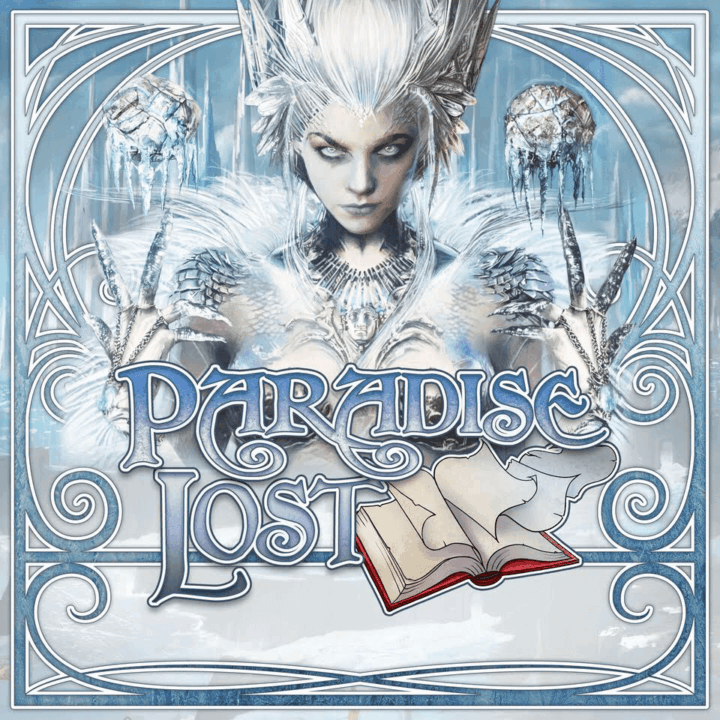
If you’ve ever wanted to feel like a detective in a fairytale, then you might get a kick out of this review. There’s mystery, there’s wild guessing, and there’s enough artwork to make your eyeballs happy. But did we have fun, or did the game turn our brains into mashed potatoes? Read on for the real scoop!
How It Plays
Setting up
Start by placing the gorgeous board in the middle of the table. Each player picks a hero and grabs their matching standee, a few clue tokens, and a reference card. Shuffle up the villain, fable, and plot cards—these are secretly picked and hidden in the villain’s lair (basically a cardboard hidey-hole). Everyone takes a sip of their drink because you’re about to need your wits.
Gameplay
Paradise Lost runs in rounds. On your turn, you move your hero, meet zany characters, and collect clues. Asking the right questions to the villain player helps you chip away at their secrets. Sometimes, you get amazing info. Other times, you feel like you just asked the lair for the Wi-Fi password. Bluffing, sneaky questions, and careful deduction go a long way. There’s also a dash of potion brewing to spice things up—though I recommend not actually drinking any potions you make from board game pieces.
Winning the Game
The real meat of the game is guessing the villain, fable, and plot before anyone else. Get all three right, and you save the day (and possibly your dignity). Guess wrong and you give the villain player a private opportunity to mock your detective skills. You only get one guess per game, so no reckless shouting! First to crack the case wins, but if nobody solves it by the end, the villain cackles in triumph. Bring your best poker face!
Want to know more? Read our extensive strategy guide for Paradise Lost.
Gameplay Mechanics and Player Interaction in Paradise Lost
Paradise Lost really tries to do something special with how players mess with each other. The first thing that hits you is the deduction mechanic, which makes you feel like Sherlock Holmes—if Sherlock was bad at remembering things and kept drinking too much coffee. Each player takes on a hero trying to figure out which villain has wrecked the peaceful land, but the clues are not straightforward at all. If you love smugly thinking you’re smarter than your friends, you’ll love this mechanic. If you think memory is your weak spot, maybe bring a notepad!
The game uses a sort of semi-cooperative vibe. You know that classic scenario where you help your friends until you get the chance to stab them in the back? This is that, but with more magical flowers and a giant frog. You trade info, give suspicious looks across the table, and occasionally watch someone make a wild guess and ruin your perfect plan. It’s not as cutthroat as some deduction games (looking at you, Secret Hitler), but there’s still enough player interaction to keep everyone from zoning out. If you have that one friend who spends twenty minutes each turn, the rest of you won’t be bored while waiting. Talking, bluffing, and wild accusations keep everyone busy.
Luck does play a small part, which I’m not thrilled about—but it isn’t as brutal as in some other games. Drawing a bad clue can slow you down, but you can recover if you act clever. If you want pure skill, you might grumble a bit, but at least you won’t flip the table in rage. Next up, I’ll talk about the theme and artwork. Spoiler: one of the illustrations made me spit out my drink.
Theme and Artwork: A Fairy Tale with a Twist
I have never played a board game as whimsical—and as unsettling—as Paradise Lost. The theme throws you into a world where familiar fairy tale heroes are snatched away, leaving everyone to wander in a fog of confusion. It’s Wonderland meets Sherlock Holmes, with a dash of “did I eat too much cheese before bed?” The premise is original, and if you love stories where the fairy tale endings don’t quite go to plan, this game will itch that scratch.
Let’s talk about the artwork. The artists must have drunk three cups of coffee too many before picking up their paintbrushes because the images are wild. Each villain portrait pops with personality. The landscapes are so dreamy that I once caught myself staring at the board for longer than I should have (sorry, Sam, for making you wait during your turn). Every card looks like it belongs in a storybook left out in the rain: colorful, a bit mysterious, and definitely inviting. The game cleverly uses art to build suspense—every time you pick up a clue card, you half-expect it to jump up and shout, “Boo!”
One small grumble, though. Sometimes the colors are so bright and busy that certain game icons blend in, making it hard to spot that crucial clue symbol.
Now, before you get too comfy in this storybook world, let’s turn the page and see if Paradise Lost has the replay value to keep you coming back for more plot twists…
Replay Value and Variability in Paradise Lost
Paradise Lost does a pretty good job here! The game swaps out which villains and heroes appear each session, so no two games play out exactly the same. I once played with my cousin, and she somehow got the Mad Hatter twice, but even then, the clues and deduction paths were totally different the second time around. Seriously, if you like games that shake things up, this one scratches that itch.
Another thing I love: there are loads of clue cards, each connected to a specific villain. Sometimes you’ll have the clues figured out in round three; other times, it’s a head-scratcher until the last card drops. The spell cards also add spice, letting someone ruin your perfect plan at the last second (my friend Dave is notorious for this, I still hold a grudge). This means you can’t really “solve” Paradise Lost by remembering what happened last week—success depends on how everyone plays off each other and the random mix of cards.
If you get obsessed with finding the perfect deduction, or if you want to try different hero powers, you’ll have plenty of reasons to set up Paradise Lost again and again. Next time I’m going to outsmart Alice and her rabbit, no matter what!
Up next: we’ll see how much luck (and bad dice rolls) can mess with your master plan in Paradise Lost—so stay tuned for a whirlwind of strategy and pure chance!
Luck vs Strategy: Who Wins in Paradise Lost?
If you’ve played as many games as I have (seriously, my kitchen table has dents from the dice), you know the delicate dance between luck and strategy can make or break a game. Paradise Lost puts on its best dancing shoes—but does it nail the waltz or just step on my toes?
In Paradise Lost, the core mechanic revolves around deduction, which on paper sounds like a strategy fest. You’re Sherlock, piecing together hints, outwitting your friends, and feeling like a genius—until the wheels come off. That’s where luck sneaks in. Most clue-gathering happens through a random token draw. Sometimes you pull the perfect hint on your first try, sometimes you get twelve potions in a row and start to question your life choices.
I had spent the previous half hour concocting an elaborate theory, only to have it destroyed by one lucky guess. Let’s just say my coffee mug ended up somewhere it shouldn’t have.
The strategy is there: you need to manage your actions, read your friends, and guess when to make your move. But the game’s token draws and some villain powers add a big scoop of randomness. I found myself wishing for more ways to mitigate the luck—maybe spend extra resources to choose a token? As it stands, it’s fun, but purists might howl at the moon.
So do I recommend Paradise Lost? Yes, if you like a good mix of deduction and surprise. But if you want chess-like control, prepare for a fairy tale where the dice roll the story!
Conclusion
Alright, that’s a wrap on my rollercoaster with Paradise Lost. If you want a game that looks pretty, lets you snoop on your friends, and doesn’t mind tossing a coin to fate, then give it a go! Just know, sometimes Lady Luck might snatch away your hard-earned deductive brilliance and hand the win to your uncle who always forgets how to play. It’s not perfect, but it sure got us talking, laughing, and accusing each other of secret villainy. If you crave pure strategy, you might get cranky, but for a night of table banter and good looks, Paradise Lost delivers. Good luck, and may your guesses always be brighter than mine!