
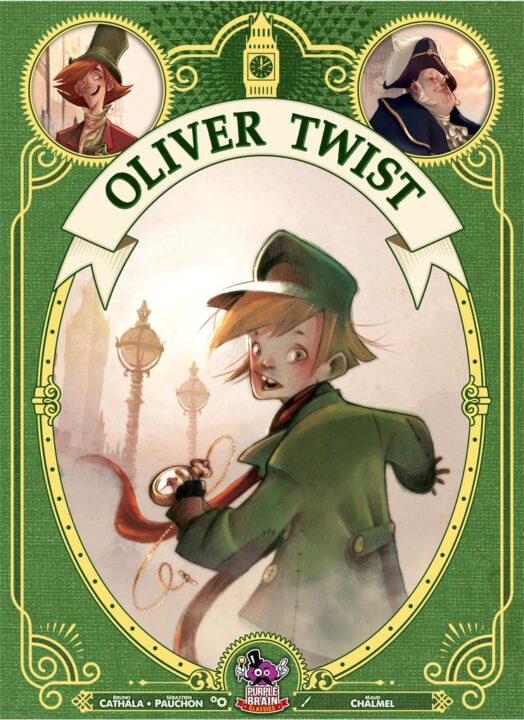
Gather round, fellow board game fans! This is my review of the game where you get to be a scrappy street kid trying not to get caught—or caught broke: Oliver Twist. If you’re curious whether it’s fun, frustrating, or just cobblestone chaos, you’re in the right place.
How It Plays
Setting up
First, lay out the board with the alley tiles face down and give each player their little thief token (no, not me—my token never wins). Shuffle the loot cards and deal some to each player. Put the Policeman pawn and Fagin’s den on their spots. Hand out the player sheets, and you’re set.
Gameplay
On your turn, peek under an alley tile and decide—do you want to take the loot or press your luck for something shinier? Move your token through the alleys, watching out for the Police. You collect loot, but keep an eye on what your friends are nabbing. Some cards are worth more if you get a set, so there’s a pinch of strategy. Occasionally someone gets greedy, and the Policeman makes an arrest. That’s when the drama kicks in and everyone blames me, even though it was Tim who tripped the alarm.
Winning the game
After a few rounds, everyone sells their loot to Fagin. Sets and rare items score big points. Add up your total—whoever has the most cash wins and gets to gloat (hopefully not loudly enough to be evicted, like last time).
Want to know more? Read our extensive strategy guide for Oliver Twist.
Theme & Artwork: Does Oliver Twist Feel Right?
So, I hauled out Oliver Twist on a rainy Saturday, figuring, if I can’t be at Fagin’s den myself, at least let me play pretend. Well, let me tell you, the game box alone already screams “Victorian London.” The cover art has that perfect blend of gloomy fog and shifty street urchins. I half-expected Mr. Bumble to pop out and demand I pay the poor rates!
Inside, the artwork stays true to the Dickens vibe. All the characters—Dodger, Nancy, even Bill Sikes—are drawn with this lovely, scratchy style that looks straight outta an old penny dreadful. Every tile and card drips with that gritty, cobblestone feel. Even the pickpocketed goods (looking at you, stolen silver spoons) are illustrated in a way that makes you almost feel a bit guilty. Almost. My friend Dave said the “art makes it look like you’re pilfering in a BBC miniseries,” which might be the only time Dave has said something clever, so you know it’s good.
The game makers clearly spent ages researching. Even the street names are spot on, making you almost want to lace up your boots and go to work for Fagin yourself—minus the small matter of getting arrested, of course. The theme weaves its way into every element, so much so that halfway through, Sarah put on an accent and demanded gruel. (We gave her chips instead.)
But does the gameplay live up to the artwork? Hold onto your top hats, because that’s up next!
How Does Oliver Twist Actually Play? Let’s Get Our Hands Dirty
I mean, how often do you get to pickpocket in Victorian London without actually getting arrested? In this game, you’re moving your colored pawn around city tiles, trying to nab sets of loot and trade them in for points. But every round, you have to bet on how far you think you’ll go—kind of like telling your mum you’ll be home by nine, knowing full well you’ll sneak back at midnight.
I have to say, the movement mechanic is simple to learn but you need to think ahead—no just running wild, unless you want to end up with a “bad reputation” (which costs you points, like a real Victorian scoundrel). I liked the push-your-luck element, though sometimes it felt a bit random if you just got unlucky with the city tiles. But you’ve got to plan where you’ll move or risk losing out to your greedy friends—there’s a real tension as you hope that blasted copper doesn’t show up on your next turn. The game moves pretty quickly, with little downtime, even with a full table.
The decisions felt meaningful, but never too brain-burny. Turns flow smoothly, especially after the first round or two. Up next: I’m going to spill the tea on how peaky you can get in Oliver Twist with player interaction and sneaky strategy. Will your friendships survive?
Outsmarting Fagin: Player Interaction and Strategy in Oliver Twist
One thing I love about Oliver Twist is the way players constantly size each other up. This isn’t just a game where you sit quietly counting coins—no, you need eyes as sharp as a pickpocket’s and the nerves of someone sneaking jam from the pantry. Every player gets to watch what loot their rivals pick, and you have to guess if they’re after valuable gear or just bluffing their way through.
You can’t win Oliver Twist by going it alone. You need to anticipate what other players want, and when to push your luck or hold back. It’s not quite chess, but it’s not pure chaos either. Timing is everything. Sometimes, I went big on a risky steal only to have someone else snatch the goods I had my eye on. Other times, I hung in the shadows, only to find myself outmaneuvered by a cunning Artful Dodger (my cousin Charlie, who takes board games way too seriously). The real challenge is reading the room—and your mates.
It’s a game that rewards clever moves, sneaky alliances, and knowing when to look innocent. But don’t get too smug—sometimes, all your cunning can be foiled by luck. Speaking of which, next up, I’ll let you in on just how much Lady Luck matters in Oliver’s world, and whether that’s a good thing or enough to make you swear off Dickens for life.
Luck vs Skill: Is Oliver Twist a Fair Game, or Just a Lucky Guess?
If you ever spent an evening grumbling over a game because the dice ruined your master plan, you know where I’m coming from. Board games should reward your cleverness, not your ability to roll sixes like a wizard.
Let me say this: Oliver Twist is not a total luck-fest. There are some elements of chance, sure, but you have actual control. You make real choices—when to risk stealing, when to cash in your loot, and when to push your luck with the other rascals. It’s not just about random card draws or dice rolls; you need to read the room, predict your mates’ moves, and outsmart them. Luck makes things spicy, but your wits give you the real edge.
Still, if you trip into a run of bad luck, you might lag behind, but you can always claw back with smart moves and a sneaky attitude. I lost one round after my friend Sam somehow picked up everything valuable in a single sweep (seriously, does he have x-ray glasses?). But in the next session, I out-tricked him and took home the win. It keeps things tense—no one’s out of the game until the fat magistrate sings.
So, do I recommend Oliver Twist? For fans of games where brains matter more than lucky rabbits’ feet, this one is absolutely worth a spot on your shelf. Just keep your eyes peeled for those sneaky friends!
Conclusion
So, that’s my take on Oliver Twist. The art and theme whisk you to the streets of Dickens’ London, and the game keeps things lively with smart choices, some sneaky steals, and a dash of luck. It’s not perfect—luck sometimes gives you the slip and leaves you eating gruel. But if you enjoy bluffing your friends and grabbing loot, it’s a solid bet for game night. Just don’t expect to win only by rolling the best. Thanks for sticking around for this review, and may your loot always be shinier than your friends’!