
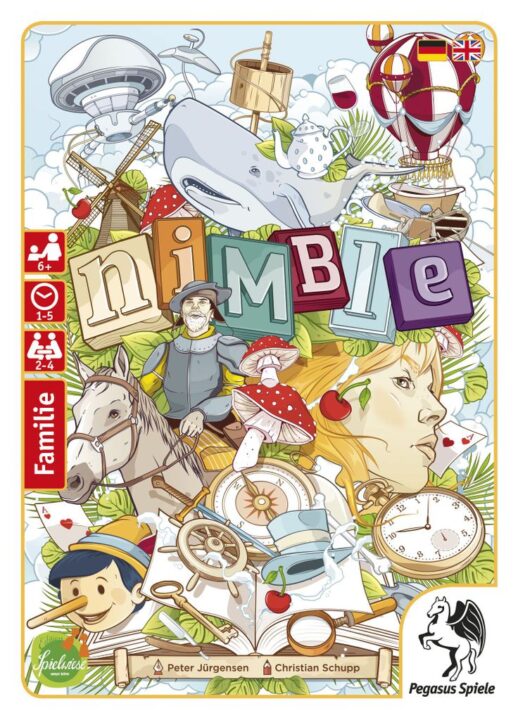
If you’ve ever wanted a board game that feels like a race between wild raccoons at a pancake buffet, boy, do I have a review for you! Today, I’m talking about Nimble. This is the game that left me sweaty, still laughing, and finding cards in my shoe three hours later. Let me save you from sticky cards and regretful purchases—all the frantic facts are right here!
How It Plays
Setting up
Give each player a deck of cards with wild, bold colors on the edges. Make sure everyone can reach the center of the table because things are about to get messy—card wise!
Gameplay
Players all play at the same time. You flip your top card, look at the colored border, and try to slap a card with that color in the middle pile. It’s frantic, it’s silly, and you’ll probably toss a few cards on the floor if you’re like me. No turns. No waiting. All chaos.
Winning the game
The first player to throw down their whole deck wins. If you mess up and play a card on the wrong color, you need to grab your cards back and try again. It’s fast, it’s furious, and it rewards speedy folks. My grandma beat me at this once and hasn’t let me forget it.
Want to know more? Read our extensive strategy guide for Nimble.
How Fast Can You Nimble?
Let me tell you, Nimble is not a game for people who like to take their sweet time. This game goes fast. By the time she figured out where to put her card, I’d already played three rounds and spilled half my drink. Nimble is pure speed. There is no pausing to strategize or argue about the rules. It’s just slap, slap, slap, cards hitting the table, and people yelling. If you blink, you’ll miss it — and lose, probably.
Player interaction in Nimble is a weird beast. You don’t talk, you don’t trade, and you sure don’t team up. But, you still feel everyone around you. The whole table buzzes with frantic energy. It’s every person for themselves, but you can’t help but peek over and see who’s got the biggest stack. I have never seen my quiet cousin Mike get so competitive. He slammed his cards down with such force the table wobbled. If you like direct competition, this will scratch that itch. If you crave negotiation or friendly alliances, go play Catan with the other peacekeepers.
The game’s speed means there’s no chance for mean-spirited blocking or kingmaking, which I love. It’s just pure reaction time and a little bit of chaos. Next up — let’s chat about how easy it is to actually learn Nimble and if the rules are as quick as the gameplay. Spoiler: I read them during a pizza break.
Learning the Ropes: How Quick is Nimble to Pick Up?
Let me tell you, when I brought Nimble to our board game night, I expected at least one person to get lost in the rules. Turns out, Nimble didn’t faze anyone. You pretty much just sit down and start slapping cards. That’s it. The rulebook is shorter than my patience for Monopoly and twice as clear. In fact, we spent more time arguing over who got to pick the prettiest color deck than on actual rules explanations.
You get a small deck, learn what colors do what, and you’re already 90% of the way to being a Nimble pro. There’s almost nothing to trip you up. There are no sneaky exceptions hidden in the fine print either—what you see is what you get. The only tiny hiccup for us was the first round, when someone tried to play aggressively before the word “go,” but honestly, that’s just my cousin Carl being Carl. The rest of us had it down in under a minute. So if you’re the type who groans at thick rulebooks or just want to start playing without a half-hour PowerPoint, Nimble is your friend. It’s the closest thing to instant gratification you’ll get in a box that doesn’t require batteries.
Next up, let’s talk about something that makes or breaks a game: is Nimble a true test of skill or are you just at the mercy of the luck gods? Prepare yourselves, because I’ve got opinions!
Does Nimble Reward Skill or Just Lucky Reflexes?
If you ask my friend Tom (who once won at Nimble by dropping half his cards on the floor and yelling “done!”), you might think luck runs the show. But after a dozen rounds and a few bruised egos, I can tell you: Nimble is mostly about skill, with just a dash of that old lucky magic.
This game is a race. You flip cards and slap them down based on matching colors, not numbers or patterns. You need lightning-fast eyes and hands—skillz, baby. My cousin, who claims to be a ‘board game prodigy,’ actually lost a few times to my neighbor’s 7-year-old, but that’s not because of luck. That’s because, in Nimble, you have to stay focused and not get tripped up by your own hands or stare too long at pretty colors. Skill comes from being able to spot those matches in a blink and not second-guessing your speed.
Luck plays a little role here and there. Sometimes you’ll get a starting card that lets you zip ahead, or someone else gets stuck with a “mean” card pile that jams up their flow. But that’s rare, and mostly, if you win, it’s because you’ve got the moves (and possibly well-caffeinated reflexes). Nimble won’t leave you at the mercy of a random dice roll—a huge plus in my book.
If you want to win at Nimble, practice those reflexes and keep an eye out for flying cards. Next up, let’s chat about whether Nimble’s components are as snazzy as its gameplay or just plain old cardboard!
How Good Does Nimble Look and Feel?
Let’s talk pieces. The minute I popped open Nimble, I knew the folks behind it wanted flashy fun. The cards in Nimble carry bright colors that just shout “play me!” from across the table. My friend Amanda, who is easily distracted by shiny objects (sorry Amanda, love you), couldn’t stop fanning them in the light. They have a glossy finish and thick enough stock to handle my cousin Todd trying to bend them (again, sorry Todd, love you less when you do that).
The box is snug and travels easy. No giant, empty space like those board game boxes that try to trick you into thinking you got more for your money. Everything fits, nothing rattles – perfect for grabbing on the way to a picnic or to show off at the pub when you’re tired of trivia night.
Artwork-wise, Nimble doesn’t have detailed illustrations or silly characters, but that isn’t the point here. Nimble’s design is about function over story. The card backs are simple but super clear, and there’s no confusion about what’s what. It helps you focus on the game, rather than guessing if that’s supposed to be a magic hat or a bowling ball (I’m looking at you, party games).
Bottom line: Nimble isn’t art you hang on your wall, but it scores big for bright, practical, and sturdy bits. I recommend Nimble, especially if you want a game that can take a beating and still look good. Style with a splash of substance – what more do you want?
Conclusion
Nimble is perfect if you want a fast and frantic game with easy rules and a table full of chaos. The skill factor is high, so if you’ve got speedy hands and sharp eyes, you’ll have a blast. Card quality is solid, but don’t expect any fancy artwork—this one is about action, not beauty. If you hate luck-based games, Nimble is a safe bet. But if you like taking your time or want something deep and thoughtful, you might need to look elsewhere. That’s a wrap for my Nimble review—now excuse me while I ice my card-flipping fingers!