
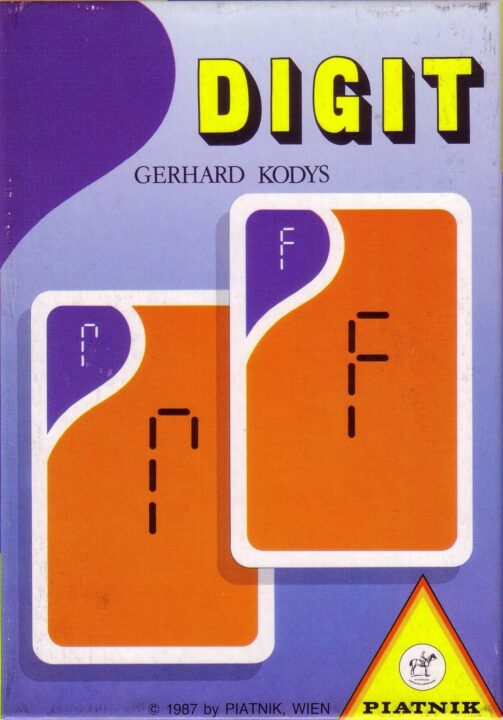
If you need a tiny game that fits in your pocket, doesn’t take up your whole dining table, and won’t make your friends fake excuses to leave early, this review is for you. You’re probably sick of games that come in boxes the size of a microwave, or rules so long your hair grows while you read them. Fear not! Today, I’m reviewing a game that’s small in size, big on fun, and won’t cause any family feuds. Hold tight—here’s everything you need to know, from setup to play and all the little quirks in between. Let’s see if it’s a keeper or one for your annoying cousin’s next birthday present.
How It Plays
Setting up
First, you pull out that stack of number cards and give everyone a hand. Set the cards in a row in front of you—this isn’t blackjack, so no secret hands here! Everyone can see all the numbers. Shuffle the deck and keep it within reach. That’s pretty much it. Even my clumsy mate Steve can’t mess this up.
Gameplay
Now you take turns changing one card in your row by flipping or switching it with another card, but here’s the catch: your row of numbers must always match a pattern pictured on one of the shared cards in the middle. If you do, you claim that pattern card! The rule is: one move per turn, no cheating, even if your little brother ‘accidentally’ flips two cards when he thinks you’re not watching.
Winning the game
Play goes on until all the pattern cards are claimed or everyone runs out of legal moves (if you somehow end up in gridlock, congrats, you’re all stuck together). The winner is the player with the most pattern cards at the end. If there’s a tie, I suggest a thumb war, but the rules actually just say both players share the glory.
Want to know more? Read our extensive strategy guide for Matchstix.
Game Setup and Player Interaction in Digit
So, let’s talk about how Digit gets the party started. First off, the setup is as easy as pie. I timed myself – it took less than a minute, and that was with my friend Max heckling me for dropping one of the sticks under the table. All you need to do is lay out the five wooden sticks in a neat row. Everyone takes a card and a deep breath (to steady their hands, because things get tense!). That’s it. No mountains of cardboard chits, no rainbow of tokens, no rulebook thudding onto the table. Just sticks, cards, and the giddy thrill of outsmarting your pals.
Now, on to the heart of Digit: its player interaction. This game is all about reading your friends, but not in a “I know your deepest secrets” way—more like, “I bet you don’t see this move coming.” On your turn, you move exactly one stick to try to match the pattern on your card. This sounds simple, but when Dave sits there for five minutes staring at the sticks like he’s decoding The Matrix, you realize how much tension five tiny sticks can create. And when someone finally nails a pattern, you can feel the groans and sighs as everyone realizes their perfect move is now gone for good.
Digit thrives on cleverness and a bit of sneaky planning. The best moments? When someone makes a move you thought was impossible, and suddenly the whole table erupts in laughter or groans. No one can sit back and coast, and it keeps everyone focused and engaged. There are no alliances or gangs-up—just pure, friendly competition.
Ready to see if the rules are as simple as the setup? Hold onto your sticks, because next up, we’ll see if learning Digit makes you feel like a genius or just a confused chicken.
Rule Clarity and Learning Curve in Digit
Whenever I teach a new game, I brace myself for the blank stares and the “wait, what do I do again?” questions. Thankfully, Digit doesn’t inspire much confusion. The rules fit on a napkin (and probably still leave room for ketchup stains). You lay out the five wooden sticks, show everyone the starting number, and then get moving. The rulebook is thin—like, take-it-on-an-airplane-and-read-it-before-takeoff thin. I love that.
Now, Digit isn’t a game about reading dense text or memorizing edge cases. It’s about seeing patterns and thinking ahead. You can literally teach your grandma, your nephew, and even that friend who still calls every piece a pawn. That’s not to say everyone will master it on the first round. The trick is figuring out the clever moves you can make with just one stick each turn. Trust me, your brain will blink a few times before you get how much you can mess with your friends.
It took about 10 minutes for everyone to feel comfy, and by the end of the first game, nobody needed the rulebook at all. That’s a huge win in my book.
So if you’re tired of games that require a PhD in rulebooks, Digit’s got your back. Next up, I’ll reveal how many times you’ll want to play this one before you even think about putting it back on the shelf—and if you’ll ever have time for a bathroom break.
Replayability and Game Length in Digit: How Many Times Can You Bend That Stick?
Let me tell you, Digit is a game that gets more fun—or more heated—the more you play. Every time I play Digit, it’s a different ride. There’s a lovely “aha!” moment when someone figures out a move nobody else saw coming, and that keeps us coming back for more. Replayability is high, as the game never really unfolds the same way twice, mainly because people’s brains are their own worst enemies (mine included!).
Some games get stale fast, but not Digit. Because everyone’s racing to figure out each puzzle, and the solutions aren’t always obvious, it’s tough to get bored. Every round feels fresh, so Digit definitely earns high marks for replayability.
As for game length, Digit fits that sweet spot between “quick filler” and “long haul.” A single round takes about 15 minutes, give or take a few moments of intense staring at sticks. You can play a single round or decide on a race to five points—or just keep playing until someone yells “Uncle!” It’s flexible, so the night won’t drag unless you want it to. This means Digit can easily sneak into any game night lineup without people groaning about their bedtime.
But let’s not get ahead of ourselves—the sticks themselves deserve a closer look! Next, we’ll size up Digit’s component quality and try to find out just how portable this little box really is.
Digit: Small Box, Sturdy Bits – Is It Worth the Space?
When it comes to component quality, Digit gets plenty right for a game that fits in your back pocket. The box itself is about the size of a chunky sandwich (the kind you’re proud of at a picnic), so you won’t need to clear shelf space or fear an avalanche when you open your closet.
Inside, you’ll find a handful of chunky wooden sticks – the stars of this little show. I’d be lying if I said I didn’t pretend they were tiny lightsabers once or twice. They’re satisfyingly weighty, so you won’t worry about snapping them just by sneezing nearby. I’ve played Digit in coffee shops, on park benches, and even once in a moving car (don’t recommend – my friend still complains about losing a stick under the seat), and nothing’s cracked or chipped yet. The paint on the sticks holds up too, even after a few accidental dunks in coffee. Don’t ask.
As for the box, it’s compact and sturdy. The lid fits tightly, so you won’t have sticks bouncing around in your bag. No plastic inserts or wasted space – just a lean, mean, puzzle stick machine.
If you love games that you can chuck in a bag, pass around, and not stress about – this is a winner. Small, sturdy, and a perfect fit for game nights on the go. I fully recommend Digit if you want maximum fun with minimum fuss and appreciate not having to buy a new shelf.
Conclusion
Well, that’s my Digit review in the bag (or should I say, in the tiny box). If you want a game that’s quick to set up, easy to teach, and lets you mess with your friends’ plans in hilarious ways, Digit is a winner. The portability is a huge plus—I’ve brought it to coffee shops more times than I can count, and no one has spilled their latte on it (yet). Sure, it’s not super deep and it won’t break your brain, but that’s the charm. If you’re after a filler game that’s fun, light, and tough enough to survive a backpack, Digit is worth grabbing. Thanks for letting me ramble about numbers and cardboard. Now go trick your friends into thinking you had this much fun by accident! This wraps up the review—on to the next game!