
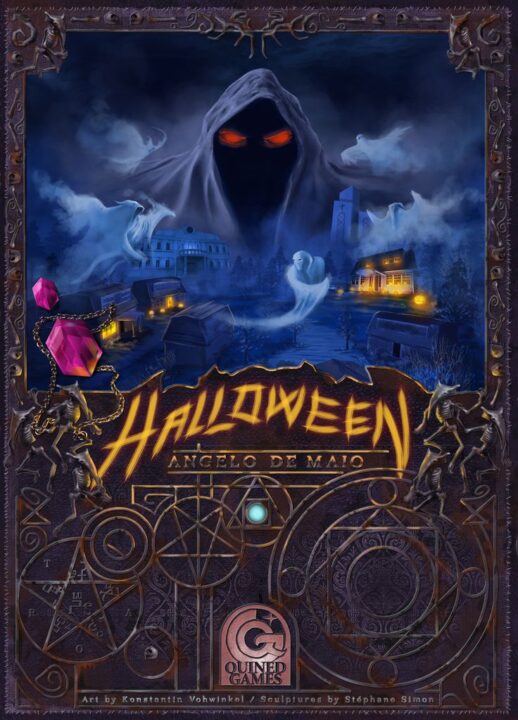
If you’re looking for a game that spooks your socks off (in a fun way, not a I’m-gonna-hide-under-the-bed way), you’ve come to the right place. This review spills the candy on a game I played last weekend with my friends, and let me tell you, things got wild. I’ll give you the good, the spooky, and even the bits that made me shake my fist at the dice. Hold on to your fake vampire teeth—here comes my review of Halloween!
How It Plays
Setting Up
Lay out the Halloween board in the center. Give everyone their spooky tokens and a player board. Shuffle the event cards and put the ghosts and candy tokens within reach. Sort out the meeples—one for each little goblin (aka player).
Gameplay
Each turn, players take actions like moving around haunted houses, collecting candy, and trying to scare the pants off their friends (not literally, I promise). Draw event cards for random twists—sometimes funny, sometimes downright evil! You’ll use strategy to outwit the other monsters and finish your secret objectives.
Winning the Game
Once someone completes all their objectives, the game ends. Count up your points—mainly from candy, ghosts, and completed goals. The ghoul with the most points wins, earning bragging rights until next year—or until someone flips the table.
Want to know more? Read our extensive strategy guide for Halloween.
Spooky Fun: The Magic of Theme and Atmosphere in ‘Halloween’
Look, I’ve played my share of games that claim to be Halloween-themed, but most are about as scary as a soggy pumpkin. This board game, though, really gets the spirit right. The first thing you’ll notice is the artwork. It’s bursting with creepy charm! Every card and game piece just screams, “trick-or-treat,” and honestly, I almost expected to get a cavity just opening the box. My friend Carla tried to scare us in the dim light, but trust me, the art is what really got everyone in the mood for mischief.
As we set the board up, we got this wave of nostalgia – the kind that makes you wish you had a pillowcase full of candy handy. The setting is also pitch-perfect. You’re not just collecting points, you’re prowling haunted neighborhoods, spooking rivals, and playing tricks, which is way more fun than just pushing cubes around. We started making little ghost noises every time we moved, and even my usually-serious friend Phil got into the spirit (pun completely intended).
I love board games that use their theme well. In ‘Halloween,’ the theme isn’t glued on like a cheap plastic mask; it’s baked into every part of the game. The colors are moody, the cards have funny horror puns, and the setting oozes October vibes. It’s immersive in a way that makes you forget the real world for a while—unless your cat knocks over the graveyard tokens, which happened twice at my house.
But enough about the spooks and laughs; next, I’m going to lift the coffin lid and look at the gameplay mechanics and how fair they really are. Hope you brought garlic!

Gameplay Mechanics and Fairness in Halloween
Let me tell you, nothing ruins a spooky night of gaming faster than wild dice rolls and unfair mechanics. So, how does Halloween measure up? Well, the core gameplay sticks to moving around a modular board, collecting candies (I mean, what else do you do on Halloween?), and avoiding ghosts. Each player gets a special ability, which is cool because it adds spice and helps balance things out. No two players are ever the same, except for me and my cousin Steve, who both play like we’re allergic to winning.
Luck does show up in Halloween, mainly with the “trick or treat” card draws. Sometimes you score a major treat, other times… a trick that sends you back to the start. I groaned more than once, but to be fair, everyone at the table had their turn eating humble pie. The only downside? If you’re someone who wants total control, these random swings might spook you more than the artwork. But the good news: the ghost movement is predictable and based on player actions, so you can plan and avoid getting ghosted—unless, of course, you play like Steve.
Overall, the mechanics are straightforward and not overloaded with rules. It’s mostly fair, with a touch of luck that kept my group howling (sometimes, in protest). If you love balanced play, you won’t find any jump scares here—unless the candy bowl runs out.
Ready for the real chills and thrills? Next, I’ll spill all the (pumpkin) guts on player interaction and strategy.
Player Interaction and Spooky Strategy in Halloween
One thing that really gets my cauldron bubbling in board games is good old player interaction. And let me say, Halloween dishes out some serious chills in this department. While you’re busy scaring villagers and conjuring spells, you’re also constantly peeking over at your neighbors’ boards, plotting your next move. I’ve seen friendships teeter on the edge when someone snatches the last pumpkin card right from under another player’s nose. (Sorry, Greg. It was just business — not personal!)
The best part? The game lets you meddle just enough without making anyone feel picked on. There’s a healthy amount of bluffing in Halloween. You can try to trick others about your planned haunt or quietly gather ingredients for a big scare later. If you’re the type who loves trash talk and muttering about revenge, you’ll be right at home here. But even my shyest friend crawled out of their shell to launch a surprise ghost attack for a cheap win. It was glorious.
Strategy-wise, Halloween rewards both bold moves and subtle schemes. There’s space for clever planning—timing your special abilities and choosing when to unleash your powers can mean the difference between a win and an embarrassing retreat into the pumpkin patch. Just don’t get too cocky or you’ll find yourself hexed at the wrong moment. The balance between direct action and secret plotting kept my group talking long after the game ended.
Hold onto your witch hats, because in the next section, I’ll spill the beans (and maybe some eyeballs) about Halloween’s component quality and artwork!
Hauntingly Good Bits: A Look at Halloween’s Components and Artwork
Alright, let’s talk about what you actually get inside the Halloween box. If you’re like me, you judge a game a little bit by how cool the pieces look. I mean, we’re not monsters. (Or maybe, in this game, we are?)
When I first popped the lid on Halloween, I was worried it would be filled with boring, flimsy tokens. Nope! The game delivers chunky tokens and cards that didn’t feel like they’d disintegrate if someone sneezed on them. The ghost meeples are a highlight for me—they’re adorable, spooky, and almost made me want to start a tiny, haunted village on my shelf. The player boards also don’t curl like a sad sandwich, which is a win on its own.
The artwork deserves its own treat bag. Every card, token, and board oozes Halloween charm. Not in a ‘look at my kid’s crayon drawing’ way, but in a ‘hey, this might actually be haunted’ way. The illustrations balance cute and creepy. One of my friends refused to sit near the pumpkin tokens after dark. True story. The iconography is easy to follow too, so even the new guy in our group didn’t have to ask for rules reminders every two minutes.
Downside? If you really hate orange and black, grab some sunglasses. Otherwise, no complaints. Everything here shows real love for the spooky theme and your shelf space.
Would I recommend Halloween based on its components and artwork? Absolutely. Even if you lose, you’ll look good doing it!
Conclusion
If you want a board game that brings out spooky vibes, goofy laughs, and a bit of friendly mayhem, Halloween is a solid pick. The art and components are great, and the theme shines through like a pumpkin in a window. It does lean a little heavy on luck at times, which cost it some stars in my book—I don’t like losing a game to a sneaky ghost card! Still, the player interaction and fun factor keep it in my collection every October. That wraps up my review. Thanks for sticking around—may your dice be kind, and your candy bowls never empty!

