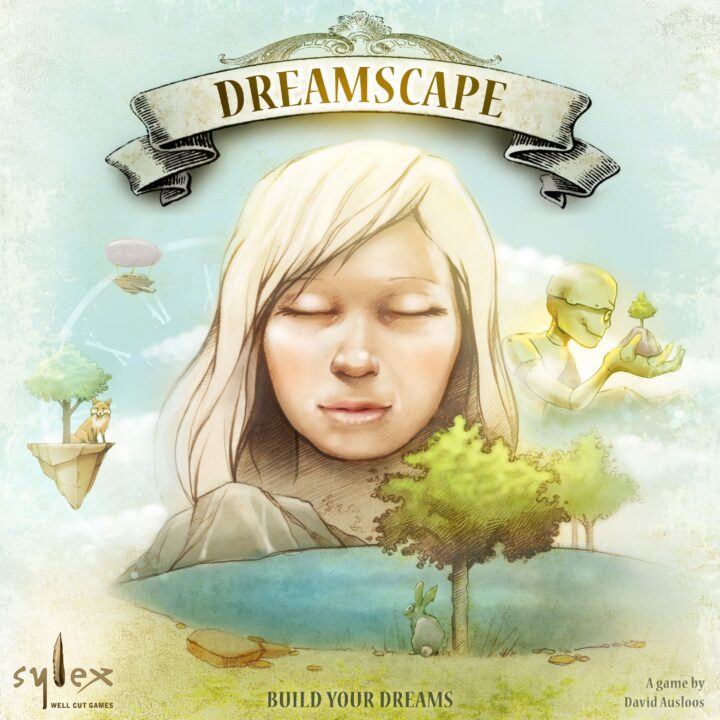

Welcome to my review of Dreamscape! If you’re tired of board games where your fate hangs on a lucky dice roll, keep reading. My friends and I spent a few evenings building wild landscapes and squabbling over mystical shards. Let’s see if Dreamscape turns your tabletop time into a peaceful, puzzly dream, or if it’s just a nap you’d rather skip.
How It Plays
Setting up
Lay out the main board and give each person a player board. Everybody grabs a little dreamer piece, and a few random dream tiles. Shuffle the dream cards and set out the goal cards. Pick your favorite color—there’s no shame in matching your shirt.
Gameplay
On your turn, you move your dreamer around collecting dream tiles. You use these tiles to build cool landscapes on your own board, matching patterns from goal cards. Every now and then, you get to mess with your friends’ plans, but it’s mostly friendly—unless you’re playing with my cousin, who takes ‘friendly’ as a challenge.
Winning the game
Once everyone runs out of rounds (or brainpower), you count up points from goals and bonus cards. The person with the most points is crowned Master of Dreams. If there’s a tie, I suggest a pillow fight to decide the winner, but the rulebook sticks with ‘shared victory’.
Want to know more? Read our extensive strategy guide for Dreamscape.
Enchanted Slumbers: Theme and Artwork Quality in Dreamscape
Let me tell ya, Dreamscape is one of those board games where the box alone makes you want to nap on a cloud. The theme here is all about crafting your own dreamy world, and it pulls you right in. When I opened the box with my usual crew, even the guy who hates ‘artsy’ games gasped like he’d seen his breakfast do a backflip. It’s like Bob Ross met Salvador Dali for an espresso at midnight.
The artwork in Dreamscape is top tier. Each card and board piece looks like a watercolour painting. Trees melt into rivers, little stone paths twirl around mushrooms, and everything looks hand-painted. My friend Sarah kept pausing the game to just stare at her own dreamscape instead of actually playing. She said, “I wish my room looked like this.” I told her that was probably impossible without a lot of spilled paint and angry landlords.
But the best thing is that the theme and artwork actually connect with gameplay. You aren’t just slapping down tokens on a dull board. Every time you add a piece, it feels like you’re really building a landscape from your dreams. The cards don’t just have pretty pictures—they help you build ponds, hills, and forests in weird, peaceful combos. It makes the table look beautiful, even if you’re losing terribly (like I did because, well, I got distracted by my own masterpiece).
The only thing that bugged me: sometimes the pretty art makes it hard to spot certain icons when you’re in a rush. If your eyesight is as wonky as mine after a long night, you’ll wish the important bits stood out more.
Next up, let’s stroll through a field of choices and peek at the actual nuts and bolts of Dreamscape: game mechanics and player decisions!
Building Dreams: How Dreamscape Lets You Shape Your Own Nightmares (or Not)
Dreamscape is not just a pretty face—this game gives you a lot to think about. Each turn, you pick up these fancy little resource discs from a central board, which you need to build your own personal dreamscape. It’s like gardening, except instead of weeds, it’s all waterfalls and weird floating rocks.
What I love about Dreamscape is how much control you have. Each player gets to choose where to move their meeple, which discs to grab, and how to place them on their board. You’re not just tossing stuff down—there’s serious planning here. If you’re good at visual puzzles or Tetris, you’ll feel pretty smart when you line everything up perfectly. If you’re not… well, you’ll at least enjoy the colors.
Each round, the way the discs refill and the special cards in play can totally change your plans. Sometimes you’ll feel like an evil genius as you pull off a combo nobody saw coming. Other times, someone will snatch the exact piece you need and you’ll be left shaking your fist at the heavens (or at your buddy, who knows what they did).
I noticed that while there’s a tiny bit of luck in what discs show up, good planning usually wins. That’s my jam. It feels fair and lets you try weird strategies instead of just hoping for the best. If you love meaningful choices, Dreamscape delivers in spades.
By the way, shuffle your dreams, because next up, we’re jumping into how much replay value and wild variety Dreamscape actually offers!
Replay Value & Game Variability in Dreamscape: Can You Dream Differently Every Time?
So, does Dreamscape pull a disappearing act after just a single session? Nope. It actually keeps me coming back like a sleepwalker who left their slippers at your place. Every game sets the stage with a brand new set of dream cards, so one session might have me sculpting a peaceful forest, while the next I’m desperately trying to make a mountain out of dream discs (literally).
The setup’s unpredictability comes from those mission cards and the shifting selection of available “shards” on the main board. You never know if you’ll get a combo that makes you feel like a dream architect or if you’ll end up frantically rearranging your landscape with only a handful of useful pieces. This keeps things fresh and keeps me on my toes—no sleepwalking allowed here.
The player powers also give everyone their own twist. My friend Laura insists her character is OP (she always says that when she wins), while I’m usually stuck with the power where I get to move a piece one more time. But hey, that’s replayability too—learning new strategies based on who you pick.
There’s a solo mode too, which I admit, I played during a thunderstorm when everyone else bailed. Dreamscape held up! Even without opponents, there’s enough challenge and variety to make it worth dragging the box off the shelf again.
If you like games that change every time you play, Dreamscape has your back (and your brain). Next, I’ll tackle the eternal debate: is Dreamscape more skill or more luck? Keep your dream journals ready!
Dreamscape: Skill Versus Luck – Is Your Inner Genius Enough?
Let me tell you, Dreamscape made me feel clever – and no, not just for remembering where I left my coffee. This game leans hard on skill. Every turn, you weigh your options: Should you chase those precious dream shards or build up your tableau for later points? It’s like my brain gets a yoga workout.
Now, don’t get me wrong: there’s a pinch of luck in Dreamscape, but it rarely spoils your plans. The main spot for randomness is in what dream shards are available and which dream cards pop up. Still, you’ve got so many ways to work around a bad draw. Want that blue shard? Maybe you’ll grab it before your friend does! Missed your color? You can exchange or plan ahead—it’s not the end of your dream world.
What I love most: Dreamscape gives players control. You plot, you scheme, and when someone else nabs your perfect piece, you only have yourself (or maybe your slow reflexes) to blame. This isn’t like rolling dice and praying for mercy. The player who plans best usually walks away victorious.
The minor stumbles? Sometimes, you get unlucky with a card or resource, but it never lasts long. A creative player can nearly always bounce back. For me, that keeps Dreamscape fun, rather than frustrating.
Do I recommend it? If you like brainy games with fairness and just a dash of chaos, Dreamscape deserves a spot on your table. You won’t need to blame luck for losing—unless your friends are reading your mind.
Conclusion
So that’s my review of Dreamscape! After several nights with friends (and a lot of head-scratching), I can say this game has some real magic. The dreamy art pulled me in and the brain-burning choices kept me thinking. It’s fair, doesn’t hand victories to the luckiest player, and always gives you something new to tackle. Sure, the icons are a bit tiny and the rules might tangle you up at first, but it’s a puzzle I want to wake up to again and again. If you love planning, clever moves, and don’t mind staring at a board covered in pastel clouds, this one’s for you. Sweet dreams—and happy gaming!