
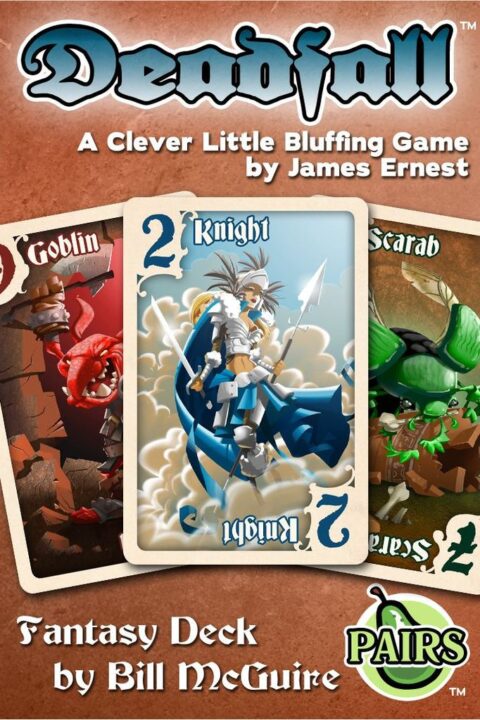
This review looks at Deadfall, a sharp little card game where bluffing, hidden clues, and nervous table talk matter more than lucky draws. It teaches quickly, but each round still gives your brain a small knot to untangle. I’ll cover how well its deduction works, how much pressure players can put on each other, and whether it keeps its spark after the first few games.
How It Plays
Deadfall is a quick bluffing game where you track cards, make claims, and try not to get caught telling porkies.
Setting up
Shuffle the cards and deal them to the players. Keep your cards face down, then arrange them so everyone can see how many cards each player holds. The game starts with the player holding the starting card.
Gameplay
On your turn, name a card rank and make a claim about how many cards of that rank remain in play. Other players can accept the claim or challenge it. Reveal the cards involved to check who was right. A correct challenge punishes the player who made the false claim, while a failed challenge hurts the challenger. Keep watching the table, because every reveal gives you another clue.
Winning the game
Players lose cards as the game goes on. The last player with cards remaining takes the loss, while everyone else escapes with their dignity mostly intact. Play several rounds if you want a final score.
Want to know more? Read our extensive strategy guide for Deadfall.
Deadfall Bluffing and Deduction: Reading the Table
The Bluff Starts Early
In Deadfall, every player holds a small hand of cards, but nobody gets the full story. That gap turns each move into a tiny courtroom drama. You study a rival’s face, listen for a shaky claim, then decide whether to call their bluff. The best plays came from noticing patterns, not from guessing wildly.
A player who pushes too hard can look suspicious, yet a quiet player may hide the strongest trap. This makes deduction feel earned. You gather clues from card choices, timing, and the way someone reacts after a challenge. When I called Sarah’s claim, she smiled so calmly that I backed down. Bad move. She had been bluffing, and her smug victory still visits my dreams.
Reading People, Not Just Cards
Deduction works best when players build a shared sense of what seems possible. You cannot simply count cards and solve the puzzle like a math test. Deadfall rewards social reads. Watch who challenges quickly, who waits, and who changes their story. A confident lie can scare off a real challenge, while a weak claim may bait someone into a costly mistake. I love that tension, because the table keeps talking even when nobody speaks. Still, the game can punish timid players. If everyone refuses to risk a call, the round loses some spark. New players also need a few turns before they spot useful tells.
Next, we will inspect Hidden card information, where secret cards turn every confident guess into a delicious headache at the table.
Hidden Card Information in Deadfall
Deadfall gives each player a small hand of cards, but the table never gets a full view of what everyone holds. That missing information shapes every choice. You know your own cards, while the rest stay behind raised eyebrows, careful pauses, and the odd player who suddenly becomes very interested in their drink.
The clever part is that card information arrives in scraps. A revealed card may confirm one guess, but it can also make another player’s story look suspicious. Since you cannot check every claim, you must track what has appeared, what has vanished, and what people avoid saying. I found this more satisfying than simple card counting because the clues came from the whole table, not just the discard pile.
Deadfall also keeps hidden information useful without making it feel like homework. I could hold a card that changed the odds, yet I never needed a notebook or a wall covered in red string. Still, the system has a small snag: new players may forget which facts matter, especially when several cards leave play quickly.
Information feels earned, not handed out
That balance made Deadfall work well. One friend loves records; another treats rules like polite suggestions. The hidden cards gave careful players clues, while casual players could make a move by noticing timing and card flow. Nobody sat waiting for luck to rescue them, which kept the game fair.
Next, the cards stop hiding quietly, as Player tension and interaction turn every pause into a tiny thunderstorm.
Deadfall Player Tension and Interaction
Every Turn Feels Personal
Deadfall creates a funny kind of pressure because every player sits close to the action and waits for someone else to blink. It is not loud or flashy, but the table slowly tightens as turns pass and choices leave less room for comfort.
The best moments came when a player had to act after a bold move from the person beside them. That pause lasted only a few seconds, yet it felt like somebody had dropped a spoon in church. Then came the groans, laughs, and comments that meant, “I will remember that.”
Deadfall also makes seating order matter. You watch who acts quickly, who takes their time, and who suddenly becomes interested in the ceiling. These small habits give the group something to talk about without turning the game into a noisy debate. We even started naming pauses after one friend used the same “thinking face” three times.
The interaction feels fair because players control their choices, while everyone else reacts and adjusts. A strong move can change the mood, but nobody feels robbed by a random event.
Still, quieter groups may miss some of the spark unless players speak up and show a little nerve. The next section looks at Deadfall’s replay value and learning curve, including how quickly new players find their feet.
Deadfall Replay Value and Learning Curve: How Long Does It Stay Fresh?
Easy Rules, Sneaky Mastery
Deadfall looks small enough to fit beside a sandwich, yet it asks your brain to keep working long after the first round. The rulebook does not bury you under a mountain of tiny exceptions, which felt like a gift after some recent cardboard law exams.
The First Games Teach You
Your first game can feel a little slow, mostly because players need time to see which choices matter and which choices merely look clever. That is a fair learning curve, though. Each round gives you a clearer picture of timing, card value, and when to stop chasing a plan that has gone wobbly.
After two plays, our quietest player started spotting patterns in the scoring and suddenly spoke with the confidence of a tiny courtroom attorney. The game rewards practice without making newcomers feel doomed. New players can still win, especially when experienced players explain their thinking instead of guarding every lesson like a dragon with a rulebook.
Freshness Comes From the Group
Replay value depends less on a giant pile of content and more on the people around your table. Deadfall does not flood you with scenarios, boards, or shiny expansion bits. Instead, it offers a compact puzzle that feels different as players improve. That makes Deadfall a better regular filler than a weekly main event.
I recommend Deadfall for groups that enjoy learning games through repeat plays.
Conclusion
This concludes my review of Deadfall. The rules stay simple, but reading players takes practice. Luck can still nudge a round, yet clever guesses and careful tracking usually matter more. Deadfall also gives you enough replay value to keep pulling it off the shelf, especially when your group enjoys groans, suspicious looks, and wildly confident nonsense. Its main limit comes from the small card set and its need for players who enjoy bluffing. If your table likes quick games with real player control, Deadfall earns a strong recommendation. Just prepare for one friend to claim they “knew it all along” after guessing by pure panic.