
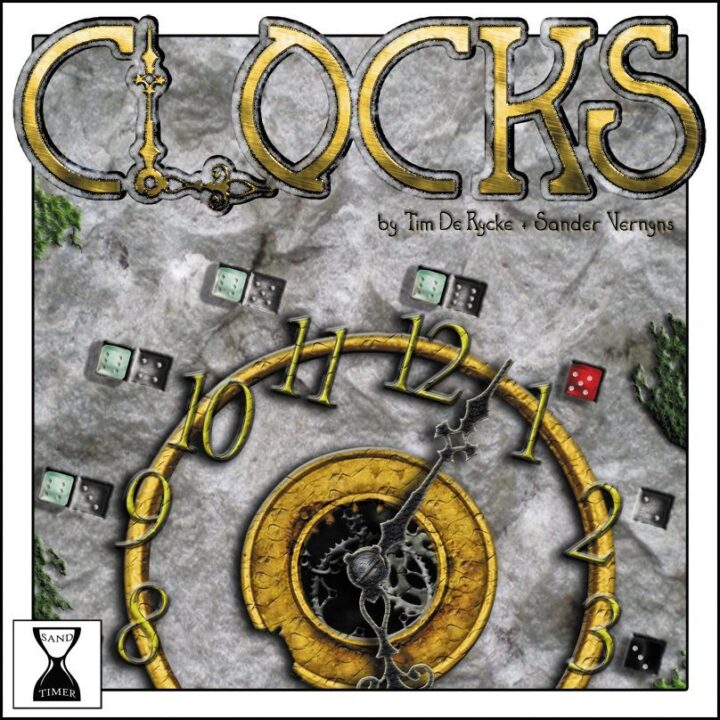
Welcome to my review of Clocks! As always, I weigh all the good, bad, and occasionally lucky parts so you know if this is worth adding to your shelf or just a fancy way to lose track of time. Grab a cuppa and let’s see if Clocks is a time well spent!
How It Plays
Setting up
First, dump everything out of the box, then try to wrangle the clock faces before your dog mistakes them for snacks. Deal out the player boards, give each person their colored gears (no, you can’t trade for your favorite color), and set up the main board in the center. Shuffle the cards and hope nobody palms an extra one.
Gameplay
On your turn, pick a card and choose an action—usually spinning a gear, messing with someone else’s clock, or taking what I call ‘revenge moves’. Plan your next step, but don’t get too comfy, since your pals will throw chaos your way. The game moves at a good pace (unless Uncle Steve starts overthinking every turn… again).
Winning the game
The goal is to set your clocks to all show the right hour before anyone else does. If you do, you win and get bragging rights, at least until the rematch. Just don’t let it go to your head, or someone will target you next game. Trust me—I learned that the hard way.
Want to know more? Read our extensive strategy guide for Clocks.
How Clocks Ticks Along: Gameplay Flow and Player Interaction
If you ever wondered what it would feel like to be a slightly stressed-out watchmaker, well, Clocks gets you there in about three turns flat. The game has a funky rhythm. Each round, players set their gears—literally—trying to hit the magic number 12, but nobody ever arrives at twelve in peace. Your friends (or enemies, depending on the current lead) watch your every move, plotting out their gears to either sabotage your perfect clock or sneak in a cheeky victory themselves.
Gameplay in Clocks runs pretty smooth. On your turn, you pick and place gears from a shared pool, and everyone is laser-focused on what you take. You’d be amazed at how heated a simple choice of a blue gear can make a group of adults. I once spent five minutes arguing with my buddy Phil about “optimal gear math”—and, let me tell you, there’s no faster way to make someone regret inviting you over for game night than by blocking his perfect gear combo two turns in a row.
The best part? There are moments when you can scheme to mess with your opponents, but it never feels totally mean. You aren’t flipping their board or anything—you’re just quietly making sure their clock is forever stuck at 11:59. This keeps everyone chatting, teasing, and sometimes plotting complex revenge. Player interaction is strong, and you’re never just moving pieces by yourself in a lonely bubble.
All these gears and grins lead us right to the hot question: how much of Clocks is luck, and how much is pure, brilliant strategy? Tick-tock, I’m about to spill the beans on that next!
Luck vs Strategy: Who’s Really Turning the Gears in Clocks?
If you’re like me, nothing gets the eyebrows twitching faster than a game that promises smooth strategy but serves up a big ol’ bowl of random luck. So, let’s set the timer on Clocks and see which hand—luck or strategy—has a heavier grip on the gears.
First, the good news: Clocks gives players a toolbox of tactical choices. Each round, you need to plan your moves, manage your coins, and time your actions just right. You can even mess with your friend’s progress by yanking gears from under their noses (it’s all fun and games until someone blocks your twelve o’clock dream for the third straight round!). This sense of control makes for some high-quality drama at the table and lots of gnashing of teeth (not literally—I promise, my teeth are fine).
But don’t get cocky! Clocks has a few tricks up its sleeve. Random events and a couple of unpredictable draw mechanics can throw a bit of chaos into your best laid plans. Once, I thought I’d clinched victory, then the random gear swap turned my glorious clock into a pile of scrap. Cue the slow clap for Lady Luck. So, while Clocks rewards clever play, you still need a lucky break or two, especially in the final rounds.
If you love pure strategy, this blend might sting (like when you lose because Uncle Jim drew the perfect part by pure chance). Still, most games remain close, and clever players usually stay in the running. Next, let’s see if the game’s tick-tocking parts look as good as they play, because nobody wants to build an ugly clock.
Component Quality and Visual Appeal in Clocks
Listen, if you’ve ever felt like flipping a table because of cardboard tokens that stick together, you’ll love what Clocks brings to the table (literally). The first thing you’ll notice when you open the box is how sturdy everything feels. The main board is thick and sits flat. No curling edges here. The gears themselves have a weight that makes you feel like you’re fixing up a real clock, not just moving flimsy plastic pieces around. My friend Greg actually tried to use one as a coaster. Don’t be Greg.
Each player gets a set of colorful wooden hands, which are not only satisfying to hold, but also make the board look lively as the game ticks on (see what I did there?). Some of the smaller tokens are a bit slippery, so don’t sneeze directly onto the table unless you want the gears of fate to spin in your favor or…not.
Now onto the artwork. Clocks nails the steampunk vibe without getting too busy or over-the-top. The colors pop but don’t give you a headache. Every dial and symbol is clear; even my colorblind friend Jamie (yes, also Jamie—awkward at game nights) had no trouble telling things apart. The iconography actually helps the game flow faster, which is a big plus for me. No one wants to spend half the evening checking the rulebook.
I even caught my cat staring at the shiny cogs, so you know it’s got mass appeal. Next up, I’ll break down whether Clocks keeps ticking with different groups, or if it stops cold after a few rounds…
How Clocks Keeps Ticking: Replay Value With Different Groups
If you want a game to last longer than my New Year’s resolutions, replay value matters. I’ve shuffled Clocks across game nights with just about every crowd—friends who calculate their every move, casual gamers who just want to chat and snack, and even my Aunt Lois, who still thinks a board game is just fancy Bingo. Each group turned the gears (pun absolutely intended) in its own unique way.
For strategy lovers, Clocks shines thanks to its variable setup and the sneaky competition over key gears. But, hand it to newer players or folks more interested in the snacks than the strategy, and the game still works! The rules don’t scare off newbies, and the pacing keeps everyone in the action without bogging things down. I’ve seen less experienced groups focus more on the fun of collecting pieces and trying to beat their personal bests, while competitive folks will get a kick out of outsmarting their rivals.
If your group leans heavy into analysis paralysis, Clocks might slow down—especially with six players. My cousin once spent longer planning her first move than it took to bake the cookies. But the rounds stay short, so nobody’s stuck waiting forever. The different strategies and sneaky player interaction bring out fresh moments each play, giving this game serious staying power on the shelf.
Would I recommend Clocks? Absolutely! It’s the kind of game you dust off for any crowd, and it keeps on ticking, pun and all.
Conclusion
So, that’s the tick and tock of it! After many games of Clocks with my gang (and my dog, who mostly just chases the dice), I can say this: Clocks is a solid, fun game that’s easy to learn and keeps everyone guessing. The strategy keeps things spicy, the luck keeps things tense, and the nice components make you feel classy even when you’re losing horribly. It’s not perfect—the luck might make purists twitchy—but for most groups, this one will keep coming off the shelf. If you like games where you can outwit your friends (or blame bad rolls), Clocks will keep you grinning. Review over! Now, where’d that minute hand go?