
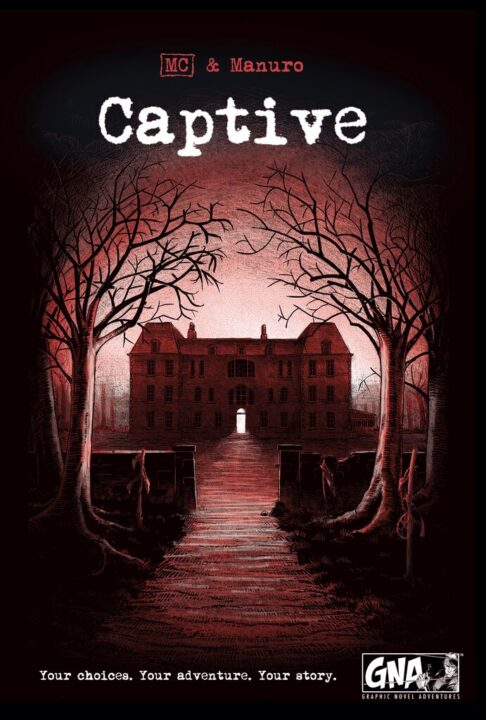
If you ever wondered what it’s like to be the hero in your own gritty movie, Captive might be your ticket to stardom—or at least a wild, page-flipping adventure. Will you escape with your sanity, or will luck leave you stranded somewhere between two chapters? Let’s find out!
How It Plays
Setting up
Grab your copy of Captive and a pencil. That’s it—no fiddly bits, no endless cardboard tokens, just you and the book. Settle in somewhere comfy because you’ll be flipping pages faster than a rabbit at a carrot sale.
Gameplay
You start as a desperate parent, thrown into a nerve-wracking rescue mission. Read the introduction, then make choices that send you to different numbered paragraphs. Every decision counts. If you see a number with a box, write it down—you might use it later! Puzzles and danger pop up, so keep your wits about you and your eraser close. If you make a wrong turn (and you will), it’s all part of the fun.
Winning the game
To win, you need to save your daughter and escape in one piece. Some endings are happier than others, so your choices really matter. Live, rescue, and keep your health up—get this right, and you’ll feel like a hero. If not, you’ll get creative with new schemes on your next attempt. Just get ready to brag or groan with your friends about your dramatic demise or daring rescue.
Want to know more? Read our extensive strategy guide for Captive.
Gripping Storytelling and Soggy Palms: Immersion in Captive
Let’s talk theme and story, because Captive sweeps you right into a whirlwind of drama faster than my cousin Angie can lock her keys in her car (which is, trust me, fast). There are a lot of board games out there that slap on a story like it’s cheap paint—nice to look at from a distance, but starts to flake after round one. Captive, though, built its whole house out of that story and then chained me to the wall for good measure.
In this game, you actually feel desperate. The plot isn’t just some words on a card—it’s the whole engine. We even started narrating our moves in bad movie voices, which I’m pretty sure increased our survival rate by at least 0%. My friend Hannah got so into character she actually started sweating—real sweat, not the polite glisten you get from Monopoly stress. Someone even shouted, “I told you not to trust him!” right before opening a trap. The drama! The pizza sauce everywhere!
What really sells Captive’s immersion is how every choice feels important. There’s a real, heart-thumping risk around every corner—do you have enough time, did you gather the right items, is that shadow in the corner actually helpful or just another way to lose hope? It’s like starring in your own thriller, but without the risk of getting ketchup on your shirt or actually being kidnapped. Even though I knew it was a game, my nerves didn’t.
Now, you might be wondering how those tense moments and tricky choices actually work—don’t worry, the next section is all about Gameplay Mechanics and Puzzles. Brace yourself, because things get even wilder!
Gameplay Mechanics and Puzzles in Captive: Are You Smarter Than a Locked Door?
Let’s talk nuts, bolts, and brainpower: the gameplay in Captive! Captive works like a choose-your-own-adventure on adrenaline. Instead of leisurely flicking through pages, you furiously flick through numbered story panels, each leading to new rooms, clues, and (if you play like Carl) plenty of dead ends.
The main star here is the puzzle design. These aren’t your basic “find the key under the rock” jobs. Captive throws at you code-cracking, logic grillings, and riddles that had us arguing if ‘left’ was really left or just a mean trick by the designer. Solving these puzzles actually feels rewarding—when you get it right. If you get it wrong, get ready to face the wrath of consequences. My buddy Mark got our hero stuck in a ventilation shaft for like ten minutes—the table lost it.
One thing I really respect about Captive: the puzzles feel fair. There’s no rolling dice and hoping the game likes you. If you mess up, it’s because your brain let you down, not a lucky coin flip (sorry, Mark). The hint system is there if you get really stuck, which we pretended not to use but, let’s be honest, we did. It’s challenging, but in that “I need to try once more” kind of way.
Next up, I’m going to spill the beans about replayability and just how much your choices really matter. Get ready for some honest confessions!
How Replayable is Captive? Decoding Choices and Consequences
Let’s face it, one of the first things my wallet wants to know before buying any board game is: will this box just gather dust after the first play? Captive tries hard to make sure it doesn’t turn into your shelf’s most expensive bookmark. This isn’t the type of game where you know all the answers after one go. Nope. Captive sets up a maze of choices, with plenty of chances to get it hilariously (and sometimes tragically) wrong. Trust me, during our second playthrough, my friend Alan tried to be clever and, well, let’s just say the ending didn’t involve a heroic rescue. Or pants.
Each decision you make in Captive matters. The story branches off, so your next run can end up completely different. You could try to punch a villain that you tried to sneak past last time, or maybe you’ll finally crack that code you flubbed before. It’s a bit like being in one of those choose-your-own-adventure books, but with fewer dog-eared pages and more gloating rights if you succeed. Sure, after a couple of playthroughs, some scenes start to feel familiar. But there are still hidden nuggets and new paths to stumble into. You won’t see every secret reveal on your first try (unless you have the world’s most annoying luck), which made us want to keep picking it up again.
If you’re the type who loves squeezing every twist out of a story and seeing just how wrong things can go, Captive delivers. Just wait until you see what I have to say about the look of this game—next up: Component Quality and Artwork. Spoiler: it’s a feast for the eyes!
Component Quality and Artwork in Captive: Is It Worth the Ransom?
Let’s talk about what you actually get in the box when you crack open Captive. No fancy gold coins or plastic pirates here, but that’s not the point! Captive comes in a sturdy book format, with thick, glossy pages. I spilled lemonade on mine (don’t judge), and it mostly survived. So, durability? Check.
The artwork is moody and dramatic, like a film noir with less Humphrey Bogart and more, well, kidnappers. The black-and-white illustrations really set the tone. It’s not just decoration either – some clues actually hide in the images, so squinting is encouraged. That said, if you’re colorblind or have trouble with small details, some bits might be a pain to spot. Good excuse for buying a magnifying glass, though.
The print quality holds up well, even after repeat page-flipping and frantic finger-pointing. The binding is strong. And yes, the font is readable – no need to bust out grandma’s reading glasses unless you want extra style points.
Captive doesn’t come with lots of pieces or tokens, so if you love fiddling with meeples, this might leave your hands empty. Still, if you want a tactile adventure with sharp visuals, this one’s a treat.
Overall, I recommend Captive for fans of graphic adventure books or anyone who wants a tense story with solid production. Just, maybe keep your drinks at a safe distance.
Conclusion
Well, that’s a wrap on my Captive review! After getting hopelessly lost several times (thanks, confusing doors), I can say this story-driven puzzle game is a wild ride. The booklet format keeps things simple, while the tension and atmosphere really draw you in. The art and sturdy book make it feel worth the price. Choices matter and boost replay value, though you might see some repeating scenes if you play again. Is it perfect? Not quite—some puzzles made me want to pull my hair out and scream for a hint fairy. But if you like choose-your-own-adventure stories or want a tense solo experience, Captive is a solid pick. Just keep snacks away from the pages!