
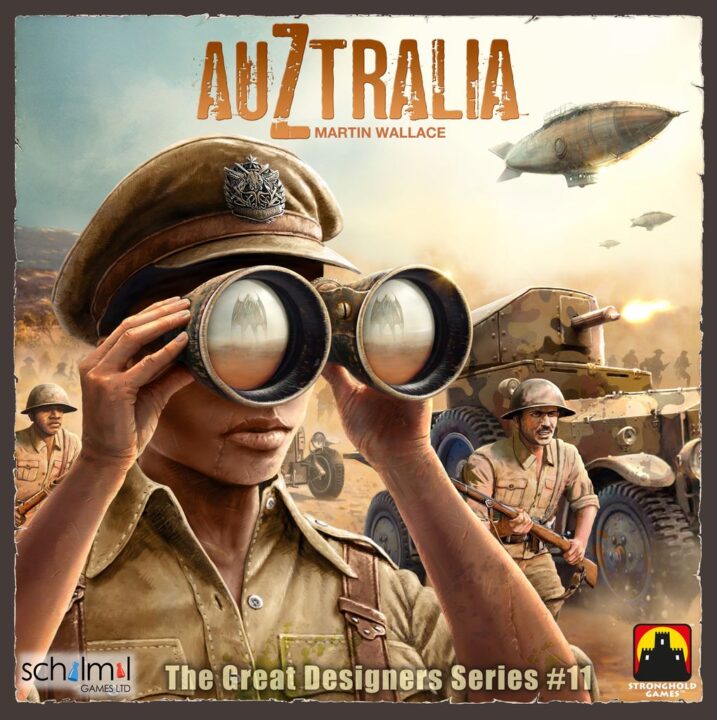
This review looks at a tense adventure of map-making, farming, trade, and monster hunting. You and your friends build a new life, gather scarce supplies, and hope the ancient nasties stay asleep for five minutes.
How It Plays
Setting up
In AuZtralia, players place their towns, farms, mines, ports, and railway lines on the map. Each player gets a small team of characters, while face-down Old One tokens wait across the wild land. The game also uses a time track, so everyone knows the monsters will not stay asleep forever.
Gameplay
Players take turns spending time to explore, build, gather resources, recruit helpers, and move their forces. Exploration reveals new land and may wake an Old One, which can attack nearby settlements. Players must share the map without getting in each other’s way, then work together when a large beast stomps into town. Dice decide combat, but good weapons and smart planning improve your odds.
Winning the game
When the time track reaches the end, the game finishes. Players score points from their farms, buildings, resources, and defeated Old Ones. The player with the most points wins, but the group must also survive the threat. If the Old Ones cause too much damage, everyone can lose. Nothing says “team spirit” like checking whether your mate’s farm is still on fire.
Want to know more? Read our extensive strategy guide for AuZtralia.
Cooperative Exploration and Resource Management in auztralia
Planning without a crystal ball
Every move asks for food, fuel, weapons, or workers, while the map keeps tossing rude surprises at us. We had one player mark a rail route, another hunt for oil, and a third watch the clock. This teamwork felt useful, not forced. We argued over each wagon like a tiny council with poor chairs.
Reading the land
The best part of exploration comes from choosing what to ignore. A distant town may offer coal, iron, or a handy railway, but reaching it can drain the supplies needed elsewhere. We often sent one train too far, then watched it crawl home while our food pile shrank. That sting makes every new discovery matter. Found land feels great; paying for it feels less great.
Keep the engines fed
Resource management sounds dry, yet auztralia makes it tense. Coal powers trains, iron supports better tools, and workers turn empty spots into useful outposts. Every choice creates a small hole somewhere else. We learned to build only what we could feed. One flashy upgrade looked brilliant, until it ate our last coal and left the team stuck beside a very ugly patch of desert. Good planning saved us more often than brave guesses. Still, the supply system can feel tight when the board rolls out several poor draws in a row. That luck never ruined our game, but it did make one session feel like a tax audit with monsters.
Why it works
The shared puzzle kept everyone involved, and teamwork always mattered. Next comes combat against mysterious ancient threats, where our plans meet teeth.
AuZtralia Combat: Fighting Ancient Threats
Pick Your Battles
In auztralia, combat feels like a bad dream with a timetable. The old Ones wake across the map, and each one brings a nasty mix of strength, range, and special rules. I have watched friends grin at a new monster, then turn pale when its marker starts marching toward a hard-won town. That small clock makes every battle matter.
You do not simply roll dice and hope for the best. Players choose a fight by moving soldiers, tanks, and artillery into range. Each unit has a job. Infantry can hold ground, while guns punch through tough hides, and scouts help reveal targets. Building a mixed force feels smart, not lucky. Yet combat still has dice, so a brave plan can end with one ugly whiff. I once sent a mighty tank against a beast, only to watch every shot miss. My mates laughed. I did not.
The best part comes after the fight. Winning costs time and supplies, while wounds linger and units cannot magically return to full health. A victory may open a route, but it can also leave your rail network naked. The ancient threats keep pushing, so players must judge whether to chase glory or protect the colony. This gives combat a sharp story arc: you start as hunters, become wardens, and sometimes act like cowards. Luck, balance, and player decisions now take the spotlight, where each gamble asks if your clever plan can survive the dice.
AuZtralia Luck and Balance: Do Your Choices Matter?
AuZtralia uses luck like a mischievous cat: it waits, then knocks your best plan off the table. The event deck can shift threats or hand you a gift after you needed it. I watched one perfect plan become expensive soup after a nasty draw. Funny once; less funny by game four.
Luck Gives, Luck Takes
Dice can swing a fight, but luck rarely decides everything alone. You choose where to build, which route to protect, and when to spend actions. A poor roll hurts most after a greedy choice, which feels fair.
Smart Choices Still Matter
The best decisions often involve accepting an ugly option. Do you take a smaller gain now, or gamble on more later? Do you spread your effort, or focus before the clock gets rude? These choices create tension without making players feel helpless. Still, the early game can punish newcomers who misread the threat level. The rulebook does not explain every danger clearly, so a first play may feel rough. After that, choices become sharper.
A Fair, If Fussy, Balance
I would not call AuZtralia perfectly balanced. Some starts offer kinder options, while others make you work for every scrap. Yet the game gives enough control to make losses feel earned. Luck adds drama, not a free pass for bad planning. That matters to me. Next comes Solo play and replay value, where the lonely test will see if this balance still holds true.
AuZtralia Solo Play and Replay Value Review
A Good Fit for One Player
auztralia works surprisingly well as a solo game, though it asks you to manage more than one side of the table. The solo rules keep the main flow intact, so you do not need to learn a whole new game.
Replay Comes from the Setup
The biggest solo challenge comes from running the human side with care rather than from any missing rules. For me, the extra bookkeeping felt manageable after one practice game, but newer players may find the first turn a little fiddly. I recommend using player aids and keeping tokens in tidy groups. Otherwise, clever choices can get buried under small reminders.
Replay value arrives through the changing setup and the different paths you choose. Each session can push you toward a new plan because the board layout and starting conditions shift. That change keeps the opening from feeling like a dull routine. I faced problems that never appeared in our shared sessions, which made the game feel fresh rather than like a stripped-down practice run.
Still, the replay value does not come from a giant campaign with dozens of chapters. AuZtralia offers variety, but it does not deliver endless surprise. If you play it every week, the rhythm may show up. Solo players may miss table talk and silly arguments that make a game night memorable. I missed those laughs, but I recommend it for solo players who enjoy thoughtful sessions.
Conclusion
This concludes my review of AuZtralia. The luck can sting, but smart choices usually give you a way to fight back. Solo play works well, too, and each game feels fresh thanks to the changing map and threats. The rules take a little work to learn, and the game can run long, but the tense decisions make the time worthwhile. AuZtralia earns a solid 4 out of 5 stars from me. Just bring snacks, patience, and a plan for when the ancient horrors come knocking.