
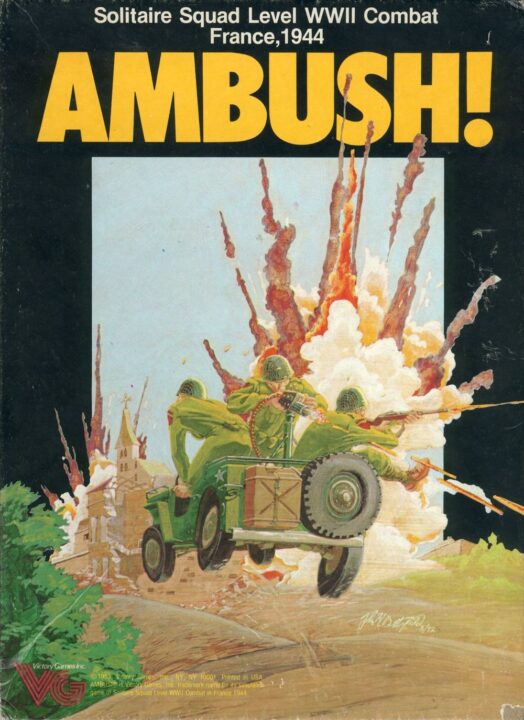
This review looks at Ambush!, a solo war game packed with tense choices, story-driven missions, and enough hidden information to make every bush look guilty. Luck adds danger, but smart planning usually keeps the wheels on. The game does ask for patience, paperwork, and a taste for old-school rules, so it will not suit everyone. Still, if you like personal stories, careful moves, and the odd “wait, that was there?” moment, this deserves a look.
How It Plays
Setting up
Set out the map, counters, cards, dice, and paragraph book. Choose a mission, place your American squad as shown, then keep enemy units hidden until the rules or story reveal them.
Gameplay
You control the squad one soldier at a time. Move through the map, search areas, follow paragraph instructions, and fight enemies with weapons, movement, and careful use of cover. The paragraph book creates new events as you explore, so the game can surprise you. Keep track of wounds, ammo, and mission notes, because paperwork joins the squad too.
Winning the game
Complete the mission’s objectives and get your soldiers to any required escape point. You can often ignore some enemies rather than shoot everything that moves, which is handy when your squad has more courage than bullets. The mission may also judge your success by casualties, time, or items recovered.
Want to know more? Read our extensive strategy guide for Ambush!.
Tactical Combat and Decision-Making in ambush!
ambush! makes every firefight feel like a test of nerve, timing, and whether your mate has quietly stolen the best position. You control a small patrol, choose movement and attacks, then hope your plan survives contact with hidden enemies. That last part matters. The game rewards careful choices before the shooting starts, rather than wild charges across the map.
Small Choices, Big Trouble
Each move creates a fresh problem. Do you push forward and risk walking into a trap, or stay put and lose precious time? Do you spend ammunition now, or save it for the nasty surprise waiting in the next card? I often picked the bold option, which sounds heroic until three enemy counters appeared beside my squad.
The best decisions come from limited information. You rarely know exactly what waits ahead, so you must read the terrain, watch the mission clues, and judge the odds. The game uses luck, but your choices still shape the result. Smart positioning can reduce danger, while careless movement can turn a strong squad into a group of very stressed targets.
Combat also asks you to protect your team, not just chase objectives. A wounded soldier can weaken later actions, so reckless attacks may win one moment and ruin the next mission. The system sometimes feels harsh, and a bad run of luck can sting, but it rarely feels fully unfair. I wanted clearer help for new players, since the first few turns left us checking rules more than checking our flanks. Next comes Paragraph-driven storytelling and immersion, where the battlefield starts telling its own wonderfully scruffy war story.
Ambush! Review: Paragraph-Driven Storytelling and Immersion
A War Story Told One Passage at a Time
Ambush! does not hand you a neat novel and ask you to nod along. Instead, its paragraphs present short scenes, choices, and sudden changes that build a rough wartime story. You read a passage, decide what your squad does, then turn to the matching entry. That simple act feels like opening a field report with a tiny, slightly evil narrator hiding behind the page.
The table grew quiet when a paragraph described a patrol finding signs of trouble. Then somebody read the wrong result and our brave plan went sideways. We laughed, groaned, and blamed the book, even though one of us had clearly ignored a warning. That mix of dread and daft mistakes made the mission feel personal.
Small Details, Big Atmosphere
The storytelling works because Ambush! gives each paragraph a job. Some entries set the scene with muddy roads, tired men, and cold rain. Others deliver orders, reports, or small human moments. A soldier worries about home. A leader guesses wrong. A quiet line can make a later choice sting. These details never turn into long speeches, so the pace stays brisk.
Still, the system asks you to track entries carefully. One missed number can send the story down a different road. The printing also shows its age, with plain pages and tiny text. A lamp fixes trouble. The next section covers Solo play and replay value.
Ambush! Solo Play and Replay Value Review
Ambush! gives solo players table trouble: you command a squad, then spend the evening arguing with cardboard. The system handles one player well because the game asks you to manage the force. You do not need a second person to keep turns moving or make enemy actions feel lively. The rules push events through numbered paragraphs, so the board keeps changing while you make decisions. That makes solo sessions feel active, not like a dry puzzle.
One Player, Many Headaches
The best solo feature is the campaign structure. Each mission leaves marks on your squad, supplies, and confidence. A bad result can change what you face later, while a strong run can open better options. My soldiers felt like a team. I remembered who got knocked down, who found useful gear, and who survived every stupid mistake I made. That memory gives repeat games a reason to exist. You are not chasing a score; you are trying to see how your unit changes.
How Much Replay Do You Get?
Replay value comes from the mission book, hidden details, and choices between outings. You can replay a scenario with a new plan, but the game does not create endless content. Once you learn its surprises, some mystery fades. The campaign asks you to track notes. I enjoy that, though my handwriting looks like a spider fell into ink. New players may find the paperwork fussy. Still, each campaign gains its own shape, and failure rarely feels wasted. I replayed missions and found enough change to keep them interesting. Solo players who enjoy records and linked scenarios get the most value. Casual players wanting quick variety may tire sooner. Next, Luck, balance, and hidden information will decide whether Ambush! feels fair or leaves me blaming the dice like a maniac.
Luck, Balance, and Hidden Information in Ambush!
Enough fog, not too much smoke
Ambush! uses hidden information to make every move feel risky. You do not know where trouble waits, what an enemy plans, or whether a quiet road hides a very rude surprise. That tension works because the game gives you clues, not just coin flips. I have watched our squad stop at a crossroads, argue for five minutes, then pick the wrong path with great confidence. That felt painful, but it also felt earned.
The luck can still bite. A bad roll during a key attack or search may wreck a careful plan, and sometimes the game seems to enjoy kicking a tired soldier. Yet players keep control through positioning, scouting, and cautious choices. Luck creates danger; it does not decide every result. That line matters to me, since I dislike games where a perfect plan dies because cardboard gods woke up grumpy.
Hidden enemy details also create a fair puzzle. You learn patterns from reports and battlefield signs, then weigh what you know against what you fear. The system rewards memory and nerve, though a first game can feel harsh when players miss a small clue. I would like a little more help for newcomers, perhaps a clearer reminder sheet. Still, the balance holds up better than expected. The game keeps surprises sharp without making success feel random.
I recommend Ambush! for players who enjoy risk with room to plan. Its luck stings, but hidden information keeps each mistake meaningful, not cheap. That balance makes it worth buying for me.
Conclusion
That concludes my review of Ambush!. The luck adds drama without stealing every win, though the rules and paperwork can feel like a second job in a tiny helmet. If you enjoy tactical games with hidden information and a strong wartime story, Ambush! earns my recommendation. Just bring patience, a clear table, and maybe a snack for the long battles.