
How To Play: Steam
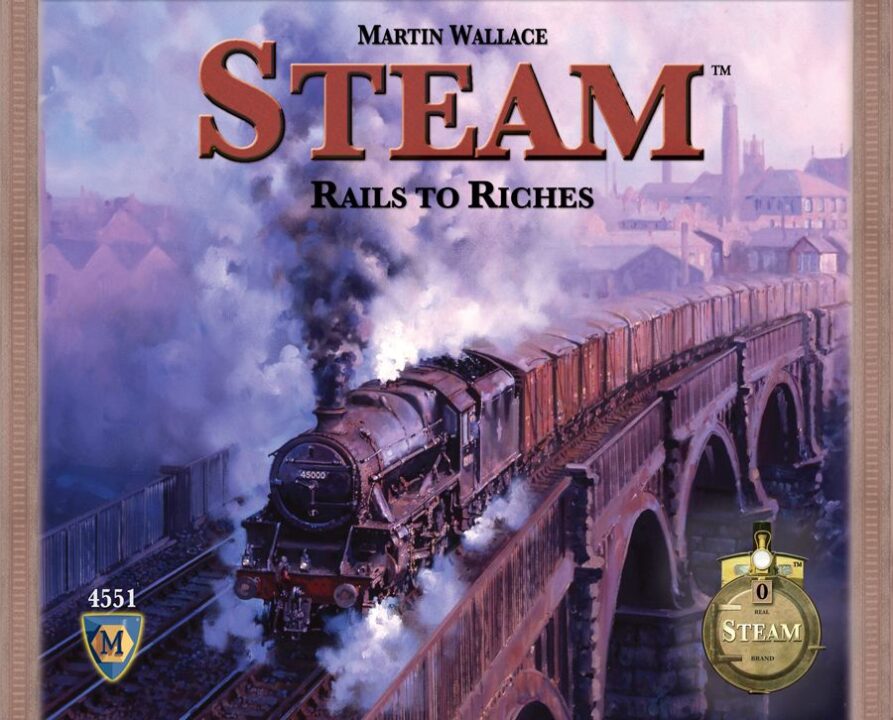
Steam is a tense railway game where players build track, claim routes, deliver goods, and chase victory points. Each turn forces tough choices: spend cash on better links, move cubes for income, or push your luck with debt. Plan ahead, because one blocked route can wreck your whole network.
Overview
Steam turns the map into a noisy little battlefield of rails, trains, and cash. This guide contains an outline of the game rules, from building links to delivering goods, plus the best strategies for winning. Expect smart planning, tight budgets, and just enough friendly table grumbling to keep things lively.
What’s in the box
- 1 game board
- 1 action board
- 6 player boards
- 96 track tiles
- 16 city tiles
- 8 locomotive tiles
- 48 goods cubes
- 36 action discs
- 6 income markers
- 6 victory point markers
- 6 locomotive markers
- 6 ownership markers
- 1 first-player marker
- 1 rulebook
How To Play Steam: Rules Summary
Steam is a railway game about building routes, moving goods, and earning points. Players place track tiles, connect towns, and deliver goods to the right cities. Meanwhile, they manage income, shares, and debt. The player with the most points at the end wins.
Setup: Build the Railway Board
- Choose a map and place it in the middle of the table. Use the map rules to set the starting goods and city markers.
- Give each player a player board, track markers, and a starting train. Each player also takes the starting money shown by the chosen map.
- Place the goods tokens in the cloth bag. Then draw and place the listed goods on the map.
- Shuffle the action discs or action tiles, depending on your edition. Place them where all players can reach them.
- Choose the first player. The map or scenario may set this player, or you can choose randomly.
- Finally, check the map rules. Some maps change starting money, goods, links, or the number of rounds.
Gameplay: Build, Move, and Deliver
- Start each round by choosing player actions. Players select actions such as Build, Urbanization, Locomotive, Production, Engineer, and Initiative.
- Resolve the selected actions in the order shown by the game. Your choices decide who acts first and what your railway can do.
- Build track by paying the printed cost. Place one track tile on an empty hex that matches the map rules. Your track must connect to your network unless the action allows another placement.
- Use Urbanization to add a city tile when the map allows it. A new city can create better delivery options, so place it with care.
- Use Locomotive to improve your train level. A higher level lets goods travel farther, which usually earns more points and income.
- Use Production to draw goods from the bag and place them on the cities shown by the production rules.
- Move goods along connected track routes. Each link counts as one step, and your locomotive level limits the total distance.
- Deliver a good when it reaches a city that wants that color. Score the delivery value, then increase your income or victory points as the rules direct.
- Use Engineer to build extra track during the round. However, you still pay the full building cost.
- Use Initiative to act earlier in later actions. Going first helps, but it can cost valuable money, so do not grab it just because it looks shiny.
- After everyone resolves their actions, collect income and adjust victory points. Then pay expenses, including debt costs, before starting the next round.
- Players may take loans when the rules allow it. Each loan gives money now, but it lowers income and can hurt your final score.
Winning: Score More Than Your Rivals
- Keep track of victory points throughout the game. Deliveries, routes, and some actions can increase your score.
- Watch your income as well. Income pays for future building, while victory points decide the winner. You need both, unless you enjoy building a lovely railway with no cash left to run it.
- When the final round ends, complete all deliveries and scoring steps required by the map.
- Apply the final income and debt rules. Some editions convert income or debt into victory points, so check your rulebook.
- The player with the most victory points wins. If players tie, use the stated tie-breaker, usually income or remaining money.
Special Rules & Conditions: Check the Map
- Follow the selected map first. Maps can change the round count, starting goods, available cities, and building costs.
- Place track only where the terrain and tile rules allow it. Mountains, rivers, and other barriers may raise costs or block a route.
- Keep each delivery connected to a legal railway route. You cannot move goods through a gap just because your train feels optimistic.
- Use each action according to its printed limit. Some actions affect one tile, while others affect several links or cities.
- Resolve player choices in the correct order. Initiative can change who acts first, which may decide a key delivery.
- Pay all costs when you build, upgrade, or use a special action. If you cannot pay, you must choose a legal action that you can afford.
- Check the scenario end condition before play begins. Most games end after a fixed number of rounds, but special maps may use different rules.
- When a map rule conflicts with the basic rules, follow the map rule. Steam enjoys making one small exception that ruins an otherwise perfect plan.
Best Steam Strategies
Build Rails Like You Mean It
Steam rewards players who connect towns with purpose, not players who slap rails everywhere like caffeinated spiders.
First, Study the Map
- Before placing track, study demand and terrain. Choose routes that serve two cities or reach future links. Then secure cheap connections before rivals block them.
Next, Build One Core
- Build one network first. Add branches only when they feed your line. Meanwhile, watch opponents’ colors and claim crossings early. A loop feels nice, but it rarely pays.
Afterward, Upgrade Wisely
- Upgrade routes that carry goods efficiently. Avoid distant links unless their income beats the cost. Finally, keep coins ready. Rivals love punishing players who spend every dollar on one track.
React Before Rivals Do
- In my games, the winner builds fewer rails, yet makes each one matter. Plan ahead, react, and let rivals waste their trains.
Make Every Coin Work Harder Than Your Opponents
Build a Cash Cushion
- Save enough money to cover one bad turn.
- Next, avoid spending just because cash looks tempting.
Borrow With Purpose
- Take debt only when it creates income or a strong scoring chance.
- Then, check the repayment cost before signing anything.
Pay Debt Early
- Clear expensive debt before buying flashy upgrades.
- However, keep cash if another player threatens your plan.
Watch Your Timing
- Spend before prices rise or supplies vanish.
- Finally, save for the last scoring push.
In our games, greedy borrowing often wrecked good plans. Meanwhile, careful players kept options open and won with less drama.
Turn Income into Victory Points Without Going Broke
In Steam, income matters when it becomes victory points. Therefore, balance today’s score with tomorrow’s cash, or engine may stall.
Score at the Right Time
- First, score when rivals cannot copy your move. Convert strong income before the board shifts, especially near the final round.
Protect Future Earnings
- However, protect future earnings. Skip tiny points gain if it weakens your next turn; steady income often wins bigger later.
Watch the Leader
- Meanwhile, read the leader. If you trail, take bold scoring chance. If you lead, choose safe points and block comebacks.
Plan the Finish
- Finally, plan the ending early. Save enough income for final scoring burst, because flashy finish can beat a fuller wallet.
Build Smart, Then Let the Trains Roll
Steam rewards players who plan ahead but stay ready to change tracks. In our games, the winner rarely chased every shiny route. They watched demand, managed cash, and built a network that kept earning. Take loans with a clear plan, place links that serve several towns, and grab points when the chance feels right. Steam gives you plenty to think about, but the best turns still feel simple: build well, earn more, and leave your friends staring at your mighty train network.
Want to know what we think of Steam? Read our detailed review of Steam here