How To Play: King
King is a trick-taking card game where players choose contracts, avoid certain cards, and chase points across several rounds. Deal cards, follow suit when possible, and play carefully as the target changes. Read your rivals, manage risk, and finish with the highest score.

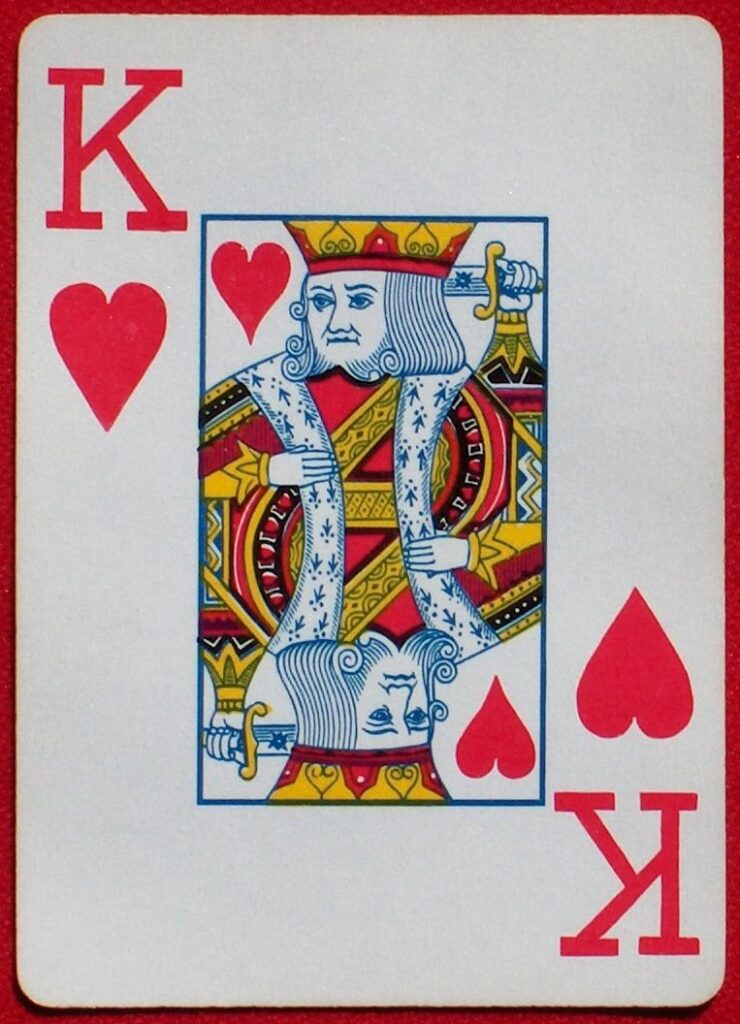
Overview
King looks simple at first, but a few clever choices can turn a quiet hand into a royal mess. I played it with friends, and we quickly learned that timing matters as much as luck. This guide contains an outline of the game rules, plus the best strategies for winning. You’ll learn how to plan your moves, manage risk, and leave your rivals wondering where their crown went.
What’s in the box
- 1 rulebook
- 1 game board
- 4 player pieces
- 1 deck of cards
- 4 player boards
- 1 score pad
- 1 pencil
How To Play King: Rules Summary
King is a four-player trick-taking card game. Players try to avoid bad cards in some rounds and collect good cards in others. First, deal the cards. Next, follow the round rule, win tricks, and track points. Finally, the player with the highest score wins. Grab a deck, three friends, and prepare for some very dramatic groans.
Set Up Your Kingdom
- Use one standard 52-card deck and remove the jokers.
- Choose a dealer. The dealer shuffles and deals all the cards, so each player receives 13 cards.
- Arrange the cards in your hand by suit and rank. The usual order runs from ace, king, queen, jack, then down to 2.
- Play a set number of rounds. Most groups play 10 rounds, with five bad rounds and five good rounds.
- Before starting, agree on the scoring for each round. King has several house-rule versions, so settle this now instead of arguing beside the snack bowl.
Play Each Trick With Care
- The player left of the dealer leads the first trick by playing one card.
- Play continues clockwise. Each player must follow the suit of the first card if possible.
- If you cannot follow suit, play any card, unless the round rule says otherwise.
- The highest card in the suit led wins the trick. King usually has no trump suit.
- The player who wins the trick collects the four cards and leads the next trick.
- Keep playing until all 13 tricks finish. Then score the round before dealing again.
Win Points, Not Just Tricks
- In a bad round, avoid the cards or tricks named by the round rule. You lose points when you collect them.
- Common bad rounds include avoiding all tricks, hearts, queens, the king of hearts, or the final two tricks.
- In a good round, collect the cards or tricks named by the rule. You gain points instead.
- Record every player’s score after each round. Keep the maths clear, because nobody trusts the friend who says, “I think I won.”
- After the final round, add all scores. The player with the highest total wins King.
Special Rules & Conditions
- Follow suit whenever you can. Breaking this rule gives another player a strong reason to become the table referee.
- In a no-hearts round, you may not lead with a heart until a player has discarded a heart or you hold only hearts. This rule is called breaking hearts.
- Some groups stop players from leading a heart on the first trick, even when hearts have already broken. Agree on this before play.
- In a no-king-of-hearts round, the player who wins the trick containing the king of hearts takes the penalty.
- In a no-last-two-tricks round, the players who win tricks 12 and 13 take the penalties.
- If a player breaks a rule, pause the game and return the cards if everyone can identify the mistake. Then replay the trick.
- Use your group’s agreed scoring and round order. King changes a little from one table to another, but the main goal stays the same: manage your cards and suffer fewer disasters than your friends.
Best King Strategies
Choose Cards Like a Crown-Snatching Champion
After games of King with friends, I learned that strong card choices beat flashy ones. First, check your goal, then build a hand that supports it. Also, leave room to change plans when luck gets cheeky.
Read the Goal
- Choose cards that score your current objective.
- Skip pretty cards that do nothing useful.
Watch the Table
- Notice opponents’ likely plans, then take cards they need only when your move gains value.
- Keep flexible cards for later turns.
Value Timing
- Take high-impact cards early if they unlock points.
- Otherwise, wait and watch. Save surprise cards until they swing a close round.
Trust your plan, but never marry a card.
Win the Moment: Managing Risk and Timing
After several games of King with friends, I learned that bold plays win only when timing supports them. In King, patience beats panic at the table.
Watch the Table
- First, note discarded suits and exposed cards. Therefore, avoid risky tricks when opponents still hold control.
Set a Limit
- Next, choose a safe loss before you bid. If costs grow, stop chasing points and protect your score.
Strike at the Right Time
- Then save strong cards until they secure a key trick. However, act before rivals empty weak suits.
Read the Endgame
- Finally, compare scores often. Thus, take calculated risks when you trail, but defend your lead when you sit first.
Catch the Plan Before It Catches You
After several King games with friends, I learned players reveal plans before they speak. Therefore, watch patterns, not promises.
Track Repeated Choices
- Note which suits a player avoids; consequently, they may lack control there.
- Notice confidence; however, it can hide a weak hand.
Read Table Talk
- Listen for jokes or complaints; meanwhile, compare words with actions.
- If someone asks who leads, they might seek clues, so answer vaguely.
Spot Forced Moves
- When a player pauses, expect a tough choice; still, avoid guessing too soon.
- Watch discarded options, because they expose what the player cannot use.
Exploit Your Read
- Adjust your play only after two clues agree; otherwise, one tell can fool you.
- Finally, test your guess with a move, then punish the plan.
Play the Table, Not Just Your Cards
King rewards calm choices, sharp timing, and a good memory for who played what. After a few games with my friends, I learned that the boldest move often looks boring: save a strong card, watch the suits, and let someone else grab the trouble. Don’t panic after one bad hand. Adjust your plan, track your rivals, and make them regret that smug little smile. King can swing fast, but smart play keeps you in the fight. Shuffle up, trust your read, and remember: every king eventually loses a crown.
Want to know what we think of King? Read our detailed review of King here