
How To Play: America
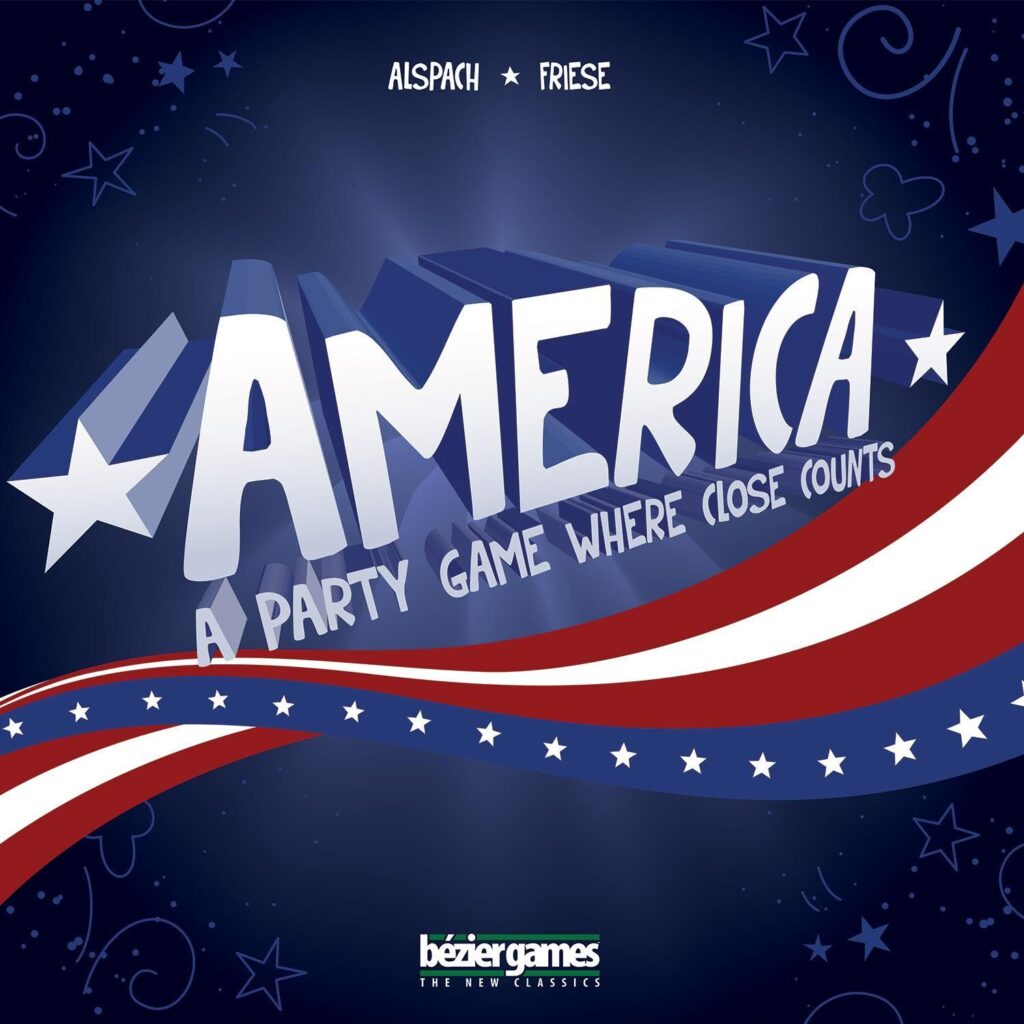
America is a lively trivia game about the United States. Players answer questions by estimating numbers, locations, or dates, then place their guesses on a map or scale. Smart bets and close answers earn points, while wild guesses can send your score south.
Overview
America turns U.S. trivia into a lively guessing game where smart clues matter more than a perfect memory. Players estimate answers, place bets, and try to read the table before someone claims the points. This guide contains an outline of the game rules, from setting up the board to scoring each round. It also shares the best strategies for winning, plus a few tips to stop your friends from bluffing you into last place.
What’s in the box
- 1 game board
- 300 question cards
- 6 player pawns
- 6 answer dials
- 6 scoring markers
- 1 rulebook
How To Play America: Rules Summary
America turns facts about the United States into a guessing game. Players estimate answers, place their guesses, and score points for accuracy. After playing it with friends, I found that confidence helps, but wild guesses usually bite back.
Setup: Get the Table Ready
- First, place the game board in the middle of the table.
- Next, give each player the playing pieces, markers, or betting tokens shown in the rulebook.
- Then, shuffle the question cards and place them face down.
- Choose one player to act as the first reader. That player handles the card but does not answer it first.
- Finally, place the score markers at the starting space. Keep paper nearby if your group wants to track extra points.
Gameplay: Guess, Bet, and Score
- First, the reader draws a card and reads the question aloud.
- Next, every other player studies the question and secretly chooses an answer or estimate.
- Players then place their markers or tokens to show their guesses. Do not change a guess after the reveal.
- After everyone answers, the reader reveals the correct answer on the card.
- Players compare their guesses with the correct answer. The closest answer usually earns the most points.
- Then, players resolve any bets. A smart bet can boost a good guess, while a reckless bet can cost points.
- Move each score marker as soon as the group confirms the result. This keeps the table from turning into a small courtroom.
- Pass the reader role to the next player and continue clockwise.
Winning: Finish With the Most Points
- Keep playing until the group reaches the agreed number of rounds or finishes the chosen card set.
- After the final question, add all earned points and apply any allowed bonuses.
- Next, subtract penalties from missed or losing bets when the rules call for them.
- The player with the highest final score wins America.
- If players tie, use one final question as a tiebreaker. The tied player with the closest answer wins.
Special Rules & Conditions: Handle Odd Moments
- Players must give answers before anyone reveals the correct result. Otherwise, table talk can spoil the fun fast.
- If two players make equally close guesses, award the points according to the card or rulebook. If no tiebreak rule applies, share the points.
- A player cannot move a marker after the reveal unless the group agrees that a mistake happened before scoring.
- When a card asks for a state, city, year, distance, or number, answer in the format the card requests.
- If a player challenges an answer, pause scoring and check the card or the official source. Do not settle history with the loudest voice at the table.
- Use only the special bonuses, penalties, and betting limits included in your edition of America.
- Finally, agree on house rules before the first card. Clear rules prevent a friendly quiz from becoming a very tense meeting of Congress.
Best America Strategies
Win America by Trusting Your Best Guess
Read every clue
-
Then I marked known facts and weak guesses before estimating.
Set clear limits
-
Next, I set a low and high range. That kept one odd number from controlling my answer and stopped panic.
Trust broad patterns
-
Afterward, I compared the clue with places, dates, and events I knew. However, I avoided fake precision and trusted patterns.
Ignore table talk
-
Finally, I wrote my estimate before table talk. Therefore, I trusted my range, chose clearly, and moved on without fuss.
Turn Smart Bets into a Winning Route
In America, every wager can lift your score or leave you limping behind. Therefore, place bets with a plan, not with sweaty hope.
Read the Board First
- Check which regions offer safe answers before risking chips.
- Notice opponents’ likely targets and avoid copying them.
Set a Clear Limit
- Choose a maximum stake for each turn.
- Keep reserves for late scoring pushes.
Use Odds and Clues
- Favor bets backed by several clues.
- Then wait when evidence conflicts.
Adjust After Each Round
- Review your position.
- Shift to smaller bets when you lead.
Finally, protect your edge.
Win the Map Before It Wins You
Regional knowledge turns guesses into smart moves. I learned that after my friend guessed Texas for nearly everything. He was wrong, but impressively loyal.
Learn Local Clues
- First, connect place names, weather, food, and accents to likely regions.
- Use these details to shrink a huge map into one useful corner.
Use Table Talk
- Next, ask teammates which towns, crops, or landmarks they recognize.
- Share clues quickly; however, avoid loud guesses that steer everyone wrong.
Track Regional Patterns
- Then, notice repeated rivers, roads, and building styles.
- Compare each clue with places you already know.
Stay Flexible
- Finally, start with your strongest regional hunch.
- Change it when new evidence appears. In my games, one calm local clue beats five wild guesses, and it wins more often.
Pack Your Bags and Trust Your Gut
America rewards players who mix sharp guesses with a little nerve. Use the clues, watch the odds, and don’t let one loud friend steer the whole table into a swamp. In my games, the best turns came from players who stayed flexible and grabbed points when the chance appeared. You won’t know every answer, and that’s fine. America stays fun because wrong guesses still spark big laughs, loud debates, and the odd dramatic table slap. Keep your head clear, trust your read, and enjoy the ride. Just remember: confidence helps, but facts usually pack better luggage.
Want to know what we think of America? Read our detailed review of America here