
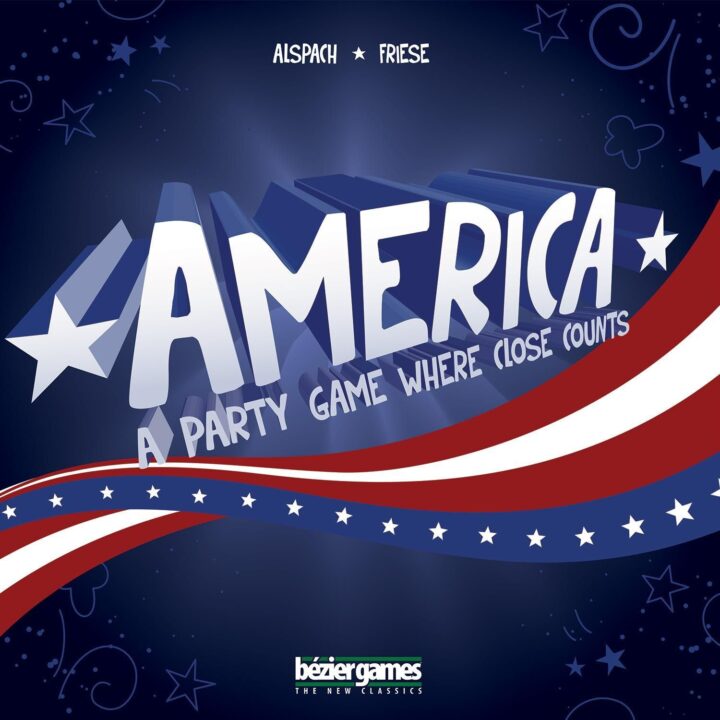
This review looks at America, a lively trivia game that turns friendly get-togethers into loud debates, proud guesses, and the odd answer so wrong it deserves its own state. With broad questions, fun team play, fair scoring, and plenty of replay value, it offers a lot for quiz fans. A few niche facts and strong players can still cause trouble, but most groups will find a smart, social game with plenty of laughs.
How It Plays
Setting up
Split everyone into teams and give each team its answer pieces. Shuffle the question cards, place the board in reach, and pick a player to read the first card. Try not to let the reader peek at the answer. That ruins the fun faster than a bald eagle stealing your hot dog.
Gameplay
Each round, the reader asks a question about America. The teams discuss the answer and place their marker where they think it belongs. Questions cover places, people, history, culture, and odd facts that make you wonder who keeps track of this stuff. Once everyone has answered, reveal the correct answer and check the markers. Teams score for getting close or landing on the right spot, depending on the card.
Winning the game
Keep playing until the agreed number of rounds ends or the question cards run out. Add up each team’s points. The team with the highest score wins and earns the right to correct everyone’s facts for the rest of the evening.
Want to know more? Read our extensive strategy guide for America.
America Board Game Review: Question Variety and Difficulty
America offers a tasty spread of questions, and the mix keeps each round feeling fresh. In our games, we jumped from history and pop culture to food, music, science, and odd facts that made us shout, “Wait, seriously?” The game avoids asking the same sort of question again and again, which matters when your group plays it several times in one night. I enjoyed the small surprises most. A question about a famous place can sit beside one about a strange law or a snack I have never heard of. That range gives strong players room to show off, while casual players still get chances to score.
Easy to Learn, Hard to Master
The rules explain the question cards well, and most answers feel clear once you read them aloud. America does not bury players under tricky wording or needlessly fussy clues. Still, a few questions rely on niche knowledge. I saw one friend stare at a card like it had just confessed to a crime. Those moments can feel rough, but the broad topic spread keeps the sting low.
The game also handles different kinds of knowledge well. Some cards ask for a name, while others ask you to place events, people, or places in the right order. That change stops the quiz from feeling like a memory test with a cowboy hat. We had to reason through several answers, and even wrong guesses sparked a quick chat about the real answer. Those small talks made the cards feel useful,
The difficulty sits in a nice middle spot. Experts cannot sleepwalk through every card, yet newcomers rarely feel shut out. When we missed an answer, the next round often offered a way back into the race.
Where the Question Design Shines
The best cards reward memory, but they also reward smart guessing. You can use clues from the wording, the answer choices, or a player’s hunch. That gives America more shape than a plain trivia quiz. I also liked the way the game mixes serious facts with lighter ones. After a hard question about presidents, a silly question about breakfast can reset the mood.
The main weak spot is the odd dud card. A few prompts feel too narrow, so they may favor one person at the table. That is not a deal breaker, but it can make a round feel less even.
America works best for players who enjoy learning a little while they play. It keeps the pace lively, gives every age group a shot, and rarely turns the quiz into homework. Next, we will look at Team play and discussion, where the loudest answer is not always the best one.
America: Team Play and Discussion
Talk It Out
America’s team mode turns a trivia night into a noisy war room. Each side huddles up, reads the question, and argues over the answer before placing a card. I’ve played it with friends who treat teamwork like a group chat with no replies, yet they started sharing clues. The best moments came when one player knew the subject, while another spotted the sneaky wording. America’s team rules give both voices room.
A Small Catch
Teams can talk, which makes the game feel social rather than stiff. That freedom also creates table drama. One friend insisted that a river ran through the wrong state, then defended his claim with the confidence of a man hiding a bad map. Another player kept quiet until the seconds, then saved our team with a fact. Those talks matter because the answer alone does not win the round; the group must agree.
Still, team play can drag when one person dominates every chat. America gives no special job to a clue expert or a loud guesser, so shy players may fade into the wallpaper. I fixed that by asking each teammate for one thought before we chose. That rule kept the table fair and made weak guesses useful. With people, the noise rises, but the laughs rise too. Next we will look at Scoring and game balance, where America’s points face their test: can smart teamwork beat a lucky guess, and can the scoreboard keep everyone smiling after the last card lands on the table without making one team feel robbed.
Scoring and Game Balance in America
The game rewards answers that land close to the truth, so players can stay in the race even when a wild guess sends them into the weeds. Exact answers feel great, but near misses still earn enough points to keep hope alive. That matters in a trivia game; nobody likes spending an hour as a decorative houseplant.
The balance also depends on how the table handles the cards. A player with strong facts can pull ahead, yet the lead never feels impossible to chase. In one game, my brother grabbed an early pile of points, then missed two big questions and watched us close the gap. He still had a shot at winning, which saved the night from becoming a one-man victory lap.
I do have one small gripe. Some questions offer a narrow range of sensible answers, while others let several guesses sit near the mark. That can make a round feel slightly swingy. Luck affects which facts appear, but it does not control every result. Players still choose how bold their answer feels, and smart risk-taking can pay off.
For me, America works best with four or more players. More guesses create a wider spread, making point gaps feel meaningful without turning them into a cliff. The scoring gives everyone a reason to stay alert until the last card. It keeps the game tense, friendly, and pleasantly free of runaway nonsense. Next comes Replay value and audience appeal.
Replay Value and Audience Appeal in America
A Game That Keeps Its Seat at the Table
America earns its place on my shelf because it feels easy to bring out and hard to wear out. America worked for both groups, which surprised me.
Different Crowds, Different Laughs
The game’s broad appeal comes from its flexible mood. With a lively group, America feels like a quick party where everyone wants to prove a point. With quieter players, it becomes a relaxed evening of odd facts, bold guesses, and the occasional “wait, really?” moment. Nobody needs expert knowledge before sitting down, and newcomers can join without asking for a ten-minute history lesson. That low barrier matters. My friend Dave once arrived late, played half a session, and still asked to join the next round. He also brought crisps, so we welcomed him back.
Replay value comes from the people around the table, not from a huge pile of rules. Each group creates new jokes, rivalries, and strange moments, so America rarely feels exactly the same twice. I noticed this after five plays: one night rewarded careful thinkers, while another turned into glorious nonsense after someone defended an answer with the confidence of a game show host who had forgotten the question. Those fresh stories give the game a long life, even when players remember many of the cards.
Still, America may not suit players who want a deep campaign or a strong solo mode. Its best moments need company, noise, and a little nonsense. For families, casual groups, and repeat hosts, that trade feels fair. I recommend America for anyone seeking a friendly game with table appeal.
Conclusion
This concludes my review of America. Its wide mix of questions keeps each round fresh, while team play helps players who do not know every answer. The scoring stays fair, though a lucky guess or one very tough card can swing a round. That small wobble never ruined our games, but it did cause a few dramatic groans. America works best with a lively group and offers strong replay value. It may not suit players who want deep strategy, but for casual quiz fans, it earns a solid recommendation.