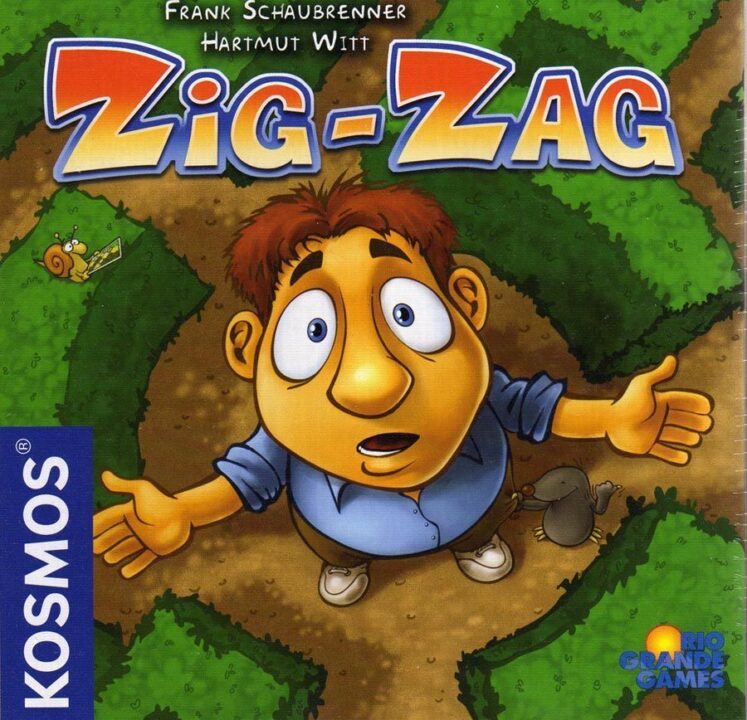

I got my hands on Zig-Zag after a friend insisted it would spice up our game night. So, this review is all about whether that was a blessing or a curse for my living room. Zig-Zag promises strategic plotting, lively table banter, and none of those moments where luck wrecks your shot at winning. I played with a few pals, some crafty, some chaotic, and we put this box of twists through its paces. Let’s see if Zig-Zag is worth squeezing onto your shelf—or if it belongs in the mystery box at your next yard sale.
How It Plays
Setting up
To start Zig-Zag, toss the board on your table (not literally, unless you want chaos) and give each player their colored pieces. Shuffle the cards and place the deck in the center. Everybody grabs a player marker. That’s it. Easy as pie — and less messy.
Gameplay
You take turns placing your pieces on the board in a zig-zag pattern. Each card gives you a wild twist: swap pieces, jump spots, or block someone (your best friend will become your nemesis fast). You need to plan ahead, but keep your cool — there’s not much luck, so you can’t blame the dice for your mishaps. If you get stuck, you’ll need to out-think your opponents instead of just hoping for a lucky break.
Winning the game
The first person to connect their pieces from one side of the board to the other wins. That’s it. Simple, right? But getting there isn’t so easy. When you finally finish your path and your mates glare at you, you know you’ve made it.
Want to know more? Read our extensive strategy guide for Zig-Zag.
Getting to Grips with Zig-Zag’s Gameplay and Rules: Easy Street or Twisty Lane?
If you’ve ever played a game where the rules are as clear as a muddy puddle, then you know what a relief it is when a game like Zig-Zag hits the table. The instruction booklet is short enough that I actually read the whole thing—big moment for me. You get an overview, examples, and even a cute diagram showing how you’re supposed to slide your pieces across the board without creating total chaos. The first time I played Zig-Zag, I taught it to my cousin who still thinks ‘strategy’ is a pasta shape. Even he picked it up in three minutes. That’s a win in my book.
The core mechanics keep things fast and simple. You’re moving pieces around a zigzagging path, but here’s the fun bit: you have to plan ahead, because certain paths will block others, making you think twice before you commit to your move. Is it mind-bending? Well, not exactly, but it does make you scratch your head just enough. The action always moves quickly, and you aren’t waiting years for your turn. No rogue dice here to destroy your hopes and dreams—just clever planning. That said, if you crave deep complexity or a huge ruleset, you might find yourself hungry an hour later, like after eating one breadstick.
If you like your games clear and snack-sized, Zig-Zag delivers. Up next, let’s see if playing with friends brings out the best or the worst in humanity in the player interaction and engagement section—which is always my favorite social experiment!
How Zig-Zag Turns Friends into Frenemies: Player Interaction & Engagement
If you’ve ever wanted to see your sensible friends transform into sneaky masterminds, Zig-Zag does the trick. I played this game with my regular board game crowd – you know, the ones who still bring snacks but now keep their poker faces on from round one. In Zig-Zag, your moves can block other players or even open doors for tactical revenge (nothing says “I like you” like ruining someone’s perfect plan).
The board is set up so that you can’t just focus on your own zig-zag track and hope for the best. You’ve got to keep your eyes peeled for what everyone else is plotting. This game BLEEDS engagement because your next action might be stopped cold by someone else, so every turn can get spicy. During our playtest, we’d laugh, groan, accuse each other of betrayal, and then pretend to forgive – you know, the usual game night stuff. There’s a lot of banter, but it stays light and fun (unless your best friend decides to win by blocking you for four turns in a row – looking at you, Dave).
Zig-Zag keeps everyone looped in—not just during their own moves, but watching others scheme as well. Nobody zones out. Even Dave. Everyone stays on board (pun very much intended) and the table talk is half the fun.
But before you sell your soul to the Zig-Zag gods, let’s spin our wheels towards the next section: the eternal battle—Skill versus Luck!
The Eternal Battle: Skill vs. Luck in Zig-Zag
Let’s talk about something that keeps me awake at night: do my poor board game losses come from bad luck or bad plays? With Zig-Zag, my sleep is… slightly less disturbed. Why? This game actually tips the scales way more in favor of skill, and I can’t even blame my inevitable defeat on unlucky dice or a rogue card draw.
You won’t find dice chucking or wild guesswork here. Zig-Zag is all about planning your moves, predicting your friends’ plans, and sometimes, tricking them into going the wrong way. I’ve played with my usual group, and the sneaky glint in everyone’s eye was real. We all knew, deep down, that whoever won deserved it. If you mess up—like I did, more than once—it’s pretty clear it’s your own doing and not a freak accident. I mean, there is some randomness, because you never know exactly how bold your friends will be, but you’re really battling their brain, not a random number generator.
My favorite thing about Zig-Zag is that both new and experienced players have a fighting chance, but skill definitely decides who walks away with bragging rights. That makes every win feel earned and every loss a little less painful… unless you’re really competitive. Then it’s just painful.
If you’re tired of games where luck overshadows smart choices, Zig-Zag will feel like a breath of fresh air—or at least a game-night argument you can win with skill! Now, hold onto your seats as next, we’re going to talk about the shiny bits: the components and visual design, because everyone loves a bit of board game bling!
Component Quality and Visual Design: Is Zig-Zag a Feast for the Eyes?
So, you want to know if Zig-Zag looks as good on your table as it does in your wildest board game dreams? Well, let me tell you, I’ve seen board games that look like they were designed freehand by my nephew (he’s five and likes crayons). Zig-Zag, luckily, is not one of those. It’s clear from the get-go that some thought went into the design.
The cardboard pieces in Zig-Zag feel chunky and satisfying to pick up. I’m not saying you could build a shed with them, but if push came to shove, you could probably break a window (please don’t test this). The board itself is bright and colorful, with enough contrast to keep my half-asleep friend awake during our marathon game night. The artwork is playful without being childish—unless you prefer your games to look like tax forms, you’ll like it.
But hey, it’s not all rainbows. The player markers are a bit small, so if you have sausage fingers like me, be ready for some finger gymnastics. And while the box is sturdy, the insert is as useful as a chocolate teapot. I once opened Zig-Zag and the pieces went everywhere, which made my cat very happy.
All in all, Zig-Zag makes a solid first impression and holds up to repeated use. If you value games that don’t look like they survived a dog attack after three plays, you’re in luck. I recommend Zig-Zag for folks who want a good-looking game without worrying about pieces falling apart. Just keep an eye on those tiny markers—and your cat.
Conclusion
Zig-Zag surprised me in a good way. With easy rules, good looking pieces, and a big mix of skill and fun, my friends and I had a blast. There’s no silly luck messing with your plans, just pure strategy and some friendly table smack-talk. Sure, the pieces are a bit tiny for my sausage fingers, but that’s a small problem for how much the game shines. If you want a quick and fair brain-battle, Zig-Zag is a win. That wraps up my review—thanks for zigging and zagging with me!