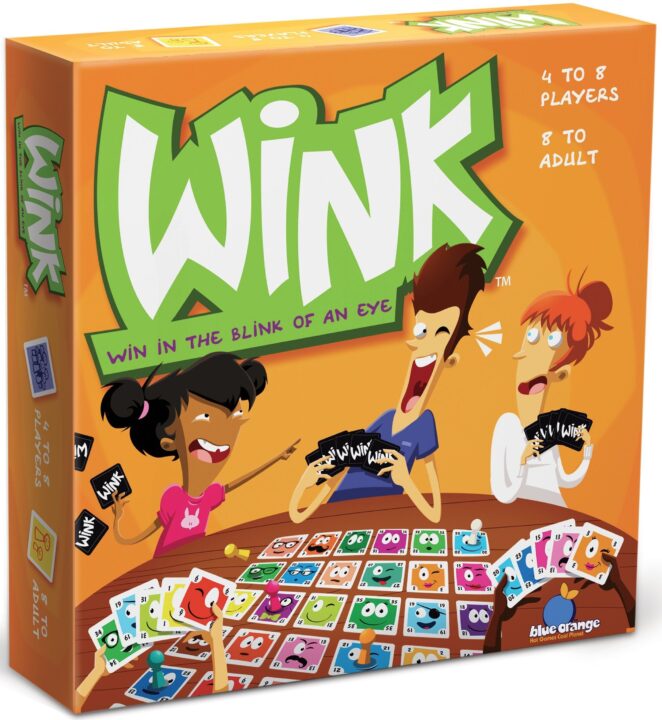

Let me start by saying: if you think winking is just for flirty bar banter or awkward family photos, you’re about to be proven spectacularly wrong. This is my review of Wink, the party game that sent my friends into fits of giggles and suspicion—sometimes at the same time. We laughed, we failed terribly at keeping a straight face, and someone may have developed a lifelong paranoia of eye contact. But is it actually good, or just a fleeting party trick? Grab your best poker face, and let’s see if this game deserves a wink of approval.
How It Plays
Setting up
Deal out the cards so each player has a hand, and place the number tokens in the middle. Everyone grabs a stand to keep their cards secret. Try not to drop your snacks on the cards. (Seriously, I once ended up with salsa on a seven!)
Gameplay
On your turn, you pick a number token and try to spot who has the matching card. Here’s the sneaky part: if you have the card someone’s calling, you must wink at them without getting caught. If the caller thinks they know who it is, they point them out. If you spot someone else winking, you can call them out. And yes, it gets chaotic if Aunt Linda winks with both eyes.
Winning the game
Points go to both the guesser and the winker if the wink is pulled off. If you catch someone else winking, you earn a point instead. The sneakiest winkers and shrewdest observers rack up the most points. After several rounds (or when someone starts overusing their “winking eye” excuse), the player with the highest score wins the game.
Want to know more? Read our extensive strategy guide for WINK.
How To Actually Play Wink (Without Stabbing Someone In The Eye)
If you’ve ever tried to explain a board game to your friends and ended up sounding like you were reading out IKEA instructions, you know how important clear rules are. I gathered my regular group—yes, the same ones who still accuse me of cheating at Uno in 2008—to give Wink a fair shot. The box promises quick fun, and the setup is super fast. Shocking, I know. Cards get shuffled. Everyone grabs a pile of number cards and plops their player token up on the table. The aim? Spot your secret winker and stay sly about it.
The rules for Wink are written in decent, plain English, so you don’t need to call in a translation service or decipher arcane board game symbols. We managed to kick things off within 10 minutes, after only a brief fight about who would be the best at winking (spoiler: it wasn’t me, unless blinking both eyes counts). Each round, you pick a target card, and someone at the table gets the job of winking at you without giving themselves away. If you spot your winker, you score. If someone catches you winking, you’re exposed and lose points. The basic rules are clear, but we still had a moment or two of “Wait, do I wink now or after the cards move?” It wasn’t game-breaking, but a few more diagrams wouldn’t hurt.
Wink’s gameplay is all about reading your friends’ faces and trying not to look like you’re having an eye spasm. The rules don’t get bogged down with heavy strategy, which makes it great for casual nights but maybe a little light for hardcore board gamers. Still, the pace is fast and things get silly very quickly. Up next, let’s see how Wink turns your friends into suspicious detectives and makes everyone paranoid—in the most entertaining way possible!
How Wink Hatches Player Interaction and Engagement
When it comes to player interaction, Wink delivers more than your nosy aunt at Thanksgiving dinner. Every moment, you’re watching, waiting, and scanning for sneaky eye signals. There’s no hiding in this game! From my group of friends (who already can’t keep a straight face), Wink turned us into a bunch of suspicious detectives and nervous criminals.
What makes Wink such a hoot is how the game rewards those little moments of connection. You need to catch winks without letting other people catch you catching them. I once tried to wink while sneezing, which both failed and got me caught—costing me a point and a little dignity. You learn pretty fast that you can’t trust your best friend, your spouse, or even the quietest person at the table, because betrayal is always around the corner (or across the table).
The game works best with 4 or more people, since the more players, the crazier and more unpredictable the action gets. Even bystanders get involved, since there’s always laughter and finger-pointing, plus everyone loves accusing the wrong person. If you hate games where folks tune out, Wink isn’t for you. You have to stay sharp or risk being outed as the world’s worst winker.
Wink’s magic lies in its power to drag shy players out of their shells and keep everyone engaged. I mean, there’s just no way to look cool winking at your neighbor while pretending you’re not. Next up, let’s squint suspiciously at the luck versus skill balance in Wink…
Luck vs. Skill: Who Blinks First in Wink?
Let’s talk about the wild world of luck and skill in Wink. Imagine you’re sitting at your table, cards in hand, and your only weapon is your ability to act casual—or at least fake it very badly, like me. At first, you will think, hey, this is all about skill. I mean, how hard can it be to wink without anyone noticing, right? Spoiler: Apparently, for me, it’s very, very hard. My friends caught my wink as fast as I catch a whiff of pizza in the house.
This is where luck sneaks in. Sometimes, you manage a slick wink when your opponent is picking their nose or looking at their phone. Boom—they miss it, and you score. Other times, all eyes are on you and suddenly it feels like trying to cross a river on a banana peel. There’s a bit of bluffing, cool nerves, and a massive helping of hope that no one is watching. I’d say the game balances skill (acting, timing, reading other players) with luck (will someone sneeze at the right time?). But if you don’t like games where luck can flip the outcome in a heartbeat, Wink might leave you blinking in frustration. I give it 3 out of 5 stars for luck vs. skill, since the sneaky card draws and random glances can decide a lot.
Next up, I’ll slap on my monocle and give you the lowdown on Wink’s component quality and visual appeal—so stay tuned for some eye-candy judgment!
Wink: Component Quality and Visual Appeal
I have to admit, the first time I opened Wink, I didn’t expect much. The box was small, and it looked like it might hold nothing but disappointment and some spare lint. Luckily, I was wrong. The cards inside are thick and handle all the clumsy shuffling from my pals (and my dog who once sat on them). They’re not premium linen, but I don’t expect to hand Wink down to my grandchildren, so that’s okay.
The artwork is, let’s say, unapologetically bold. The bright colors make Wink pop on any table. The silly face cards—some winking, some just looking confused—get plenty of laughs before the game even starts. My friends spent the first ten minutes trying to copy the card faces instead of reading the rules. Pretty sure Dave sprained his eyebrow.
The player tokens are simple but do the trick. You won’t find fancy miniature winking eyeballs or laser-etched poker chips here, just basic markers that are, thankfully, not the size of rice grains (looking at you, other party games). Everything fits back in the box, which is always a plus for folks with overflowing shelves.
If you care about flashy components and deluxe editions, Wink might not impress. But if all you want is a game that looks friendly, sets up fast, and resists mild snack-related disasters, you’ll be happy. I recommend it for anyone who’s more interested in laughs than luxury. Grab Wink if you want a game that doesn’t take itself (or your table) too seriously!
Conclusion
Wink brought a bunch of laughs to my table. The game shines with groups who love playful accusations and silly face work. It’s bright, durable, and easy to get into—even for friends who usually claim they “never understand board games.” But I gotta admit, luck can mess with your plans, and if you hate not being in control, it might bug you. Wink isn’t deep, but it’s a blast at parties or with family. If you want serious strategy, look elsewhere. But if you want awkward winking and accusing your grandma of lying, Wink is for you. This concludes my review—go wink responsibly, folks!