
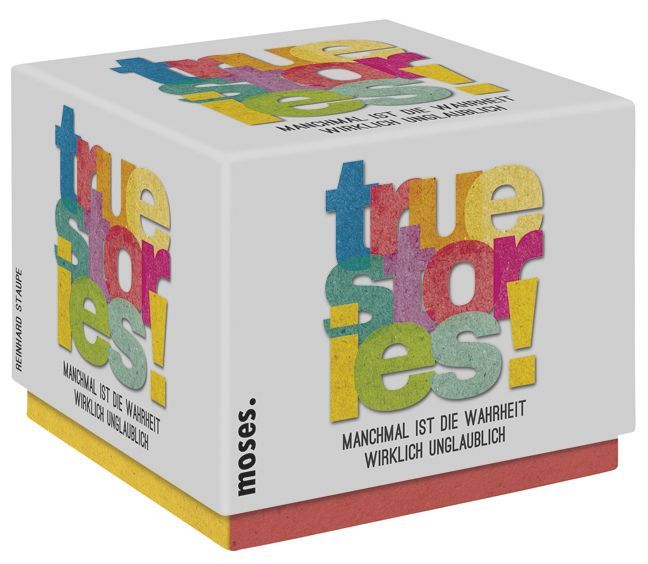
Grab your wildest pals and your most suspicious eyebrow, because I’m about to review a game that will leave you doubting everything you think you know. Can you spot the undeniable truth, or will you fall for the oldest trick in the book? Well, I’ve shuffled up the tales, fought through the giggles, and even survived a heated debate about whether bears can really use public bathrooms. Let’s see if this game is worth adding to your next game night lineup—or if it belongs in the same pile as my cousin Jerry’s half-eaten cheese puffs.
How It Plays
Setting Up
Open the box, fish out the story cards, and put everyone in a circle. Grab a pen and paper if your group is competitive, or just keep score in your head like my friend Jerry (who definitely cheats.)
Gameplay
One player reads a bizarre-but-true story from a card. Everyone else must vote: Is that story fact or fiction? Cue wild arguments and sudden Google searches (not allowed, Karen!) The correct answer is revealed, and those who guessed right score a point. Then, the next player takes a turn as storyteller. Laughter is pretty much mandatory.
Winning the Game
Keep going until you’ve run out of stories or snacks. The person with the most points at the end is crowned the True Stories Champion—and if it’s me, I demand a crown and a speech.
Want to know more? Read our extensive strategy guide for True Stories.
How to Play True Stories: Rules That Don’t Require a Law Degree
If you ever sat through a board game rules explanation and thought, “I need a nap,” then True Stories might bring you hope. The rules booklet for True Stories is thankfully short and written in real-life human English. I read through it twice just to check if they snuck in anything tricky, but nope—I understood everything, even after just one cup of coffee.
The basic setup goes like this: one player reads a card with a wild, supposedly true story, and the others ask yes-or-no questions, trying to figure out what in the world actually happened. Players get points for guessing the truth or stumping the group. There’s also a “Wild Guess” rule, which lets you take a shot in the dark. I love this rule. My friend Steve, who guesses more than he thinks, loved it even more.
I do have to complain a little—sometimes the answers to the stories are kind of out there, and certain cards left us scratching our heads. In one round, we argued for five minutes about whether a story counted as a “true story” or just a sad prank. I wish the cards had more details or a little explanation for nit-pickers like us. Still, the game moves fast. Everyone knew what to do, and nobody pulled the dreaded “rules lawyer” routine. That alone is worth a few points in my book.
Now, ready yourself for the next section where we see if True Stories fills the room with roaring laughter or silent confusion—on to Fun factor and group interaction!
How Much Fun Do You Really Have With True Stories?
I brought out True Stories last Friday during our regular game night. I had no idea if it would be a hit or just something to make us all stare at our phones instead. Well, let me tell you, our phones stayed untouched. This game is a magnet for groans, gasps, and a good bit of shouting, which is exactly my kind of Friday night.
The fun factor in True Stories comes from the crazy scenarios and the faces of your friends when they realize they just fell for a story about a man eating twenty socks. Every round, somebody gets caught off guard and the laughter is real. I love how the game gets people talking—and, more importantly, trying to outsmart each other. It’s not just about knowing the truth, but about convincing others that you do (when you really don’t, half the time).
Group interaction is wild. There’s plenty of friendly debates and the arguments can get wonderfully silly. It’s also easy to pick up, so no one feels left out. However, if you have a group that’s super shy or doesn’t like bluffing games, True Stories may not spark as much joy. But with the right crowd? Absolute chaos, and so much fun.
So, what happens after the truth is revealed and socks have been (theoretically) digested? Next, let’s see if True Stories keeps the surprises coming, or if it’s a one-hit wonder.
How Many Times Can You Fool Your Friends? Replay Value and Story Variety in True Stories
Let’s get something out of the way: nothing ruins a party like hearing the same story about a man swallowing twenty spoons more than once. True Stories dodges this pitfall pretty well—at first, anyway. The box packs a decent stack of cards, each with its own weird, wild tale. That’s a solid thumbs up from me.
The stories themselves range from “Wow, I can’t believe that happened!” to “Wait, you just made that up…” I loved the mix! There’s a genuine variety of topics: crimes, accidents, unlucky love, and the all-time classic, “I swear this happened to my cousin.” I once managed to convince everyone that a chicken really did survive a parachute drop—no regrets.
Now, once you’ve plowed through most cards, replaying with the same group does drop the fun a notch. You’ll remember the answers (especially the wildest ones—I’m looking at you, goat and cheese incident), so it works best with fresh faces or spaced-out sessions. Mixing up player groups brings new guesses and fun, but the magic fades a bit if you stick to the same crew every time.
So, would I call True Stories a game with endless replay value? Not quite, but it holds up far longer than most story-based games I’ve played. Ready to tackle luck and skill? Strap in, because this game’s balance might just surprise you.
Luck vs. Skill: Who’s Actually Smarter in True Stories?
Let’s be real, I usually avoid games where Lady Luck is the real star. If I wanted my fate decided by random chance, I’d let my cat choose my breakfast. But with True Stories, the balance between luck and skill is a bit more nuanced than you’d expect from a party game.
Each round, you get a wild and weird story. Everyone debates and guesses if it’s true or not. Here’s the kicker: knowing obscure facts or being a natural detective helps a bit, but sometimes your buddy Ted, who thinks ketchup is spicy, guesses correctly just by picking at random. There’s skill in reading the room, bluffing confidence, and watching for those tells when someone is fibbing. But no matter how sharp you are, sometimes sheer luck lets people rack up points like they’ve just seen the answers on your phone.
After four rounds with different friends (and yes, even my mom played), we counted more victories thanks to wild guesses than from actual logic. So, if you like a game where a dash of cleverness meets a heavy spoonful of chance, True Stories fits the bill. If you want pure skill and no luck, you might end up yelling at the board. Or your friends. Or your cat.
Would I recommend True Stories? If you’re looking for laughs and don’t mind a bit of chaos, absolutely! Just don’t use it to settle any bets about who’s the smartest in your friend group.
Conclusion
So, that’s my take on True Stories, and wow, what a ride! This game brings out wild stories and even wilder guesses, all wrapped up in rules even my half-awake uncle understood. It shines with groups who love a good debate and a laugh, but if you want a pure test of skill, you might get more out of guessing the next bus arrival. The mix of facts, fibs, and luck means every round feels fresh, at least for a while. It’s perfect for parties, family nights, or any gathering where wild stories are welcome. Just cross your fingers you get the storyteller who remembers how to read the cards! All in all, True Stories does what it aims for: bringing people together for some good, silly fun.