
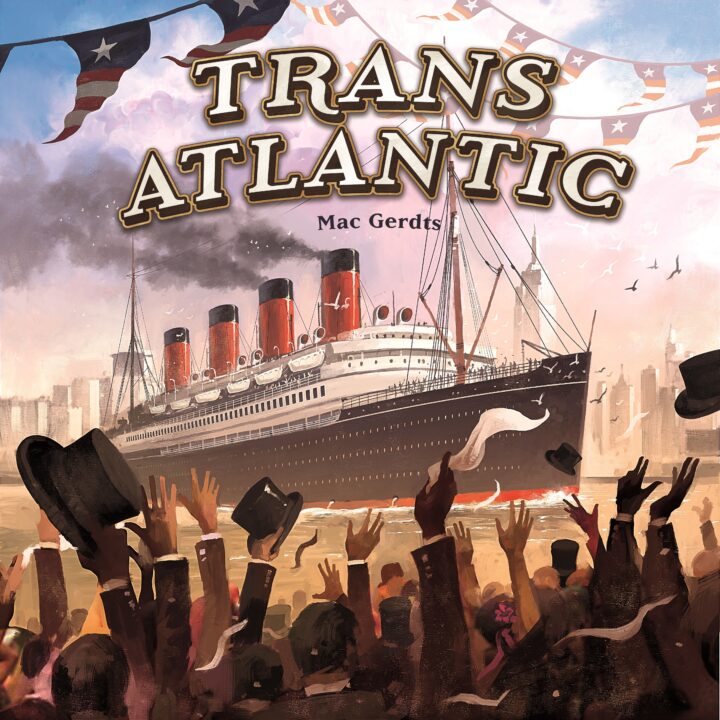
I never thought I’d argue with friends about the price of coal, yet here we are. Welcome to my review of Transatlantic— the only board game where I ended up shouting, “But that’s MY ocean!” as if I had shares in the Atlantic. If you love strategic plans, historical ships, and ruining friendships (gently), you might want to see if Transatlantic should set sail to your table. Let’s see if this steam-powered adventure is worth the ticket— or if it runs aground faster than my last attempt at diplomacy.
How It Plays
Setting up
Line up the board, sort the piles of ship cards, and hand everyone their starting boats with matching action cards. Put some coal out and shuffle the market. Make sure everyone has snacks. This is important. You’re now ready for a steam-powered showdown.
Gameplay
On your turn, play an action card from your hand to do things like buy new ships, send them to sea, buy coal, or upgrade your fleet. Action cards are key—once you use one, it sits in your discard until you use your ‘Administration’ card to pick them all back up. Each action feels as tense as loading coal with oven mitts. You’ll earn money from routes your ships are on, and watch as your buddies snap up the best ships before you can blink—or finish your biscuit.
Winning the Game
The game ends when the deck of ships runs out. Count up your cash, your ship values, and your global achievements. The player with the most money is crowned the best steam mogul, with the right to gloat for at least a week (or until someone demands a rematch).
Want to know more? Read our extensive strategy guide for Transatlantic.
How Transatlantic Keeps You Sailing: Gameplay Mechanics and Flow
If you want a game where you actually feel like an old-timey shipping magnate, Transatlantic delivers. And by delivers, I mean it creates a storm of decisions that’ll sink your attention span faster than a leaky steamer. Each player starts with a deck of action cards. This is not a deck-building game, but you do get to add a few new cards over time (so my dreams of building a 200-card combo deck were crushed—sorry, Magic fans).
The real heart of Transatlantic is action selection. On your turn, you play a card, do its action, and then your card stays face-up in front of you, which matters for later. You’ll buy ships, send them on routes, and collect money from delivering goods. But the twist is—you only get your played cards back with a certain card. So if you burn all your best moves right away, your turns get pretty sad later. There’s a real balance between saving up for a big move and spending now for instant gains.
The economy in Transatlantic is tight. You never have enough money. Honestly, if I managed my real finances like I do in this game, I’d be living in a cardboard box. Everything you buy, from new ships to new cards, sets up your next few moves. Oh, and don’t expect a wild dice-fest. Luck is pretty minimal here—strategy comes first, just how I like it.
Next up, I’ll spill the tea on how Transatlantic gets people battling for ocean supremacy and if you can really backstab your best friend or not—so brace yourself for some nautical drama!
Racing Steamships: How Players Clash in Transatlantic
When it comes to player interaction, Transatlantic really pulls out all the stops – and then blasts its foghorn in your face. There’s Johanna, who always tries to build a shipping monopoly, and Dave, who’d sell his own mother for an extra pound. Punchlines aside, what makes this game stand out is how everyone competes for the same markets but in totally different ways.
Have you ever seen grown adults groan in agony when someone buys the last iron steamer, just before their turn? Well, that’s Transatlantic for you. You never directly attack other players, but you can absolutely ruin their perfectly-laid plans just by being first to buy a ship or claim a juicy contract. There’s only so many ports to go around, and sometimes it gets as tense as sardines in a can.
I’ve learned (the hard way) that you need to keep an eye on everyone else’s fleet and not just your own growing empire. Sniping a contract from a friend is satisfying – but also means listening to them whine for the next three rounds. The board always feels tight. Competition for essential resources, contracts, and those nice mail cubes gets fierce. Transatlantic rewards players who can plan ahead but also adapt when rivals throw a spanner in the works.
If you’re looking for a game where the competition feels polite, look elsewhere; in Transatlantic, you’ll need your elbows out and your poker face on. Next up, put on your top hat because we’re about to set sail into the theme and historical immersion of Transatlantic!
Theme and Historical Immersion in Transatlantic
If you ever wanted to experience the golden age of steamships without the risk of seasickness, Transatlantic nails this vibe better than a captain’s hat at a fancy dress party. The game’s theme oozes from every card and ship token—it’s like you’ve been handed a ticket to the late 19th-century shipping race, minus the questionable food and iceberg hazards.
Each player manages their fleet of steamships, sending them across the world’s oceans to deliver goods and collect sweet, sweet profits. The ship designs, names, and ports all wink at real history. The rules even toss in nods to how trade routes worked, why coal was king, and which powers ruled the seas. It’s practically an interactive documentary, but with more competition and fewer boring voiceovers.
What I appreciate most about Transatlantic is that it doesn’t force the theme—everything just fits. The mechanics tell the story as you play. When my pal lost his best ship to obsolescence, it felt less like a rule and more like history moving forward (he, however, looked betrayed). The sense of time and progress is real. You want to adapt, modernize your fleet, and sometimes just get on deck and shout at your rivals, “Full steam ahead!”
Now, hold onto your captains’ hats—we’re about to set course for the choppy waters of replay value and strategy depth!
How Many Times Can You Sail These Waters? Replay and Strategy in Transatlantic
If you’re like me and can’t stick to one board game for more than a couple weeks (my shelves look like a board game adoption center), replay value means everything. Now, Transatlantic doesn’t come with secret missions, hidden traitors or a game master that screams plot twists, but boy, it has legs—long, elegant, steam-powered legs. Or, you know, hulls.
The different company setups, ship cards, and random market shifts keep each session from feeling samey. One night, I felt like a shipping tycoon genius. The next, my fleet looked like the ‘before’ picture in a disaster movie. It’s a brain workout, but you won’t get bored after three games. Or six. Or, in our case, twelve (so far!).
Best of all: Transatlantic rewards planning ahead. You can try to corner the market, gamble on risky upgrades, or just turtle and rake in those sweet dividends. The game punishes sloppy choices, so even after a dozen plays, we keep tinkering with our approach. Strategic depth? Oh yeah, it’s in there, and it won’t let you coast to victory.
Do I recommend Transatlantic? Absolutely. If you like brains over blind luck and messing with your friends (in-game, I swear), this ship is worth boarding.
Conclusion
So, that’s it for my review of Transatlantic! If you like games where planning matters more than lucky dice rolls, this one’s a gem. It’s loaded with history, tight on money, and packed with those delicious moments where you outsmart your friends (and maybe make a few enemies). Sure, it can get a bit cutthroat, and it may burn your brain a bit, but if that’s your thing, you’ll have a blast. Not for folks who want chaos or pure luck, but for us planners, it’s a keeper. Now, if you’ll excuse me, I need to go explain to Mark why scuttling his ship was just “good business.” Thanks for reading!