
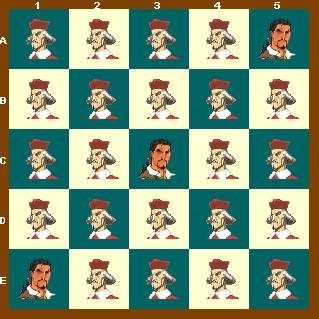
This review looks at a clever three-versus-one board game where teamwork, timing, and a bit of table talk matter more than lucky dice rolls. The Musketeers must work together, while the Cardinal tries to spoil their plans. It is easy to learn, offers good rematch value, and mostly feels fair, though the balance can wobble with new players.
How It Plays
Setting up
Place the board between both players. One player takes the three Musketeer pieces, while the other takes the Guard pieces. Set them in their starting spaces as shown in the rules. Pick a side, then get ready for some very polite sword trouble.
Gameplay
Players take turns moving one of their pieces. The Musketeers move around the board and capture Guards by jumping over them. The Guards move into open spaces and work together to block the Musketeers. The Musketeer player needs clever routes, while the Guard player needs to build a neat little wall of doom.
Winning the game
The Musketeer player wins by getting the three Musketeers into the target area. The Guard player wins by blocking all three Musketeers so they have no legal move. Swap sides for a rematch, since one role can feel tougher until you learn its tricks.
Want to know more? Read our extensive strategy guide for Three Musketeers.
Three Musketeers: Asymmetric Three-versus-One Gameplay
Three Heroes, One Busy Villain
In Three Musketeers, three players share the heroes while one player controls Milady and her guards. This setup creates a tug-of-war. The musketeers must reach the Queen, protect key spaces, and work as one team. The villain tries to block routes, split the heroes, and make each swordfight hurt. It feels less like four people playing the same puzzle and more like a small stage play with two very different jobs.
The hero side gets more tools, but also carries the stress of talking through every move. One player can spot a gap, and another can close it by accident. Meanwhile, Milady enjoys the power to react and punish loose plans. That makes the one-versus-three side satisfying without making the heroes feel helpless. When the team surrounds her, though, the villain may spend turns escaping rather than building a clever trap. The game then slows down like a carriage with a flat wheel.
A Strong Team Puzzle With Teeth
The best part comes from table talk. Each side has clear goals, so new players learn quickly. The rules give both sides strong choices without burying them under tiny exceptions. Still, the match can feel uneven when one hero falls early or Milady draws the perfect defense cards. I prefer the game when players focus on position, timing, and teamwork instead of chasing lucky breaks. Next comes Strategy, Luck, And Player Skill.
Three Musketeers Strategy, Luck, and Player Skill Review
Planning Over Panic
In Three Musketeers, choices matter more than lucky rolls. The game rewards players who study the board, spot threats, and plan moves ahead. I learned this the hard way when I chased a flashy attack and left my guard open. My friend pounced, and my plan folded like a cheap cape.
Chance Has Teeth
Luck still has a seat at the table, but it should not drive the carriage. A poor draw or awkward starting position can spoil a neat idea, especially when players fight over the same route. That swing adds tension, yet it rarely erases careful play. I have watched new players win with bold timing, while veterans lost after treating chance as an insult.
Skill grows through reading opponents, not memorising a perfect script. Each turn asks you to weigh patience against pressure. Should you block a path now, or tempt an enemy into a costly detour? The strongest choice often looks dull: protect an escape line, keep a useful space free, or force another player to reveal intent. That shift made wins feel earned, not gifted by a plastic cube. That lesson keeps skilled players alert without making beginners helpless.
The game rewards clear table talk, though loud players can steer the mood too easily. Quiet players need to speak up, ask questions, and protect plans without giving away every secret. That social layer adds skill beyond movement, but one confident voice can dominate the room. A clever bluff matters, but only when the table notices. Next, we will see whether that skill stays fair when the Musketeers face the Cardinal.
Balance Between the Musketeers and the Cardinal
A Fair Fight?
In three musketeers, balance lives or dies on the board. The three heroes share a goal: break through the Cardinal’s net and reach safety. The Cardinal has fewer pieces, but controls the action with a nasty mix of blocking, trapping, and table presence.
The best part comes from the changing pressure. Musketeers must support one another, yet they cannot bunch up like nervous pigeons. One brave move can open a lane, while one greedy move can hand the Cardinal a wall of targets. The Cardinal player also faces a puzzle. They need to slow all three heroes, not simply chase one. If they focus too hard on a single Musketeer, the others slip past. If they spread too thin, the escape route opens wider than my snack cupboard.
Where Skill Takes Over
Still, the balance depends on players knowing the rules well. A new Cardinal can feel powerless, while a skilled one may turn the board into a brick maze. That learning curve creates a small gap between first games and later matches. We fixed this by swapping roles each round, which kept complaints low and smug victory dances even lower. I also like that the game rewards planning more than lucky draws. The weaker side can recover through smart positioning, not a miracle card pulled from the void. Next, Replay Value And Game Length will decide if this clever duel deserves another evening beside the dusty Monopoly box at home.
Three Musketeers Replay Value and Game Length Review
Quick Games, Fresh Problems
The board stays familiar, but the path to victory keeps shifting. One game may end in a brisk ten minutes, while another stretches past twenty when both sides refuse to give an inch. That short range makes it easy to fit between dinner and the game you actually planned to play.
Why It Comes Back
Replay value comes from the changing cast of players as much as from the rules. With three people, the Musketeers can feel like a tight little crew, sharing one brain and occasionally losing it behind the sofa. Add a fourth player, and the lone Cardinal gains a more active opponent to watch. Switch seats next time, and the same pieces create a new puzzle.
Where Replay Value Fades
Still, the game does not offer endless variety. After several matches in one night, we started spotting familiar openings and guessed which plans would appear. The compact design keeps choices clear, yet it also limits the number of big surprises. If your group wants a long campaign, changing maps, upgrades, or stacks of new cards, this box may feel a little thin. It works best as a sharp repeatable filler, not as the main event of a whole weekend.
My Final Take
Game length helps Three Musketeers shine as a quick rematch game. We often played two rounds, then stopped before the fun wore off. That pacing feels honest: the game gives you enough to chew on, but does not serve a giant meal. I recommend Three Musketeers for groups who like short games with room for a rematch, but I would not recommend it for players seeking endless variety.
Conclusion
Three Musketeers gives friends a sharp, tense battle in a small package. The three Musketeers must work together, while the Cardinal player hunts for weak spots and tries not to look too smug. The rules stay simple, but each move matters, which keeps luck from stealing the show. Balance can wobble with new players, and the game offers less variety after many plays. Still, its short rounds make rematches easy. This concludes the review. Three Musketeers earns a solid recommendation for players who enjoy quick, clever, and slightly sneaky board games.