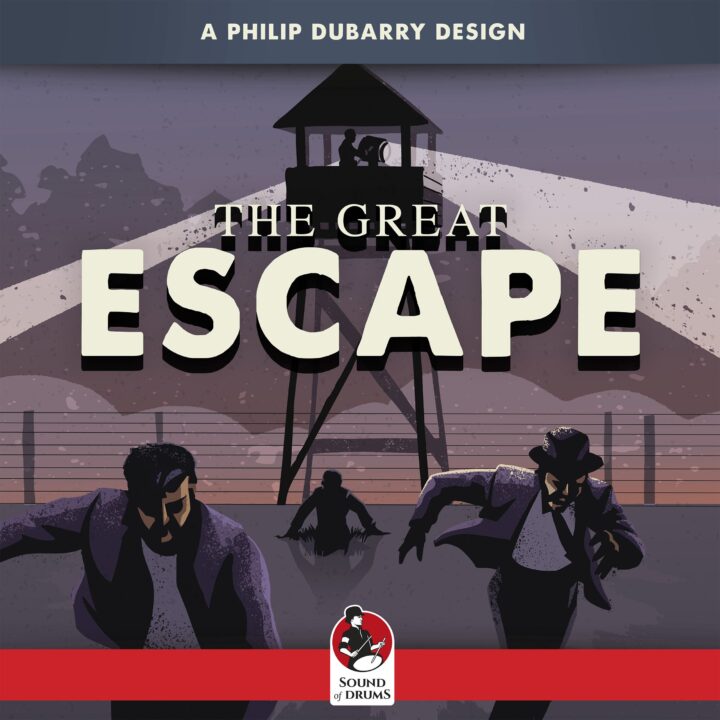

If you’ve ever dreamed of outsmarting guards, crawling through tunnels, and high-fiving your team as you pull off a daring escape—all from the safety of your kitchen table—welcome to my review of The Great Escape! After a few rounds of plotting and probably too much suspicious whispering, I’ve put this game through its paces with my friends. Grab your fake passports and let’s see if this box of puzzles is worth busting out your wallet for.
How It Plays
Setting up
First, toss the board on the table so it lands with minimal drama (unless you’re playing with Steve—Steve brings drama). Each player picks a character pawn and grabs their matching card. Set the puzzle deck in the middle, place the timer where everyone can see it, and scatter the clue tokens like confetti. You’re ready to roll—or sneak out, in this case.
Gameplay
On your turn, flip over a puzzle card and groan at its brilliance. Everyone races to solve it by talking, pointing, and possibly arguing (friendly, of course). Use clues wisely—they’re limited, like my patience for slow turns. Every solved puzzle gets you closer to daylight. Watch the timer! If time runs out, you’re toast.
Winning the game
You all win together if you solve every puzzle before the timer explodes (not literally, that’s a different game). If you’re still scratching your heads when time’s up, well, better luck next time. Just blame Steve.
Want to know more? Read our extensive strategy guide for The Great Escape.
Gameplay Mechanics and Puzzle Variety in The Great Escape
If there’s one thing The Great Escape gets right, it’s the mix of gameplay mechanics that keep you on your toes. My friends and I sat down, snacks in hand, expecting your basic roll-the-dice-and-move setup. Boy, were we wrong. The game throws you straight into a maze of logic puzzles, pattern matching, and code cracking—all with a wacky prison twist. There’s not just one way to break out, which adds a bit of suspense. Do you sneak past the guards, or do you bumble your way by distracting them with a chicken (yes, that happened in our game)?
Puzzle variety surprised me. I thought it would go stale after the first few rounds, but each challenge throws something new at you. We got verbal clues, visual riddles, and even a memory game that had my friend regretting all those late-night study sessions. Some puzzles were a breeze, while others made us question if we’d ever graduate past junior detective. The biggest plus? No two games felt the same. Replay value is strong, although, if your group has someone who remembers every puzzle, hide the box from them next time.
I’ve seen games where luck is the boss, but in The Great Escape, skill and teamwork matter a lot more. The frustration is real when you mess up the code for the third time, but at least you know it’s on you—not a random card draw. My only gripe: a couple of the later puzzles seemed a bit too clever for their own good—watch the table for furrowed brows and the sound of heads being scratched.
If you’re wondering how all this head-scratching affects group dynamics, stay tuned for the next bit, where I’ll spill the beans on player interaction and whether teamwork really makes the dream work.
How The Great Escape Turns Friends Into Frenemies: Player Interaction & Teamwork
I’d be lying if I said The Great Escape didn’t test my friendships. If you think you can just coast through this game solo, ha! You’re in for a surprise bigger than the pile of dirty socks under my couch. From the get-go, The Great Escape demands you actually talk to your teammates—out loud, not with interpretive dance or looks of panic. Whether it’s cracking a code or searching for secret clues, you’ll need to blend your brainpower like a weird smoothie with everyone else’s ideas floating in it.
What really jazzes up the gameplay is that everyone’s skills can shine. Got a mate who does crosswords at breakfast? They’ll love the word puzzles. Know someone who’s always spotting their lost keys? They’ll nail the visuals. No one’s left out. But don’t expect to just show off—because if you try to solve everything yourself, you’ll probably crash and burn faster than my cherry pie at Thanksgiving.
I loved how team roles changed on a dime. Some games, you get that bossy player who wants to narrate your every move (yes, Gary, I’m talking about you). In The Great Escape, bossiness gets you nowhere fast. Creative ideas, quiet hints, and sometimes the weirdest hunches all have to be given room to breathe. The game feels a lot like being in a heist movie—minus the snazzy suits. After a round, my group actually felt closer, and not just because we’d been yelling at each other.
Next up: Let’s talk about game balance and fairness—will The Great Escape treat you right, or will it break your spirit like an unfair thumb war?
Is The Great Escape a Fair Game? Let’s Talk Balance
One thing I judge a game on—harder than I judge my friend Dave’s cooking—is how fair it treats its players. The Great Escape actually got me raising an eyebrow in surprise (the left one, for those keeping score) because it keeps things pretty balanced throughout the game. Whether you’re the sneaky codebreaker or the puzzle-master, everyone gets their moment to shine. I only spotted one tiny gripe: if you play with a group where someone likes to take over every puzzle, it can feel like a solo show. Luckily, the game nudges you to share the glory, so everyone’s getting in on the action (if not, just hide the instruction booklet from the alpha gamer, trust me).
The Great Escape also avoids those wild swings of fate you get in games loaded with dice or cards. You won’t lose because you drew a bad hand or rolled a cursed ‘1.’ Instead, your wins and losses hang on teamwork and clever thinking. That’s my kind of game—one where my brain, not my lucky socks, gets the glory.
There’s no runaway leader problem, either. If somebody pulls ahead, the next tough puzzle brings them back to earth. The game keeps everyone chasing that final escape, so nobody feels useless halfway in.
Curious about whether you’ll want to play The Great Escape more than once, or if the pieces will survive your cat’s curiosity? Hold onto your dice cup, because that’s up next!
How Much Life is in The Great Escape? (And Do the Bits Fall Apart?)
I have a notorious pile of board games that my mates now call, ‘Jamie’s Once-And-Done Stack.’ Honestly, it’s shameful. The Great Escape, though, is safe from that fate. Here’s why: replay value. The designers packed this box with enough puzzles and scenarios to keep the game fresh. Every time we finished a round, someone at the table would shout, ‘Again! But I’m not being the lookout this time!’ With the different routes to take and a handful of special challenge cards, the game doesn’t get boring fast—even if you think you’ve seen all the tricks.
Now for the bits and bobs (the fancy term is ‘component quality’). The Great Escape comes with chunky cardboard pieces that could survive a toddler’s rampage—or my friend Pete’s overenthusiastic dice rolls. The cards are glossy and thick. The artwork? It’s fun, not too serious, and even got a nod of approval from my usually grumpy cousin. One tiny issue is the rulebook, which tried to be clever with ‘themed’ hints but just left us scratching our heads once or twice. Still, nothing we couldn’t sort out over snacks.
So, do I recommend The Great Escape? Absolutely! If you like puzzles, a bit of drama, and don’t mind arguing about who forgot the flashlight, grab it. Your ‘once-and-done’ shelf will stay empty.
Conclusion
Alright, that’s a wrap for my review of The Great Escape! After lots of laughs, groans, and maybe one or two heated debates about who hid the clue under the cat, I can say this is a solid pick for puzzle lovers and team players. The game nails its mechanics, keeps luck out of it, and gets your brain (and friends) working together. While it’s not perfect—watch out for that bossy alpha player—the fun and challenge make up for it. The Great Escape earns my stamp of approval. Just don’t blame me if your friends keep you locked in the next room for taking too long!