
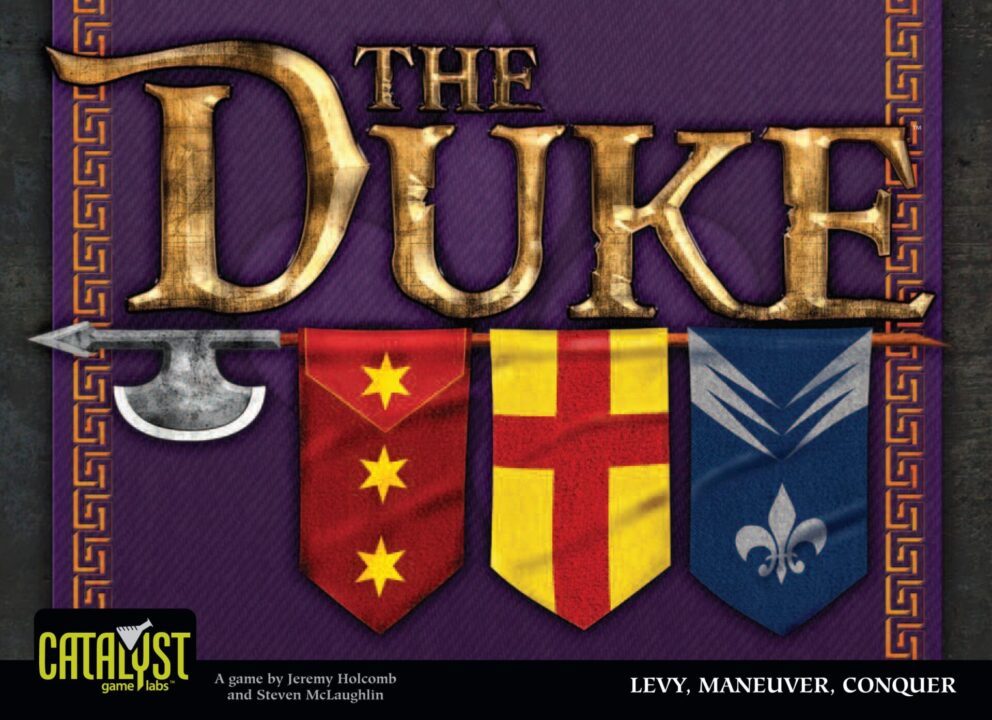
Alright, pull up a chair and prepare for less talking and more flipping—because this is my review of The Duke! If you’ve ever wanted to outsmart your best mate by sliding chunky tiles across a board, plotting sneaky moves, and living the dream that you actually do remember how chess works, then keep reading. Let’s see if this nifty little abstract strategy game has the brains, brawn, and balance to earn a spot on your shelf (or if it’s better left in the box at the end of the night).
How It Plays
Setting up
Each player grabs a Duke tile and two Footmen, plopping them down on their half of the board. Shuffle the rest of your tiles into your personal bag. Keep the rulebook handy in case someone tries to move a tile like a bishop in chess. (Not naming names, but you know who you are.)
Gameplay
On your turn, pick between two choices: move a tile or pull a new one from your bag and place it next to your Duke. Every tile shows its legal moves right on top, but watch out—they flip after moving, and the moves change! I once moved a tile thinking I was clever, only to discover it could now only move sideways. Clever play means planning ahead and tricking your opponent into a trap or, at the very least, making them groan in frustration.
Winning the Game
The first player to capture the other’s Duke wins. You’ll need to outthink, outmaneuver, and sometimes out-bluff your pal across the table. Just remember: there’s no dice, no luck, and no blaming a bad hand—so if you lose, it’s all on you. (Trust me, I know from experience.)
Want to know more? Read our extensive strategy guide for The Duke.
Gameplay Mechanics and Player Strategy in The Duke
Like, I thought this was going to be checkers with a fancy hat, but no. The gameplay in The Duke is smart, mean, and full of quirky surprises that make you second-guess every move. You start with your Duke and a couple of foot soldiers, but every turn you get to pull another piece from your bag and slap it onto the board. It feels like you’re baking cookies but can’t remember what you put in the dough—sometimes you pull a sweet Scout, sometimes a chunky Marshal, and once in a while, something that makes you go, “Wait, what does THIS do?”
Each tile has movement printed right on it, which flips over after you use it. Picture this: your Duke hops one way, then BAM! Next turn, he moves completely differently. I once lost a game because I forgot my Duke turned into a sloth after I attacked. Bluffing and setting up traps? Big part of the game. And since every player has the same bag o’ tiles, it feels super fair—if you lose, it’s your own fault, not because someone drew the Magic Win Tile.
The tactical depth in The Duke reminds me a lot of chess, but you don’t have to memorize fancy openings or know what an endgame is. The board stays tight, and there’s always a chance to turn things around with a smart play. Next up, let’s talk about what you actually touch: those chunky tiles and whether they’re as fun to hold as they are to play.
Chunky Tiles and Royal Tactility: Component Quality & Tile Design in The Duke
If you love the feel of a good game piece, The Duke treats your fingers like royalty. The first time I popped open the box, I expected thin, wobbly tiles. Instead, I got these thick, wooden squares so sturdy, I swear they could double as coasters (don’t actually use them for drinks, though)! The weight alone makes every tile move feel like an event. You hear the thunk when you place the Duke on the field—it’s pure joy for people who like a bit of drama in their board games.
The tiles look sharp, too. Each one shows the unit’s name, a clear grid for movement, and a symbol to flip it after taking a turn. There’s no guesswork or squinting here. Even my friend Jim, who brings the wrong glasses every game night, finds it easy to see his options. The Duke tile itself stands out with gold accents and an air of importance, which really sets the mood. There’s a medieval theme but it stays classy—no cheesy dragon doodles or over-the-top fonts.
The bag (for drawing tiles) is a nice touch, too. It’s big enough for even my massive mitts to root around but sturdy enough that it won’t tear after a few intense games. But, because I’m honest: after a while, the print on some tiles did start to fade a little. Nothing tragic, but a touch annoying—especially if you’re a perfectionist.
Ready or not, next up is a look at how The Duke keeps you coming back for more—and just how steep the learning hill really is!
Replayability and Learning Curve in The Duke
If you’re bored by games that get stale after two rounds, The Duke is here to slap you awake. I’ve played this game more times than I’ve reheated leftover pizza (which is saying something), and every match feels fresh. Because each piece in The Duke has its own movement pattern that flips after each turn, the strategies stay wild and unpredictable. And, with so many different tiles to draw and deploy, you can try sneaky, silly, or seriously smart tactics each round. Some games are over quick; others become slow-burn chess matches that leave you squinting at the board like it owes you money.
Learning The Duke doesn’t take forever. I taught my most impatient friend (the one who still can’t spell “catapult”) in less than 10 minutes. The rules are short, but the game rewards you the more you play. Beginners can make sneaky progress just by remembering what each tile does. Veterans, on the other hand, start to spot clever combos (and the best times to block your opponent’s best-laid plans). Plus, there are a bunch of expansion pieces you can throw in if your group gets bored easily, so you can keep mixing it up.
So, whether you’re a hardcore tactician or just feeling lucky, The Duke’s replay value holds strong. Up next, I’ll test just how well The Duke keeps things fair or if someone’s stacking the tiles with the next section all about Balance and Fairness between players. Get your justice scales ready!
Balance and Fairness: Does The Duke Treat All Players Equally?
The Duke is all about balance—almost like my diet plans, except this game actually sticks to the rules. One of the best things I noticed after my fifth (yes, fifth!) dramatic defeat is that both players have the same pieces and the same starting point. Everyone gets a Duke tile: he might look stiff, but he’s the heart of your army. You both also get two footmen, and after that, it’s a tense back-and-forth of shifting, flipping, and sneaky attacks. No one ever gets a free ride or a pity advantage here. If you win, you actually earned it. Shocking, I know!
Every time you grab a new tile, you pull it from a bag, so sure, there’s a smidge of luck about what comes next. But—and this is key—every tile type is split evenly and the abilities are mirrored. You’ve got the exact same tools to cause chaos as your opponent. If you lose (and oh, I have), it’s usually because your master plan was just a tiny bit less genius than your friend’s. Or you got distracted by snacks. Happens.
The movement systems stay fair, too. Each tile tells you exactly how it moves—no secret trick cards or wild swings. The rules are simple, the playing field is level, and success comes from sharp thinking, not who last washed their hands before grabbing the bag. I never once blamed the game for beating me—only myself, and my tragic fondness for risky plays.
Would I recommend The Duke? Absolutely. It’s clever, it’s clean, and it never feels rigged. If you want a true test of wits, this is your battlefield. Just don’t eat Cheetos while playing. Those tiles deserve respect.
Conclusion
The Duke packs loads of strategy into a box of chunky tiles and clear rules. I love that there’s no lucky rolls—just clever moves and a few groans when your big plans fall apart. It’s all about out-thinking your opponent, and it stays fair every match. The tiles feel solid (just don’t spill your coffee), and the game is fast to learn but keeps surprising you even after many plays. If you like games where your skills matter most, The Duke is a smart pick. That wraps up my review, thanks for reading! Now, excuse me while I plot my revenge after losing to my friend again.