
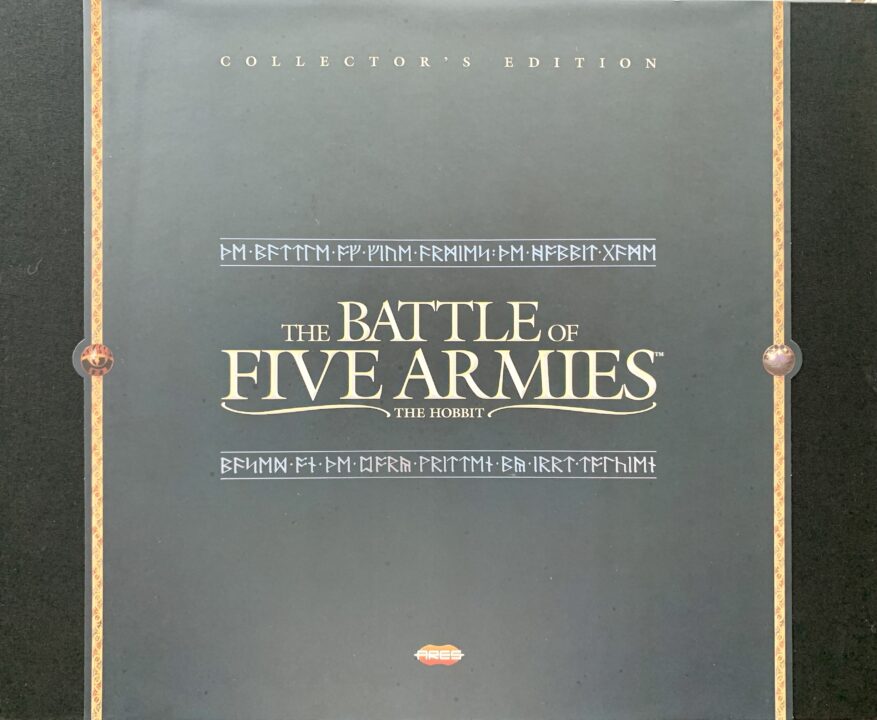
After several loud evenings with friends, I found The Battle of Five Armies a smart and tense strategy game. Its rival factions bring fun powers, while dice combat adds risk without stealing every decision. The map rewards careful movement, clever control, and the odd brave mistake. It does take a little time to learn, and games can run long when nobody wants to blink first. In this review, I look at the factions, combat, map play, learning curve, and whether the battle earns a place on your shelf.
How It Plays
Setting up
One player leads the Free Peoples, while the other commands the Shadow. Place the armies, leaders, settlements, cards, and dice on the board as shown in the setup guide. The Free Peoples player also protects key heroes, including Bard, while the Shadow player prepares Bolg and a huge pile of trouble.
Gameplay
Players take turns rolling and using action dice. These dice let you move armies, recruit troops, play cards, attack, or use special powers. Armies move across the map, fight for strongholds, and try to control key areas. Each round also brings event cards and leadership effects, so the battle can swing fast. The Free Peoples player must protect the settlements and heroes of Rhovanion. The Shadow player pushes hard before the defenders gather too much strength.
Winning the game
The Shadow wins by capturing enough important settlements and earning the required victory points. The Free Peoples win by defeating Bolg. If neither side reaches its goal, the struggle continues into another round, usually with more battered armies and fewer polite conversations.
Want to know more? Read our extensive strategy guide for The Battle of Five Armies.
Asymmetric Factions and Special Powers in The Battle of Five Armies
Asymmetric factions give The Battle of Five Armies its biggest spark. Each side feels like a different animal at the table. The Free Peoples gather leaders and troops with flexible choices, while the Shadow player leans on fear, monsters, and nasty tricks. That fresh clash kept our second match from feeling like a rerun.
The Free Peoples can move heroes around the board, then use their skills to rescue allies, rally armies, or spoil a Shadow attack. Their powers feel useful without turning every hero into a cheat code. Gandalf changes plans with clever support, while Thorin makes a bold push feel suitably grumpy and heroic. The Shadow gets a wider bag of trouble. Nazgul, trolls, bats, and other threats each ask the heroes a different question, and the Witch-king can make a safe-looking area suddenly feel like a bad parking spot. That variety creates strong stories, especially when one power forces a player to change their plan instead of simply adding more strength.
Power Balance at the Table
Still these powers need close timing. A special card can look weak in one match and brilliant in the next. I once watched a friend use a hero ability to save a key stronghold, but the Shadow player punished the gap. It felt rough to me. Some powers need a clear board state, so new players may miss their best chance. Good asymmetry gives both sides a voice, not a pile of bonus tokens.
Next, Dice combat and luck management will decide whether these grand plans survive a few rattling cubes.
Dice Combat: When Fortune Joins the Army
The Battle of Five Armies uses dice to make each clash feel like a tense gamble. In our games, I never knew whether a brave company would hold a hill or scatter like crumbs under a table. Each fight gives players choices before the dice roll, so luck does not steer the whole cart by itself.
Why the Dice Work
Combat dice show attack strength and defense results, while fate dice add twists. A poor roll can hurt, but the game gives you ways to soften the blow. You can spend special dice for stronger symbols, use leaders to change a result, or save resources for a later crisis. This makes luck feel like weather: dangerous, but worth watching.
Managing Those Bad Rolls
I also like how different units handle risk. A tough troop can absorb a bad result, while a small band may need two good rolls just to stay alive. That difference creates drama without turning every battle into a slot machine. Still, unlucky streaks can sting. In one match, I watched my mate lose three fights in a row despite smart play. He looked ready to challenge the dice to a duel.
That risk is the game’s main spice, yet players can manage it through timing, reserves, and careful target choice. I prefer this to pure luck, because a bad roll creates a problem, not an instant loss. The combat stays noisy and easy to teach, though a long chain of wild rolls can test your patience. Next section: Map control and tactical choices, where luck meets planning.
Map Control and Tactical Choices in The Battle of Five Armies
In The Battle of Five Armies, map control feels like the real star of the board. Regions connect through roads, hills, towns, and river crossings, so each space can shape the next move. Holding one spot may protect a route, cut off an enemy advance, or open a path toward a prized stronghold. The map never sits still. When one player shifts troops, the other must rethink plans. Good control comes from seeing links between areas, not just grabbing the biggest location.
Reading the Map
The best tactical choices often look small at first. A bridge may offer no glory, yet holding it can keep two routes open. A hill may score little, but it gives a strong position for later moves. I have chased shiny targets before and regretted leaving a narrow pass exposed. The game asks whether to press forward, defend a link, or step back before trouble arrives. That choice feels fair because the map shows the risk clearly.
Tactical Trade-Offs
The map rewards timing. Taking ground early can help, but it may stretch your reach too far. In our games, one player blocked a crossing, then used that pause to claim a distant stronghold. Another retreated from a tempting clash and kept a route open for later. Those plays made the board tell a story. Still, a missed connection near the end can hurt. Next comes playtime, complexity, and the learning curve, showing how much table time this epic map demands.
The Battle of Five Armies: Playtime, Complexity, and Learning Curve
The Battle of Five Armies asks for a proper evening, not a quick after-dinner skirmish. By game three, we finished in about two hours. That still feels long, but the time passed well.
Rules That Settle In
Once everyone understands the turn order, the game moves with a steady rhythm. You draw event cards, place leaders, roll dice, and resolve battles in a clear sequence. The rulebook looks fairly chunky, though the core rules are not as scary as the first glance suggests. I needed a few reminders about movement, siege effects, and when certain cards could fire. A player aid would have saved my tired brain.
A Gentle, but Long, Learning Curve
The learning curve comes from timing rather than piles of hard rules. New players can take useful actions right away, then improve as they spot better chances. The game also teaches through mistakes. My friend Tom spent a turn chasing a flashy attack and learned, quite painfully, that the clock matters more than glory. By the second session, he planned turns faster and made fewer wild guesses.
Still, the first game can feel slow when one player studies every option. This problem grows with four players, since turns pause while plans collide. I recommend teaching with a short rules chat, then playing without stopping to chase perfect moves. I recommend it for patient groups, but not for players seeking a quick, casual game after work.
Conclusion
This concludes my review of The Battle of Five Armies. The dice add drama, but they can also turn a proud plan into a very sad pile of cardboard. Still, the game gives players ways to manage bad rolls, so luck rarely feels fully unfair. The main catch is the learning curve and long play time. Once the rules click, though, the game tells a cracking story every time. I recommend it to Tolkien fans and players who enjoy deep two-player strategy.