
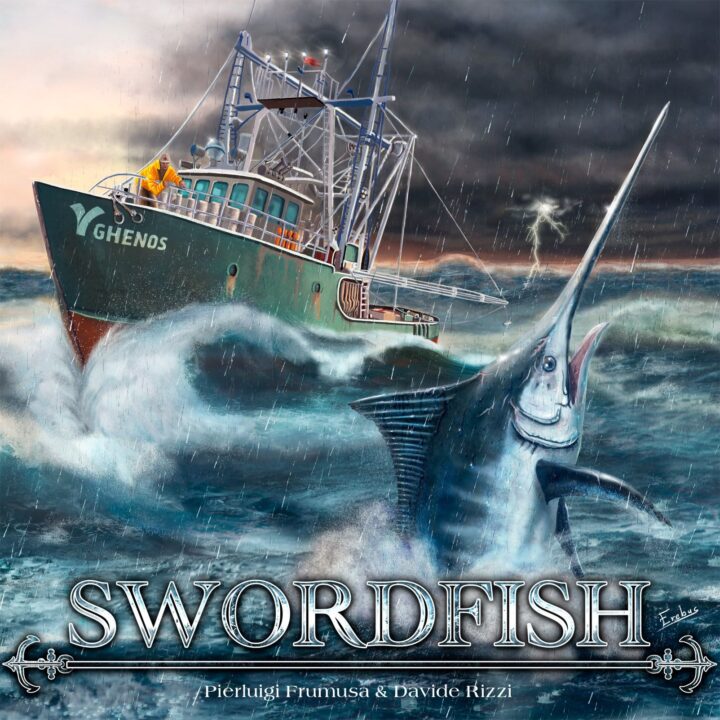
Welcome to my review of Swordfish, the board game that’s caused more arguments at my kitchen table than Monopoly ever did. Let me tell you how it went, fishy puns and all.
How It Plays
Setting up
To start, lay out the Swordfish board in the middle of the table. Give each player a fishing boat, some tokens for bait, and a handful of cash. Shuffle the swordfish cards and place them face-down in the deep sea area. Try not to make too many fish puns at this point (fail: I made three).
Gameplay
On your turn, you pick a spot to fish, drop in your bait, and hope to reel in a swordfish card. Sometimes you’ll pull out a big whopper, sometimes just a sad, soggy boot. Players can also sabotage each other’s fishing or try clever trades and deals. Every round is a mix of taking chances and trying to outsmart your friends—expect shouting, laughter, and plenty of silly fishing jokes.
Winning the game
The game ends when all the swordfish have been caught or you run out of bait tokens (pro tip: someone will always forget to keep an eye on their bait). Add up the value of your catches and cash. The player with the biggest haul wins and gets bragging rights as the top angler! For maximum fun, the loser must wear a ridiculous fish hat.
Want to know more? Read our extensive strategy guide for Swordfish.
How Swordfish Hooks You: Gameplay Flow and Player Interaction
If you’re looking for a board game where every player either laughs or groans at each turn, Swordfish is a strong contender. When my buddy Dave spent five minutes pretending his fisherman meeple was talking smack, I knew we were in for a wild ride. Swordfish plays out over several rounds, each with players choosing actions like grabbing bait, scouting waters, or yelling at their luck (like Dave, who blames the dice for everything, even his burnt toast). The game moves quickly, keeping downtime to a minimum, unless you count fish-related puns as downtime—then, you’ll need hours.
The turn sequence keeps everyone engaged. You’re never truly off the hook (pun intended), because you have to watch what others are doing. When my sister sneakily blocked my perfect fishing spot, I may have called her a ‘habitat hog.’ It gets competitive, but never mean. Swordfish encourages a bit of friendly sabotage. Stealing the best gear or outmaneuvering for those elusive swordfish feels great—unless you’re on the losing end. The game relies on open information, so table talk and negotiation become part of the fun. Some of our best laughs came from arguing about whose fish was actually the biggest (spoiler: it wasn’t mine, and I may have exaggerated its size by ‘just a little’).
If you love games where you can cheer, groan, and occasionally mock your friend’s poor fishing skills, Swordfish keeps everyone entertained and involved. But is it all skill, or does luck play a big part? Grab your nets—next, I’ll wade through the muddy waters of strategy versus luck!
Swordfish: Does Skill or Fortune Rule the Waves?
Swordfish promises a deep-sea fishing adventure, but I have to be honest—my history with board games that rely too much on luck reads like a shipwreck log. If I wanted pure luck, I’d play the lottery.
At first, Swordfish seems like a game where you just draw cards and hope for the best. But dig a little, and you’ll spot some clever ways to out-think your friends. You have to decide when to risk bigger catches or play it safe, and timing your actions matters more than I expected.
Still, Swordfish can tip the scale towards luck, especially when those wild event cards turn up. I groaned so loud my cat left the room after losing a massive catch to a random storm! It’s not a dealbreaker, but if your group values pure skill, this might not be your cup of seawater. The luck factor can lead to funny, memorable moments, but sometimes it overshadows smart play.
All things considered, Swordfish offers a decent mix of skill and chance, though it leans a bit too much on luck for my taste. Ready for my next words about Swordfish? Hold onto your fishing hat—next, I’ll tackle the game’s component quality and artwork, and whether those plastic fish look as delicious as the ones in your sushi dinner!
Swordfish Board Game: Do The Components And Artwork Make A Splash?
Alright, let’s talk about the physical bits: the chunky pieces, the cards, and the artwork that comes in the Swordfish box. I’ll be honest, when the game landed on my kitchen table, my first thought was, “Is this thing waterproof?” (Spoiler: It isn’t. Don’t take it in the bath, no matter how fishy you’re feeling.)
The Swordfish tokens have a nice weight to them—no flimsy, paper-thin nonsense here. My dog tried to steal one, but even she struggled to get a good grip. The cards feel decent: nothing fancy, but they won’t melt in your sweaty fishing hands after you bluff your grandma out of her last tuna. Artwork-wise, the game is a real treat. The designs are bright, friendly, and just a bit silly. There’s a cartoon fish with an eye patch and another with a suspicious moustache. I caught myself giggling more than once—yes, I’m an adult (on paper).
The board lays flat, and the print quality is crisp. No blurry fish here! Component-wise, I’d say Swordfish punches above its weight class. Everything fits in the box, which is more than I can say for my kitchen drawer. If you’re one of those people who sleeves everything, you might grumble a bit, but the cards survived several rounds with my not-so-gentle friends without a scratch.
Feeling hooked by the attractive art and sturdy pieces? Well, grab your tackle box, because next up I’ll talk about Swordfish’s replay value when you wrangle up different groups!
Is Swordfish Just a One-Trick Fish? Replay Value With Different Groups Explored
So let’s talk about Swordfish and whether it sinks or swims when you play it with all kinds of folks. I dragged this game to my weekly game night, my family get-together, and even forced it on my neighbor who only likes games with dice the size of grapefruits. The results? Surprisingly splashy.
With strategy-loving buddies, Swordfish turned into a full-blown battle of wits. Everyone was trying to remember past moves, read minds, and bluff their way to the biggest catch. It got tense—and honestly, a little petty. (Yes, Mark, I still remember you stealing that legendary swordfish from under my nose. You monster.)
The simple rules and fast turns meant even my youngest cousin could join in. Instead of endless explaining, we got right to the fun… or, in my case, to the losing. My grandma wiped the board with us all. She’s ruthless, folks.
With new people, Swordfish still packs a punch. It’s easy to teach, and nobody feels left out. There’s enough luck that everyone has a chance, but, as I’ve said, strategy fans might wish for just a bit less fishy fortune. Still, it’s replayable and lively, especially when folks get competitive. I even found myself going, “Just one more game!” (That’s the sign of a keeper.)
Do I recommend Swordfish? If you like a playful balance of fun and strategy—absolutely. But if you want only pure skill, this fish might slip off your hook. Cast your net wisely!
Conclusion
Alright, that wraps up my Swordfish review! After lots of laughter, some tense moments, and a couple of arguments about what counts as a legal fishing move (don’t ask), I can say Swordfish is a solid pick for game nights. It’s easy to learn, has lots of player interaction, and the artwork’s cute enough to make you forgive your buddy for stealing your prized catch. The luck factor can sting if you’re chasing deep strategy, but if you’re after fun with friends or family, this game bites—in a good way. Just don’t play near open windows, unless you want the board to become a real-life fishing expedition.