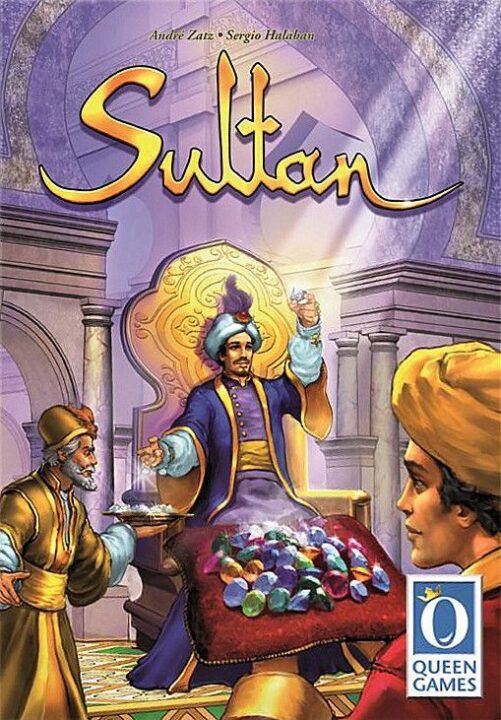

I still remember the first time I played Sultan. My friend Dave brought it over, promising a mix of clever trades and sneaky moves. He forgot to warn me about his terrible poker face, but let’s save that roast for later. This review will spill the beans on everything I loved (and grumbled about) in the game, from chaotic table talk to shiny bits and sneaky strategies. If you’re looking for honest banter, hard-won insights, and stories of failed alliances, keep reading. Let’s see if this game is worth adding to your shelf—or if it’ll become trade fodder at your next board game night.
How It Plays
Setting up
First, plop the main board in the middle (try not to spill your drink on it). Give each player their Sultan screen, coins, and a handful of negotiation tokens. Shuffle the resource and event cards. Hand out starting resources—you get what you get, no tantrums.
Gameplay
Players take turns as the Sultan, making deals, trading resources, and eyeing each other with suspicion. You can swap goods, promise alliances, and trick your friends, all while grabbing power and saving face. Every round has random events—sometimes helpful, sometimes like stepping on a Lego. Bluff, haggle, and watch those sneaky offers!
Winning the game
When the last round ends, everyone reveals what they collected. Count your power and wealth. Whoever’s got the fattest stash of riches and the most influence gets to gloat as the winning Sultan. But if you ticked off everyone, expect a lonely victory dance.
Want to know more? Read our extensive strategy guide for Sultan.
Game Balance and Fairness: Is Sultan Fit for a King?
So, let’s talk about game balance and fairness—a topic that’s split more friendships than Monopoly ever could. When it comes to Sultan, I always feel on pretty equal footing with my pals, whether I’m playing with the cunning strategist or my cousin, who once tried to trade a sheep for my sandwich in Catan. Sultan does a solid job at making sure everyone gets a fair shot. The rules don’t just give an advantage to the loudest person (looking at you, Uncle Bob), and resources seem designed to balance out over time.
One thing I noticed is that the starting positions aren’t wildly different. No one gets a magic palace while the rest of us are stuck in the sand, which I appreciate. It’s pretty easy to catch up if you fall behind, which keeps the tension high and stops folks from sulking halfway through. But on the flip side, the game still has a few moments where random card draws can tip things, and you might wish you had a genie to fix your bad luck. It’s not a dealbreaker, but if you hate randomness, Sultan might annoy you once or twice.
Overall, Sultan is fair enough that you don’t walk away feeling cheated, but it still keeps you on your toes. If you’re like me and want to know if you lost because you played badly (and not because your friend rolled six sixes in a row), Sultan mostly delivers. Next up, I’ll tackle Player interaction and negotiation—prepare for alliances, backstabbing, and some questionable bribery attempts!
Player Interaction and Negotiation in Sultan: Trading, Scheming, and Laughing
If you want a board game where you can talk, bluff, and cut a quick deal, Sultan will not disappoint. My group loves games with talking, and Sultan forced us to sweet-talk each other like used car salesmen. You will find yourself begging, bargaining, and sometimes even threatening (not legally binding, of course) to get the treasures you want. Negotiation is not a side dish here—it’s the main course, and everyone at the table gets a big helping.
One of my friends tried to form a secret alliance with me in Sultan, thinking we could split the loot. Two turns later, I betrayed him for a shiny blue gem. No regrets. Sultan rewards clever talkers and crafty planners, but you can’t just be a smooth talker. Timing and reading people are key. If you misread the table, expect to be out-negotiated and left with the scraps. It’s hilarious watching folks try to keep a straight face while plotting their next move.
Sultan’s table talk is old school social fun, not just rules and tokens. Deals might shift every round, and it’s easy to trust someone one minute and get stabbed in the back the next. If your group likes games where you can gang up on the leader or forge a last-minute truce, Sultan will fit right in.
Next up, let’s see if Sultan stays spicy after five plays or if it turns as stale as week-old baklava in our section on Replayability and strategy depth!
Replayability and Strategy Depth in Sultan: Why I Keep Coming Back For More
Right, let’s talk about why Sultan keeps landing on my table even after a dozen plays. This isn’t one of those games where you feel like you’ve seen it all by the third round. Nope, Sultan actually offers a surprising amount of replay value—so much so that my friends and I still argue over the “best move” in the car ride home.
The mix of variable setups, unpredictable player moves, and different paths to victory means every session feels fresh. One time, I tried hoarding resources like a greedy squirrel and got completely outsmarted by Jen’s clever alliance play. Next game? I tried alliances, only to be stabbed in the back by Mike. (No hard feelings, Mike. Except there are.) Sultan rewards players who think ahead and adapt, and the fact that you can’t just rely on the same strategy every game makes it interesting for both frequent and occasional players.
If you’re into games where you can try risky gambits or patiently build up for a big turn, Sultan’s got your number. There’s enough happening in the game for strategy buffs to chew on, but it never gets so heavy that you forget to have fun. The only downside is, if you fall behind early due to your own strategic blunder, it can be tough to catch up—but you won’t be bored while you’re plotting your revenge for next time.
Up next is the section where we’ll talk about Sultan’s components and artwork—get ready for an eyeful, because this game doesn’t just play well, it looks good doing it!
Component Quality and Artwork in Sultan: Does It Feel Fit for a King?
Let me tell you, there’s nothing worse than paying good money for a game and then opening the box to find bits that look like they’ve been printed at home on a rainy day. Thankfully, Sultan does not fall into this trap. From the moment I opened the box, I felt like I was getting ready for a royal feast. The cards are thick enough to survive my mate Andy’s shuffling (which, I swear, is more like a tornado than card play).
The coins and tokens included in Sultan feel weighty and satisfying. There’s a clink when you toss them onto the table, and that sound gets my competitive side going. Even the player boards, which in some games are as thin as my patience for poor rules explanations, have a solid feel. There’s little chance of accidental damage unless you invite my cat to game night—don’t ask, it’s a sore spot.
Artwork is bright, colorful, and totally on theme. Every card draws you into the bustling markets and glitzy palaces of Sultan’s world. Illustrator vibes here remind me of classic Disney movies, minus the singing animals (or maybe that’s just my group after too much coffee). I noticed every detail, from the tiny lanterns to the dramatic Sultan himself. It’s clear a lot of love went into this design.
So—would I recommend Sultan based on components and artwork alone? Absolutely! It looks and feels like a treat from the moment you crack open the box. If you’re looking for table presence, Sultan delivers. Stay tuned for my final verdict!
Conclusion
Alright, that’s a wrap for my review of Sultan! After many evenings spent trading, backstabbing, and trying to become the fanciest sultan in the land, I can say this game delivers a fun and engaging experience. The player interaction is top-notch, and every session feels different thanks to its solid replayability. The art and pieces didn’t disappoint either—my cat tried to steal a few coins, which is always a good sign.
It’s not perfect. If you hate negotiation or have the world’s worst poker face (like me), you might have a rougher time. Also, luck can sneak in, but it never ruins the game. Overall, Sultan offers good value, lots of laughs, and plenty of chances to blame your friends for your own mistakes.
If you want a game that gets everyone talking—and maybe plotting—give Sultan a go. This concludes my review! Time for me to hunt down my missing game pieces.