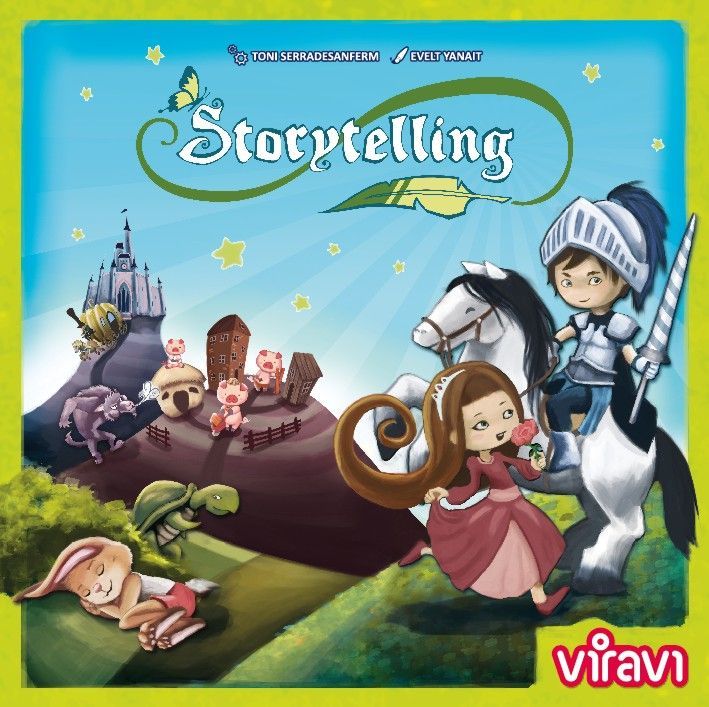

I never thought a board game could get my serious friend Dave to admit he once fell off a trampoline and blamed the cat, but here we are. Welcome to my review of Storytelling, the board game where your brain, tongue, and imagination all get a good workout. If you want a game night full of laughs, tall tales, and a few wild accusations, you might be in the right place. I played this one with my usual crew—some creative geniuses, a shy cousin, and that one guy who just makes everything weird. Let’s see if Storytelling can turn your boring evenings into epic sagas or if it’s just another broken pencil in the board game junk drawer.
How It Plays
Setting up
First, grab your copy of Storytelling, some paper, and pens. Sit everyone in a circle. Shuffle up the prompt cards (or whatever inventive triggers the game uses) and hand each player a blank piece of paper. Snacks nearby are optional but recommended for creative fuel.
Gameplay
The starting player draws a prompt card and kicks things off with the first part of a story. They pass the paper to the next player, who must continue the tale. This loop keeps going, with everyone adding their own silly (or dramatic) twist. If you get stuck, just remember: the wilder the better. Laughter is basically guaranteed. Watch out for that one friend who always adds pirates or llamas to every story. You know who you are.
Winning the game
Once the story goes full circle, everyone votes on their favorite tale (or plot twist). Whoever gets the most votes wins eternal glory and possibly the last cookie. There’s no luck — just charm, wit, and maybe a little shameless bribery. The real win? The absurd stories you and your friends will never let each other forget.
Want to know more? Read our extensive strategy guide for Storytelling.
How Clear Are the Rules in Storytelling?
The first time I pulled out Storytelling with my friends, we all did something that wasn’t reading the rules at first. Some people just want to jump right in and start making up ridiculous tales about detective ducks or intergalactic pizza deliveries (and yes, both happened). But then the arguing started. Who’s turn was it? Was I allowed to end the story with a tap dance? Was Bob’s story about a talking teacup even on theme? Clearly we needed to check the rulebook.
Let me tell you: Storytelling actually does a better job than most in the rules department. The instructions are written in plain language, not board game gobbledygook. The examples are funny, and they help new players understand the game flow. I didn’t have to pull out a magnifying glass or call my uncle who’s a lawyer. The rules are short! Just a few pages. Even my friend Jenny, who once tried to play chess with UNO cards, got it after one round.
But it’s not all roses. Some rules about judging stories and breaking ties are a bit wishy-washy. It’s like the game wants us to get creative with the rules too. This can lead to some minor feuds, especially if someone decides their chicken-ninja story is award-winning. The rules don’t always help you there. So you might end up with a house rule or two by the end of the night.
Despite a few blurry edges, I’d say Storytelling is easy to teach and even easier to play. Next up, I’ll share whether you’ll want to play it twice—or a hundred times—and how creative things can really get at the table!
Unleashing Replay Value and Creative Juices in Storytelling
Let me tell you, my group has played Storytelling more times than I’ve lost my train of thought… which is a lot! The magic of this game lies in its replay value and the endless river of creativity it seems to bottle up, only for us to pour out every game night. Every session flips the script—literally. You get a new theme, fresh prompts, and a bunch of unpredictable friends who throw in their wild ideas. Billie once invented a talking duck detective who’s allergic to breadcrumbs. You do not get that in Monopoly!
Storytelling’s replay value comes from its freedom. No matter how many times you play, the stories keep changing. Your shy cousin might turn into an improv champion or the quiet guy from work suddenly reveals he’s a narrative wizard. The cards nudge you in new directions but don’t handcuff your imagination. Even better, you never feel like you’re ‘solving’ the game and then shelving it forever—there’s always a new story to tell. And unlike some dry word games that make you feel like you’re stuck in a spelling bee, Storytelling makes everyone the hero of their own wacky adventure, even if the plot goes off the rails.
If you crave variety and hate board games that get boring after two rounds, Storytelling is a great remedy. Now, let’s peek behind the curtain and see if Storytelling strikes the right balance between luck and skill—or if it’s all just a roll of the dice!
Luck vs Skill: Who’s Telling This Story?
Okay, so what’s the deal with luck and skill in Storytelling? Can you win just because you’re lucky, or do you have to actually know what you’re doing? I roped my friends into several rounds (even managed to get Dave away from his beloved Catan for this one), so I can spill the beans for you.
Storytelling is not your classic roll-the-dice-and-shrug sort of game. There’s luck, sure – it’s there, like that random uncle who crashes every family barbecue. Sometimes your prompt card will be a gift from the story gods. Other times you’ll draw a turkey and have to explain why the wizard needed 14 pineapples at a medieval wedding. (Ask me how I know.)
But even then, the real fun comes from how you spin those weird prompts. Skill, imagination, and the occasional shameless bluff really matter. The person who wins is usually the one who can keep a straight face while telling the most ridiculous tale, or work their way out of a narrative corner with just a dash of nonsense. You can try to rely on luck, but the group will sniff out your lazy storytelling in seconds. Storytelling rewards boldness and wit, not just the luck of the draw. So yes, luck makes an appearance, but skill is queen here. If you’re like me and get performance anxiety telling stories, don’t worry – hammy overacting is basically a win condition.
And now, a real plot twist: next up is how Storytelling plays with different group sizes and whether it can turn a dull gathering into a legendary party. Stay tuned!
How Group Size Shapes the Magic of Storytelling
If you ever want to see humans forget their phone for an hour, just slap a box of Storytelling on the table and shout, “Who wants to tell fibs?” I’ve played this gem with my usual group of four, but also in a chaotic eight-person gathering that nearly resulted in a dog getting a speaking role. Here’s what I found.
With 3-4 players, Storytelling feels tight—each player gets more turns to shine, and the game clips along at a cracking pace. No waiting forever to tell your tale or judge your friends’ questionable imagination. I like that: less yawning, more giggling. Our friend Dave, who’s allergic to boredom, started narrating in pirate voices. Blame the game’s fast pace for inspiring such bold artistic choices.
Bigger groups (5-8 players) bring in wild energy. The stories get weirder, the interruptions louder, and it’s a lesson in crowd control by the end. The downside: folks have to wait longer for their spot in the limelight. That can lead to distractions. My buddy Emma almost missed her turn because she was trying to air-drum along with someone’s epic dragon chase. If you’ve got a table full of wallflowers, smaller is better. But big group chaos is unbeatable for parties.
Bottom line: Storytelling does a great job keeping everyone engaged, especially with creative and active people. If your group can handle some rowdiness (and the occasional random dog input), I totally recommend it. Just don’t be surprised if you laugh so hard you forget who’s winning.
Conclusion
So, that’s Storytelling! If your group likes making up stories and isn’t afraid to be silly, this game is a total blast. It’s easy to teach, never gets the same twice, and everyone gets a turn in the spotlight. The rules could use a little more detail, and if you have quiet friends, you might need to bribe them with snacks to join in. But when everyone’s on board, it’s a riot. Just don’t expect a super-competitive strategy game—with Storytelling, the fun is in the chaos, not the victory. Thanks for reading, and may your stories always be wilder than your uncle’s fish tale. Review over, you can go back to pretending to work now!