
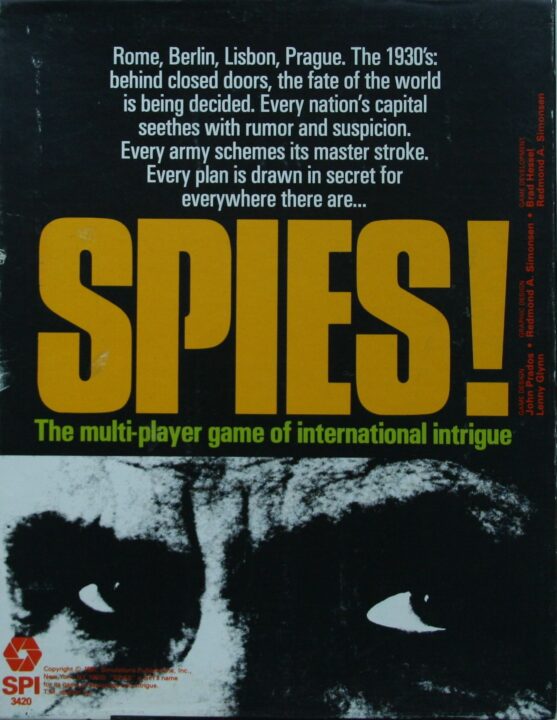
Spies! is a sneaky little party game where players trade clues, hide plans, and stare at each other like someone just stole the last biscuit. This review looks at how well the deduction works, how fair the turns feel, and whether the game keeps its charm after the first few missions. It has some rough edges, but it makes people laugh, accuse friends, and forget whose turn it is.
How It Plays
Spies! is a sneaky game of hidden plans, secret agents, and trying not to look guilty when someone asks what you are doing.
Setting up
Set out the board and place the action, mission, and scoring cards where everyone can reach them. Each player takes a spy team, receives their starting cards or tokens, and keeps their secret information hidden.
Gameplay
Players take turns sending spies, playing cards, and gathering information. You can work towards your own missions while watching the other players for clues. Bluffing helps, but a loud tablemate may give away more than they mean to.
Winning the game
The game ends after the agreed number of rounds or when the final mission is completed. Players score points for successful missions, useful information, and other goals shown in the rules. The player with the most points wins and gets to act smug for at least five minutes.
Want to know more? Read our extensive strategy guide for Spies!.
Deduction and Bluffing: Who Put the Mustache on the Spy?
Reading the Room
In spies!, deduction feels less like solving a crossword and more like trying to spot a cat pretending it did not knock over your drink. Every player gathers clues from actions, claims, and the wonderfully suspicious pauses between them. The game gives you enough to form a theory, but rarely enough to feel safe. That gap creates its best moments.
Bluffing matters just as much as deduction. You can tell the truth with a grin, lie with a straight face, or offer a half-truth that sends everyone chasing the wrong suspect. One player kept tapping their cards whenever questioned, so we treated the tapping like a secret code. It turned out to be nerves, not genius. We still accused them for the rest of the night.
The Bluff Has Teeth
The strongest plays do not come from wild lies. They come from choosing when to reveal a small fact and when to hide it. A good bluff should fit the evidence, while a bad one collapses under one calm question. Spies! rewards players who watch patterns instead of chasing flashy guesses. I enjoyed that pressure because every decision left a little footprint. Even passing could make you look guilty, which felt unfair only when someone had no useful clue to offer.
Next, we will test how Balance of hidden information shapes those guesses, because a clever lie means little if one player knows far more than everyone else; that section will check whether spies! keeps its secrets tight, or hands one lucky detective the keys to the whole silly cupboard.
Spies! Review: Balance of Hidden Information
Enough mystery, not too much fog
Spies! keeps its hidden information simple enough to follow without making my brain file complaints. Each player holds secrets, watches other agents closely, and tries to judge what the table knows. That sounds basic, but the game gives each secret real weight. One private detail can change a choice, while public moves still offer clues. Even the quiet player had something worth guarding.
The best part sits in the information split. Spies! never hides so much that players must guess blindly. You can build a plan from visible actions, then check whether your secret supports it. This keeps the game tense but fair. I dislike games where one lucky reveal wrecks an hour of careful play. Spies! mostly avoids that trap. Information arrives in small pieces, so players can recover after a bad read. My friend Sam once made a wild call, missed the mark, and still returned next round with a plan. No one groaned at the rules; we just called him “Inspector Guessy” and moved on.
Balance also comes from how much a secret can protect you. Hidden details help the weaker player catch up, but they never erase the cost of a poor move. That matters in a group with mixed levels. New players can watch, learn, and improve without feeling like targets in a spy movie where everyone owns the script. At the same time, experienced players gain something to chew on, since they must manage what they reveal, not simply hoard every secret. A few secrets feel stronger than others, though.
Next section: Turn flow and player interaction will send our spies sprinting around.
Turn Flow and Player Interaction in Spies!
Quick Turns, Loud Reactions
Spies! keeps each turn short, which saved our game from the dreaded table swamp. Players usually choose one action, resolve it, and pass the spotlight before snack time. That pace gives the game a neat rhythm, but it never feels like a race. Friends stayed alert because each move changed the mood around the table.
The best moments came when players affected one another directly. A move can force someone to change plans, spend a useful card, or abandon a smug little scheme. Those choices spark real talk without a courtroom. We teased players who waited too long, then cheered when a well-timed action spoiled their grand entrance. Even quiet players get chances to act, since the turn structure does not let one captain run the ship.
The interaction stays strongest at three or four players. With two, the exchange feels tighter, yet some effects lose their comic bite. At five, the table gets busier and turns can drag when everyone debates the same choice. Spies! also rewards watching the action, not just waiting for your own turn. That keeps players involved when their hands stay still.
A few actions need a second rules look, and that pause breaks the spy movie mood. Next, I’ll check replay value and setup to see whether espionage stays fresh.
Spies! Replay Value and Setup: Fresh Missions, Fewer Fiddly Bits
Setup That Gets Moving
We placed the cards, handed out the gear, and started within five minutes. The rules did not make us sort tokens by color or build an embassy. That mercy matters when friends bring snacks, pets, and a drink called “the green one.”
Small Changes, New Schemes
The replay value comes from changing roles and trying new plans rather than from a pile of events. Each session asks us to read the room in a way. That switch changed the mood without adding rules. At three players, the game felt tight and quick. With five players, it created noise but gave every scheme a little cover. I enjoyed both, though my cousin needed one round to stop looking at his cards like they might confess on their own.
That restart keeps Spies! on our shelf. We could finish a game, laugh at one choice, and set up another before anyone reached for a phone. Still, the game needs a willing group. If players repeat the same safe plan, later sessions can feel familiar. The box asks for a bit of table space, so our coffee table looked like a spy had sneezed on it. Storage feels tidy, but the cards deserve sleeves if your crew eats near the mission area.
I recommend Spies! for replay.
Conclusion
This concludes my review of Spies!. The quick turns keep the game moving, while hidden information gives everyone a reason to watch each other like tiny, nervous detectives. A few balance bumps and luck swings can spoil a close match, but they rarely ruin the fun. If you enjoy deduction, bluffing, and accusing your best mate of being a double agent with no proof at all, Spies! deserves a look. Just keep your poker face ready.