
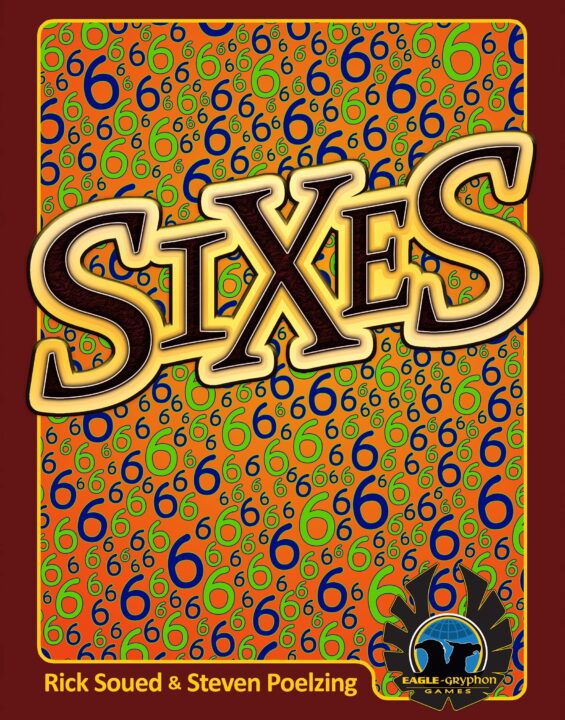
Welcome to my review of Sixes, the game that made me laugh so hard I almost snorted soda through my nose. Whether you’re a casual gamer, a party animal, or just want an excuse to make your friends groan at your terrible jokes, you’re about to find out if this game earns a spot on your shelf or the dreaded spot in the closet next to old Monopoly.
How It Plays
Setting up
Grab the deck of Sixes cards and a bunch of paper and pencils. Shuffle the cards and deal six to each player. Everyone also gets their own answer sheet. Prepare to challenge your inner genius and your worst handwriting skills.
Gameplay
On each round, a card gets flipped with a category on it. Think fast! Every player scribbles down six answers that fit the prompt. The trick? You want to match as many answers with the other players as possible. When time’s up, you share your answers—cue the arguments about whether ‘hotdog’ counts as a fruit or not.
Winning the game
After a set number of rounds (usually six, if you’re feeling classic), you tally up points for each matched answer. The player with the most points is the Sixes champion—until next time, when someone accuses them of cheating over that hotdog answer again.
Want to know more? Read our extensive strategy guide for SiXeS.
How to Play Sixes: Master the Madness
Alright, if you’ve ever wondered how chaos gets packed into one tiny box, Sixes is your answer. I first learned this the hard way when my friend Mark started yelling nonsense words before he even understood the rules. Let’s break it down so you don’t end up like Mark.
Each player grabs a stack of colored cards—six colors, six cards of each, hence the catchy name, Sixes. Every round, you get a random category. It could be as simple as ‘Animals’ or as weird as ‘Things That Make You Itch’. You have to write six answers that fit, but here’s the kicker: you want to match your friends, but not too much. If too many people write the same thing, you all get nothing. Write something unique, but not so unique that nobody else thinks of it. Turns out, I was just weird. No points for me!
Rounds are fast, and the timer is relentless—it’s like the game knows I panic under pressure. After everyone reveals their answers, points are scored by matching, but not over-matching. The person with the most points after a set number of rounds wins the game—and sometimes, if you play with my uncle, eternal family glory.
If you’re itching (not from velcro!) to know whether Sixes plays better with two or six, stick around for the next section where I spill the beans on fun for every group size!
How Much Fun Can Sixes Handle? (Player Count Showdown)
If you’re like me, your gaming group size changes more than my WiFi signal. Lucky for us, Sixes claims it works with 3 to 8 players. That’s a bold move, Sixes. So, does it actually deliver the fun, or does it crumble faster than a cookie at a toddler’s birthday party?
With three or four players, Sixes feels a bit like a calm walk in the park—nice, pleasant, but not a lot of tension. There’s enough time to think, and you can actually remember who’s winning. It’s safe but slightly less exciting than my cat’s afternoon nap.
Now, crank it up to six (very on brand) or more. Suddenly, Sixes transforms into a loud, chaotic free-for-all. I’ve played with eight, and it honestly felt like herding caffeinated puppies. Words fly, laughs roll, and you stop caring about winning and start caring about being the fastest scribbler in the room. Everyone’s ideas bounce off each other, and things go hilariously off the rails. My friend Amy laughed so hard, she nearly fell off her chair, and that’s basically the gold standard for “fun factor” in my book.
Is there a sweet spot?
Next up, I’ll pull back the curtain on whether Sixes is all skill, all luck, or some kind of mystical blend that would make even a fortune cookie jealous.
Is Sixes More Brains or Blind Luck?
Let’s face it—when you play a party game, you want at least some control over your own destiny. I don’t mind a bit of chaos, but I hate when a game just throws the dice and leaves the rest up to the fates. So, where does Sixes land on the scale of skill versus luck? Spoiler: It’s not as simple as you think.
With Sixes, you get a pretty even tug-of-war between quick thinking and randomness. I noticed right away that it’s not just about what cards you get, but how fast you can blurt out answers that fit the prompt and match the letter card on the table. My friend Dave, who claims he’s the king of word games, got totally flustered when the timer started. Meanwhile, my cousin, who honestly doesn’t know the meaning of the word ‘strategy,’ kept scoring points just because he’s got a knack for shouting out the first thing that comes to mind.
That means skill helps, but luck still butts in—especially when you land on a weird prompt or the letter is “Q”. Nobody’s got six things that start with Q! The randomness keeps things light-hearted, but sometimes it tips a little too far and you can feel like the game’s messing with you. Still, the game gives quick thinkers and wordy folks a slight edge, so it isn’t just luck running the show. It’s a rare balance, but it’s not perfect.
Feeling lucky? Good—because in the next bit, I’ll talk about replay value and the mad world of card variety in Sixes. Grab your dictionary!
Replay Value and Card Variety in Sixes
One thing that always makes or breaks a party game for me is whether it can stand up to repeated play. So, how does Sixes hold up after the tenth (or, let’s be honest, twentieth) round?
First off, Sixes packs a pretty decent punch when it comes to card variety. The prompts on the cards do a good job of keeping things interesting. You get everything from, “Types of cheese” (my friend Ben just writes ‘blue’ six times and somehow always gets points) to ones like, “Things you’d never say to your boss”—which, trust me, got out of hand real fast. I haven’t come across the same prompt twice in a session, and that’s after several rowdy game nights.
On top of the card variety, the replay value gets a boost from the players themselves. No two groups will give the same answers, and half the fun is seeing how your friends’s brains work under pressure. My cousin Karen once answered “types of hats” with, “baseball hat, cat hat, that hat, what hat, mat hat, sat hat.” Not a typo. She was dead serious.
That said, if you play with the same group every time, some of the joke answers might get old. But honestly, Sixes still manages to stay fresh more often than not. I’d happily give it another go next weekend after pizza and before the inevitable group existential crisis.
Would I recommend Sixes? If you want something light, hilarious, and with legs for repeat plays, absolutely. Just don’t blame me when your friends start making up their own cheese names.
Conclusion
Alright, that wraps up my wild ride with Sixes. If you want a game that keeps everyone laughing, thinking, and arguing over what counts as a sandwich, Sixes is your new best friend. It works with any group size, but five or six people bring out the best chaos. Skill matters, but you can’t escape the goofy prompts and random surprises. The replay value is top notch thanks to a huge stack of cards, so you won’t run out of ideas. Sure, if you hate even a sprinkle of luck, you might grumble once or twice, but for most of us, it’s a gem that belongs on the game shelf. Thanks for sticking with me—now go see if your grandma thinks a hotdog is a kind of sushi!