
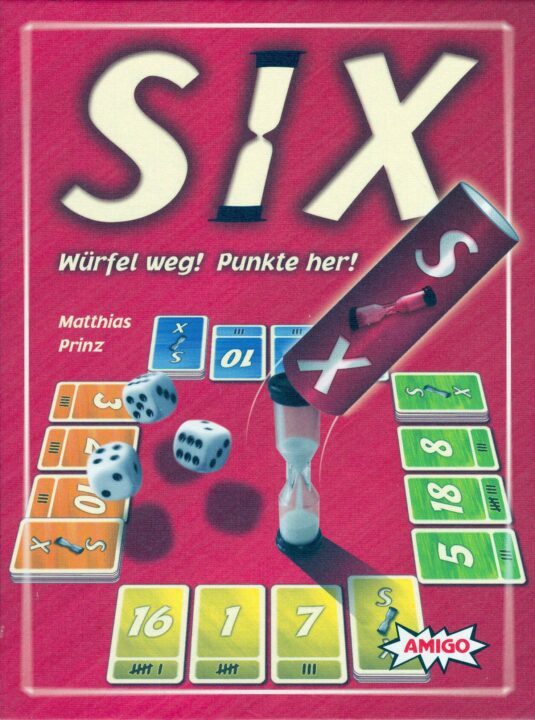
Welcome to my review of Six! If you like games with quick setup, tough choices, and not a shred of luck, you’re in the right place. Spoiler: my competitive cousin is still sulking, so you know it’s got some bite. Grab a snack, your thinking cap, and prepare to find out if Six is the next must-play in your collection!
How It Plays
Setting Up
Grab all 18 chunky hexagon tiles, split them between you and your buddy. Each player gets nine tiles of their own color. No need for a board or fancy bits, just a flat surface and you’re good to go. Keep the rest of your snacks safe nearby, because these tiles roll if you bump the table. Ask me how I know.
Gameplay
Players take turns putting down one tile at a time, connecting their own tiles to try and form a specific shape. The rules are simple: you can only place your own tiles, and you can’t break apart existing groups. After every move, give the play area a suspicious stare—someone’s always up to something sneaky. Trust no one. Especially your cousin Dave.
Winning the Game
Win by being first to create one of three shapes with your tiles: a straight line of six, a triangle made from six, or a closed loop of six. You’ll want to block your opponent while pushing for your own pattern. The game ends as soon as one of you shouts, “I got six!” and then everyone checks your tiles to see if you’re lying or just really good at this game.
Want to know more? Read our extensive strategy guide for Six.
Let’s Talk Six: Mechanics and Brain-Burning Strategy
Six is an abstract strategy game with a twist. It’s not just about chucking wooden discs onto a table and hoping for the best. You know those games where you can blame your loss on a bad dice roll? Yeah, this isn’t one of those.
Six keeps things simple. You’ve got 18 hex tiles and the goal is to connect six in a row, make a loop, or build a triangle with them. Think of it as tic-tac-toe on steroids. Each player places or moves tiles, trying to outsmart the other—and every move can open up a sneaky new trap. There are no dice, no cards, no random events. It’s just pure strategy. If you lose, you can’t blame the universe. You can only blame Steve for being too clever for his own good.
The best part? The rules take less than five minutes to explain, but mastering the game might cost you some friendships. (Kidding. But seriously, play nice.) The strategy in Six runs deep. Do you block your opponent or build your formation? Should you move a piece or add a new one? Every choice has consequences, and there’s almost zero room for careless mistakes. I love that. It feels fair, and you actually get better the more you play.
Ready for more? Next, I’ll look at whether Six stays fresh after a few rounds and whether you’ll finish before your tea gets cold or your brain melts.
Replay Value and Game Duration in Six: More Than Just a Quick Fix?
But here’s the plot twist: I was very wrong. Six manages to toe that line between being quick and still scratching that classic strategy itch. It sports a simple set of rules, but every game feels different. If you mess up, it’s your fault, not the dice, so blame yourself and get ready for a rematch.
The game sits in that perfect sweet spot for timing. Most matches zip by in about 10 to 20 minutes. It’s fast enough for an after-dinner showdown but deep enough to make you want to play “just one more”—and then three more because your sister claims her win was a fluke. And yes, she kept the official family leaderboard for a week, just to rub it in. Thanks, Six.
Replay value is high because your moves matter and patterns keep changing. There are no scripted plays, so you can’t really coast on autopilot. Your plans can get tripped up by clever opponents, forcing you to rethink things on the fly. Also, it’s a perfect travel buddy for train rides, airport gates, or awkward family reunions where talking is optional.
Whether you’re playing with your chess club rival or that uncle who claims he never loses, Six hands everyone a fair—and fast—challenge. Next up, I’ll talk about the component quality and just how portable this little hexagon of fun really is. Stay tuned, unless you’re allergic to high-quality game bits!
Component Quality and Portability: A Pocket Powerhouse
Let me tell you, when you first open up Six, it won’t knock your socks off with a pile of flashy bits, but it’s got a certain charm. The game only has 42 tiles, and they’re chunky hexagons, which is just fancy talk for ‘basically indestructible’. Not even a scratch on the piece or my dignity (well, maybe just a little on my dignity). These tiles don’t wear down easy, and the print doesn’t rub off, even after my friend Stacy spilled her third cup of coffee during a heated match.
I also love that you could fit Six in basically any bag. I’ve jammed my copy in a bike basket, a tiny purse, and even my coat pocket (okay, it stuck out a little, but don’t judge). There’s no board to fuss with, no fiddly bits to lose, and all the pieces fit neatly in the drawstring bag it comes with. This makes it a dream for travel, whether you’re off to the park, a cafe, or, in my case, the world’s most boring dentist waiting room.
So, you get sturdy tiles, zero clutter, and the kind of portability that makes it easy to play almost anywhere. Next, I’ll get to the juicy bit: is Six as fair as your grandma’s secret cookie recipe, or does it crumble under the pressure?
Six: Tipping the Scales – Is This Game Really Fair for All?
Let me tell you, I’ve played my fair share of games that felt as fair as a coin toss. Six is not one of those. This humble-looking abstract game keeps things level for both players, and honestly, it feels refreshing. Each player gets the same number of chunky hexagonal tiles, and every turn offers equal choices. No sneaky player powers, no cards with “destroy your opponent’s hopes and dreams” written on them. Just pure, old-school strategy from start to finish.
What truly makes Six feel fair is the symmetrical board—wait, scratch that, there is no board! You build the play area as you go, with each player having an equal say in where the action happens. On paper, that sounds like it could get wild, but trust me, it stays surprisingly well-balanced.
Here’s a fact that made me do a little happy dance: There’s basically no first-player advantage in Six. I’ve seen both the starting player and their rival win plenty of times. The game avoids the classic trap where whoever goes first controls the tempo. You’ll need to actually outmaneuver, not just out-luck, your opponent.
Would I recommend Six? Absolutely! If you’re hunting for a game where your choices, not a lucky dice roll, seal your fate, this is your jam. Six proves that simple, tight design leads to fierce but fair showdowns. Just be wary—if you lose, you can’t blame the game!
Conclusion
So there you have it—my review of Six, all tied up like a neat row of matching tiles. This game really surprised me. It’s clever, fast, and travels better than my grandma’s emergency sewing kit. I love that luck doesn’t get in the way. If you lose (like I did, badly, twice to my friend Jess), you’ve got no one to blame but yourself. Sure, the game won’t wow anyone with its looks, but the chunky tiles make up for it in durability. If you want a quick, smart, fair abstract game you can play anywhere, Six is worth a spot in your bag—or your sock drawer, if you’re out of space. This wraps up my review. If you try it, let me know who you beat (and if it was cousin Dave, I want stories). Happy gaming!