
Overview
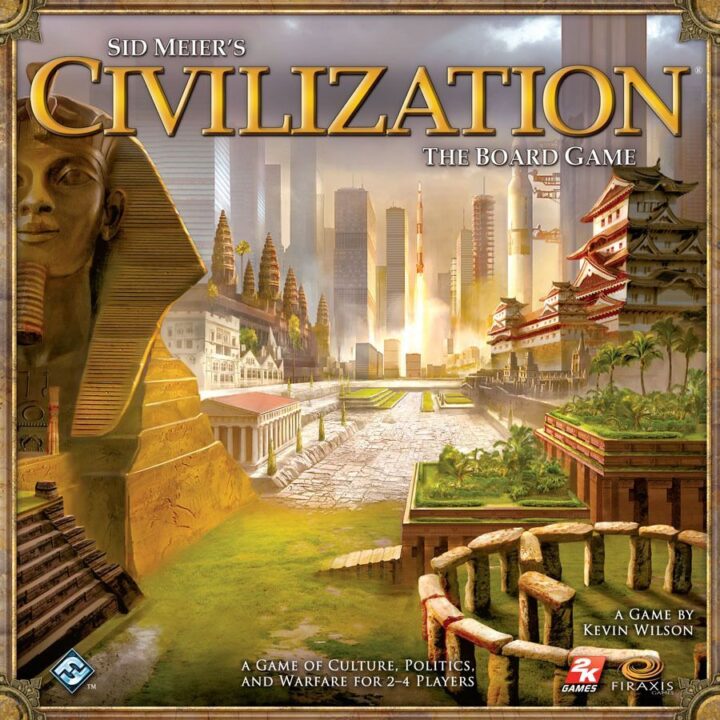
Plopping down into the reviewer’s seat, I’m here to guide you through the complex civilization-building experience that this game unfurls. Engaging in the strategy of empire crafting and the quiet thrill of discovering ancient lands in our own living room is a testimony to the game’s enthralling power. Encounter historical leaders, exploit resources, and navigate the diplomatic tides that shape your road to victory or defeat. This review sails straight into the core of gameplay—strategic depth and decision-making. We’ll converse around the campfire about memorable moments of player interaction and the diplomatic dances that ensue, and cap it off by evaluating how this game measures your evening and lures you back for just one more session. Let’s unravel the tapestry of ‘Sid Meier’s Civilization: The Board Game’ together!
How It Plays
Sid Meier’s Civilization: The Board Game plunges players into the heart of empire-building from the onset, balancing an intricate array of strategic options with interactive empire management to create unnervingly engaging play-throughs. This review nods to the game’s vast inclusion of historical empires, diverse paths to victory, and the adamantly iconic foundation of its video game predecessor. While design facets will only get a sidebar here, they’re not to be understated – catching the eye of newcomers and steadily guiding veterans to the same conclusion: Civilization speaks volumes, with a polish that counts. A game that can rekindle the stateliness of history conferences yet embody the closeness found around a family board game is hard to come by. Still, Sid Meier’s Civilization, at its core, is about shared stories, electrifying announcements, and the competitive bans of wits that foster both competition and camaraderie alike.
Setting Up
Players choose a civilization, lay out the map tiles, and strategically place their capital cities, setting the stage for their cultural, military, technological, or economic expansion.
Gameplay
Through trading, warfare, tech advancement, and diplomacy, you make profound choices in managing your society, drawing cards, and moving pieces, aiming to outpace your peers through building wonders, gaining culture, or technological superiority.
Winning the Game
The game culminates in a way that reflects history itself – it can be won by military domination, technological advancement, cultural influence, or economic investment, with victory pointing to far more than a momentarily first past the post;
Want to know more? Read our extensive strategy guide for Sid Meier’s Civilization: The Board Game.
Unraveling the Layers of Strategy
Every game night that features Sid Meier’s Civilization: The Board Game, becomes an epic tale of conquest and sagacity. As a seasoned player, I’ve savored the gratifying complexity this game offers. It’s as if each session is a fresh canvas, where our strategies paint the outcome.
Meticulous Planning
Transitioning into this topical plane, I recall one particular session where I keyed into science, unlocking powerful technologies that seemed to cascade towards an unmistakable triumph. Yet, in this game, one also learns the harsh truth that no plan is immune to the occasional quirk of fate—or the machinations of rivals.
Critical Choices at Every Turn
Each move is a decisive knot in the intricate web of tactics, whether you’re plotting the course of your army or cunningly trading with neighbors. Once, a friend surprised us by forgoing military might entirely, only to snag a cultural victory from under our noses.
What this drills down to is that strategic planning in Civilization isn’t just about pure logic; it’s tempered by the quixotic nature of your opponents’ decisions. With that, we prepare to delve into the juicy nuances of Player Interaction & Diplomacy in our next section—a dance of alliances and treachery.
The Intricacies of Diplomacy in Sid Meier’s Civilization
One standout aspect highlighted in my Sid Meier’s Civilization: The Board Game Review is the rich tapestry of player relations. In essence, Civilization is a fertile breeding ground for alliances and betrayals, and that’s what makes each game dazzle with its own unique narrative. The beauty of it comes from the evolving dynamics as you sit around the table – understanding, for instance, when your neighbor is budding into a military threat necessitates swift communal action.
Forging Alliances
Choosing friends over foes can be a hard call – should you support their growth, knowing it might imperil your own?
The Dance of War and Peace
Conversely, there’s the delicate art of the pivot when diplomatic turned military solutions suddenly spring forth and conquest becomes the language of necessity, dramatically shifting alliances. The dice rolls thunder, pieces move, and glances are exchanged – like that time I rallied a friend against another, only to have the tables turn towards an unforgettable coup. Communication, psychology, playing both the board and the people around it – it’s diplomacy in its rawest form.
In anticipation, one can only speculate how the mechanics of player interaction feed into Civilization’s broader tapestry – but now, let’s ponder the viaduct to our final destination: Game Length & Replayability.
Diving into Depth: Game Length & Replayability
Each session a marathon, our dedication to crafting our empires speaks volumes about the intricate design of the game. Interestingly, as much as the game leads you through historical time, it’s easy to lose track of actual time while playing.
Marathon Matches
As a reviewer often caught up in the whirlwind of new titles, revisiting Civilization always feels like returning to a classic novel. The game’s length is notorious; a complete playthrough is a commitment akin to those weighty tomes that demand unhurried afternoons—sessions as long as four hours regular. Transitioning constantly between war, peace, and alliance-shifting, there’s a palpable tension that dangles over the drawn-out hours, making the long gameplay as addictive as it is exhaustive.
Cultural Replayability
Social expectations suggest value in quick, reusable entertainment, but this game which elegantly outstrips that convention. Facing myriad choices of civilizations, strategies, and random encounters, each game invariably charts a fresh course. Consequentially, this sweeping replayability surges above the daunting game length and feeds directly into one’s willingness to endure it. Remarkably, personal anecdotes from various matches remain distinct precisely because no two are ever quite the same.
Through willingness to engage in its nuances, Civilization secures its recommendation from me. Like those once-in-a-lifetime vacations that require significant chunks of time and energy, it rewards handsomely, in memories that endure and stories that demand repeating—the surest sign of a journey worth embarking upon, over and over again.
Conclusion
With the final moves played and our global landscapes sprawling before us, it’s time to bring our Sid Meier’s Civilization: The Board Game Review to a close. We’ve embarked on a journey through intricate strategic depth, lively player interactions, and endless replayability, each session a testament to the game’s robust design. It mirrors the digital game’s challenge of guiding your civilization from humble beginnings to a powerhouse of historical standing. Crucially, Civilization has shown its capacity not merely as a game, but as an experience—a challenge to our wits and a catalyst for storytelling with friends, a truly competitive clash teeming with alliances and rivalries. Should you gather fellow leaders and put this game on your table? I’ve left hints of an empire-emphatic yes within the telling of my tales, for anyone scouting for a sign.