
This time, we put on our imaginary spy hats and tried to outsmart each other in Secrets. This review is for anyone wondering if this game delivers shocking betrayals, epic moments—and most importantly—good laughs, or if it’ll just end up gathering dust next to that copy of Monopoly nobody likes. Buckle up, because I’ve got all the sneaky details you need before you blow your cover (or your wallet).
How It Plays
Setting up
Shuffle those role cards and hand them out—nobody show your card! Give out the player tokens and deal out the character cards. If you get the hippie, don’t get too chill; you got your own win condition. Put the point chips in the middle. Then, try to remember who’s on your team. You’ll need it!
Gameplay
On your turn, grab two character cards, pick one, and give it to another player. Hate picking sides? You’ll have to pick anyway. The player can accept or refuse your “friendly” offer. If they refuse, you get the card! Each card has a sneaky effect—maybe swapping roles, getting points, or peeking at cards. All the while, try to remember who’s good, who’s bad, and who’s just bad at lying (that’s usually me).
Winning the game
Game ends when someone hits a certain point total, then you reveal teams and see who actually helped (or doomed) their squad. Spies want the least points, agents want the most, and if the hippie has just the right amount, they win solo. Yup, your best buddy might stab you in the back for the hippie win, but hey, that’s spy life!
Want to know more? Read our extensive strategy guide for Secrets.
How Teamplay and Secret Roles Mix Things Up in Secrets
If you like your board games with a bit of trickery—I’m talking about moments when your friend swears they’re on your side, but you both know they’re lying—then Secrets is your jam. Secrets throws players into a wild dance of alliances, bluffs, and sudden betrayals, all thanks to its teamplay mechanic mixed with those mischievous secret roles.
You start the game thinking you know who’s on your team. Spoiler alert: you don’t. There are CIA, KGB, and Hippie roles in the mix, and the game makes sure you never fully trust anyone. I once teamed up with my friend Dave, only to realise halfway through he was a Hippie out to sabotage everyone. Let’s just say Dave didn’t get invited to the next game night (kidding, but only because he brought snacks).
The teams in Secrets form and break apart quicker than my willpower near a plate of cookies. You play cards, pass information, and secretly hope your team wins. But you also have to keep your role hidden, so no one gets a clear picture. At one point, I passed the wrong card to a supposed teammate… who then grinned and stole the win for the other side. Oops.
This balance between cooperation and deceit keeps the table buzzing with tension and suspicion. You think you’re helping your team, but you might just be falling for an elaborate trick. The constant guessing adds spice to every play, especially when someone pulls off a big surprise reveal.
Now, if you’re wondering how often you can get away with such backstabbing fun, let’s chat about the replay value and game variety next—it’s less repetitive than my excuses for losing, promise.
Replay Value and Game Variety in Secrets: Never the Same Game Twice
Not because it’s the only one I own (I have far too many for my own good), but because it feels fresh every single time. The secret roles paired with ever-changing alliances make each round a total mystery. Sure, you might start thinking you’ve cracked the code and can guess who’s CIA, KGB, or a hippie just from their poker face… but then you’re wrong. Again. And again. I’d like to blame my bad luck, but really, it’s the game keeping me on my toes.
There’s a pile of different character cards, each with their own sneaky powers—like the Hippie causing chaos or the double agent turning things upside-down. This means your strategy changes with every game, and honestly? No two games have ended in the same way for us. My friend Dave once spent the whole game pretending to be on my team, only to flip the script in the last move. Still not over that, Dave.
Another thing I love is how Secrets scales with different player counts. We’ve played with five, seven, and every number in between, and it always delivers those “wait, what just happened?” moments. Plus, you never have to play the same role twice unless you really want to, so even that one friend who insists they’re bad at bluffing (we all know one) can find their groove eventually.
But before you go thinking Secrets is all variety and no bite, let’s see how it stacks up in the never-ending war between luck and skill…
Luck vs Skill in Secrets: Who’s Really in Control?
Let’s be real: if a game lets me feel like a genius and then sucker-punches me with bad luck, I’m not usually a fan. Sorry, Sam. The CIA made me do it.)
In Secrets, you have hidden roles, wild alliances, and a few twists that come from the cards you draw. At the start, you don’t know who’s on your team. That means everyone’s squinting at each other, trying to outsmart their own grandma. The luck kicks in when cards get passed around or when you try to suss out the KGB spy sitting across from you who’s bluffing harder than a poker champion in Vegas.
BUT—and this is important—Secrets isn’t pure randomness. Good players can read the table, spot subtle tells, and make smart plays. I actually caught my friend Jen lying because she starts fiddling with her hair when she’s nervous (pro tip: watch out for table quirks). Bluffing, deduction, and alliances matter a lot more than what card you pick up. Of course, a weird card combo might throw you a curveball, but solid strategy usually beats sheer luck.
So, I give Secrets high marks for letting skill win out, but with just enough chaos to keep everyone guessing. If you hate games that are pure luck-fests, you’ll be pretty happy here. Next up: let’s see if Secrets’ cards are as pretty as its gameplay is sneaky—bring on the component quality and artwork!
Component Quality and Game Art in Secrets: Sleek Looks, Cool Feels
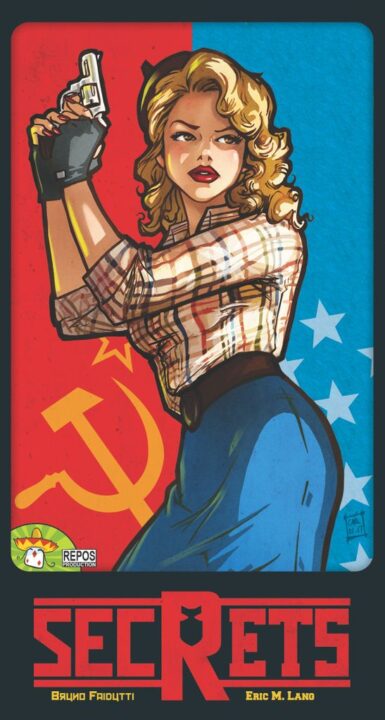
I’ll be honest—half the reason I agreed to play Secrets that first time was because the box looked like something out of a 1960s spy movie. It’s not flashy, but it oozes cool. That’s my vibe for a game night! The art totally nails the Cold War theme. You’ve got agents in trench coats, mysterious briefcases, and enough retro sunglasses to outfit an entire jazz band. I caught my friend Dave doing spy voices the whole time and I can’t even fault him—the art invites it.
As for the pieces, everything feels sturdy and functional. The game uses chunky cardboard tokens for scoring and roles. Nothing warps, nothing feels flimsy. If you ever had the “I dropped a card in the hummus” problem, you’ll appreciate this durability. The cards themselves have a smooth finish—sliding them across the table feels kinda classy, not gonna lie.
One clever touch: the iconography. Even when you’re four rounds deep and your brain is fried from all the double-crossing, the clear symbols help you keep track of who’s who and what’s what. I’ve played too many games where I mix up tokens and end up sabotaging my own team by accident (looking at you, Jimmy). Here, everything’s clear—unless someone’s TRYING to confuse you, which is what makes the game fun in the first place.
Would I recommend Secrets based on its art and components? You bet. It looks cool, it feels good, and it survives game night chaos. That’s a win in my book!
Conclusion
And that wraps up my Secrets review! This game seriously hits the spot if you love lying to your friends (in a good way). The secret teams and funky card powers keep everyone guessing. You’ll laugh, you’ll shout, you’ll accuse your best mate of being a hippie spy—which, let’s be honest, is the dream. The game’s got replay value coming out its ears, plus solid art and thick cards that survived my cousin dropping salsa on them. Not everything’s perfect—if your group doesn’t like bluffing or gets grumpy over secrecy, it might cause a ruckus. But if you’re after a clever, quick social deduction game, Secrets is a blast. I give it a cheerful 4 out of 5 salsa-stained stars.
This concludes my review—just don’t trust anyone holding the ‘CIA’ card. Trust me, I learned that the hard way.