
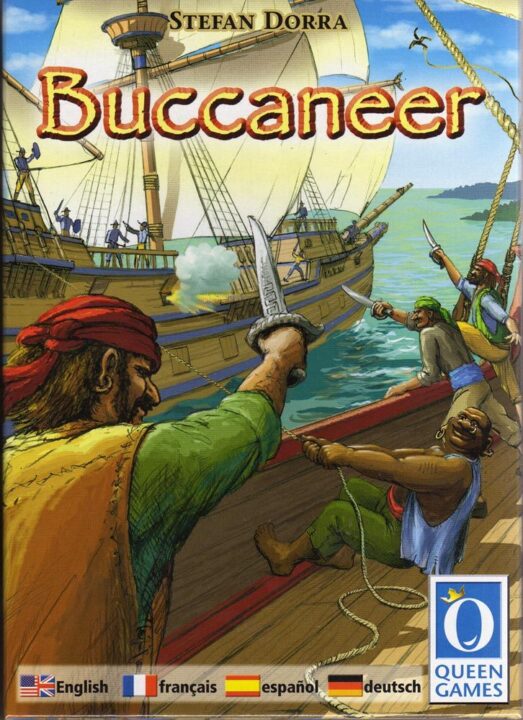
This review looks at Buccaneer, a lively pirate game where treasure, tricky deals, and sudden blockades can turn a quiet turn into total chaos. Still, a few balance bumps and some wild moments stop it from sailing perfectly. Grab your crew, guard your gold, and lets see if this old sea dog still earns its keep.
How It Plays
Setting up
Each player takes a pirate ship, crew, and starting gold. Place the treasure pieces on the marked islands, shuffle the cards, and put every ship in its starting port. Try not to look too smug. The other pirates will notice.
Gameplay
On your turn, move your ship around the board and hunt for treasure. You can collect loot, make deals, and attack rival ships when the rules allow it. Battles use your crew strength, so a well-staffed ship can scare off weaker sailors. Watch your supplies, though. A ship full of treasure makes a very tempting target.
Players keep sailing, trading, and fighting until someone gathers enough treasure to make a serious claim for victory. The game mixes planning with luck, so even the best pirate can suffer a rotten turn now and then.
Winning the game
The player with the most valuable haul at the end wins. You score treasure from your cargo, while empty-handed pirates get to explain that they were “playing for fun.” Good movement, careful deals, and knowing when to flee will usually beat wild swinging of the cutlass.
Want to know more? Read our extensive strategy guide for Buccaneer.
Trading Gold and Hunting Treasure in Buccaneer
Every Chest Has a Price
In Buccaneer, trading feels like haggling at a dockside market where everyone smells of salt, rum, and suspicious deals. You collect treasure cards, then swap them with other players to build sets worth more than their loose parts. A lonely ruby may look flashy, but three matching gems can turn a small haul into a fat pile of coins. The clever bit comes from reading the table. If another player needs your card, you can name a price, offer a trade, or hold it hostage while wearing your best pirate grin.
Risk, Reward, and Rotten Luck
Treasure hunting also gives Buccaneer its best little tension. Each card you draw might complete a set or sit useless in your hand like a parrot with no vocabulary. You must decide whether to trade early for steady profit or chase a bigger reward. That choice sounds simple until the player beside you reveals the final card for a valuable collection. Suddenly your safe plan grows legs and runs across the deck. In one game I swapped away a useful coin card for a map I thought another player wanted. They did not. I spent the next round staring at it as if it had personally insulted my parrot.
What Makes the Hunt Work
The hunt works best when players can judge value without needing a calculator and a weather report. Sets should feel tempting but not automatic for patient players with sharp eyes. Buccaneer rewards players who track which treasures have appeared and remember who holds what. You watch faces, listen to boasts, and spot the brave soul pretending that a terrible card is priceless. Luck can kick the rudder and then. A lucky draw may hand someone a near-complete set, while your careful plan collects dust. That swing keeps the game lively, but it can annoy players who want every choice to matter. Next, Pirate crew movement will steer these hard-won fortunes around the map.
Buccaneer Pirate Crew Movement: Sail Smart, Not Silly
In Buccaneer, moving your pirate crew feels simple at first: pick a ship, choose a port, and hope nobody has parked a rival vessel exactly where you need to go. That small route puzzle gives the game more bite than I expected, because every move changes the map for everyone else.
Reading the Route
Movement uses a pleasing push and pull. You want to reach busy ports, but crowded waters invite trouble. A rival can block a handy landing spot, forcing your crew to take the long way round. I watched my friend Nina spend three turns circling an island while the rest of us sailed past, laughing like very polite sharks.
The best part is that movement never feels fully safe. Short routes save time, yet they expose your crew to more challenges. Longer routes protect your plans, though they can leave you behind. This creates real choices instead of a dull race around the board. I often made a clever plan, then ruined it by moving one space too far. My crew apparently follows orders with the confidence of a cat near a bath.
Crowded Waters
Still, the system stays easy to teach. New players can see where their crew may travel, and the board shows the danger without burying anyone under rules. Nobody wants a pirate map nap.
One weakness appears when the board gets crowded. A blocked route can feel less like tactics and more like a sofa across the ocean. The game gives another path, but it may cost turns. This pressure kept us laughing. Next, we sail into Player negotiation and alliances, where friendly promises grow sharp teeth.
Buccaneer Player Negotiation and Alliances: Trust, Bluffs, and Betrayal
Talk First, Sail Later
Buccaneer gives players a lovely chance to act like charming criminals at a dinner party. Every deal starts with a smile and ends with somebody regretting their life choices. Players can promise help, share a future plan, or offer a rival just enough rope to hang themselves. A strong alliance can turn a poor position into a winning one, especially when two captains agree to stop a third player from becoming too rich. The clever part involves making deals that sound useful while hiding your real goal. I have watched friends promise to back each other, then abandon that plan the moment a better offer appears. That betrayal feels funny because nobody takes it personally for long; the table erupts, and five minutes later, everyone starts bargaining again. Negotiation rewards players who read the room. If someone controls a useful port or holds a card that another player badly wants, their voice carries weight. Still, alliances never feel permanent. The rules encourage short-term teamwork, not a pact that lasts all night. This keeps the game moving and stops one player from building a pirate government at the table. Share everything and you become predictable; hide everything and you look sneaky, even when you forgot what you promised. The best alliances also create table stories: one friend swore loyalty, accepted a favor, then charged away laughing like a seagull with stolen chips. Next, Luck, balance, and replay value will inspect whether these alliances survive the dice.
Buccaneer Luck, Balance, and Replay Value Review
When the Dice Get Ideas
Buccaneer has a healthy amount of luck, but it usually gives you a nudge rather than a full shove into the sea. Random results can open a chance, spoil a plan, or make everyone at the table laugh when a bold pirate suddenly looks very foolish. In my games, luck created stories instead of deciding every winner.
A Little Wobble in the Balance
That said, the balance depends on who sits at the table. New players can stumble into a strong position, while experienced players spot better chances and squeeze more value from each turn. The game does not always reward the person with the best plan, which may annoy serious number crunchers. My friend Lena once built a perfect path to victory, then watched a lucky card hand another player the win. She called it “pirate nonsense,” then asked to play again five minutes later. That sums up Buccaneer rather well.
Does It Stay Fresh?
Replay value stays strong because the table changes every time. Players bring different moods, risk levels, and grudges, and those choices shape the whole match. One night, cautious play kept the game tight. The next, two reckless captains caused a glorious mess and let a quiet player sneak ahead. Buccaneer also works well with a changing group, since the rules stay easy to recall. I still found a few games that felt similar, especially when players avoided bold moves. The game needs brave choices to show its best side.
Overall, luck keeps Buccaneer lively, yet it does not erase player skill. The balance sometimes wobbles now and then, but the fun survives. I recommend Buccaneer for groups who enjoy noisy surprises and fresh stories, not players seeking perfect control.
Conclusion
This concludes the review of Buccaneer. The crew movement gives players useful choices, while trading makes every haul feel like a small victory. Luck can swing a game, and the balance wobbles now and then, so it may annoy players who want perfect control. Still, the quick turns and lively table talk keep the game moving. Buccaneer works best with a playful group that enjoys risk, bluffing, and yelling “That was my island!” across the table. It is not flawless, but it delivers a good time without asking for a pirate-sized rulebook.