
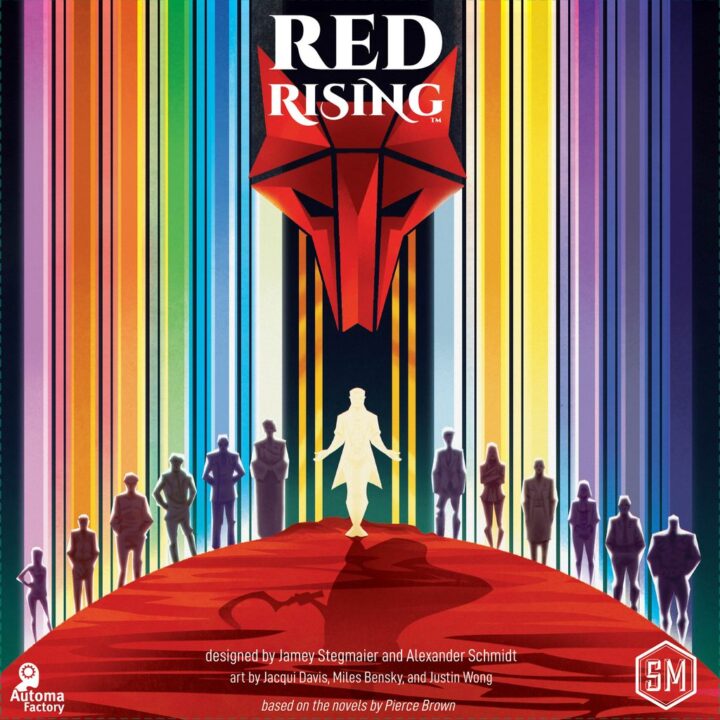
Here we go, another cardboard adventure! If you’re curious whether this shiny, combo-crazy game is worth your table space—or if it’s just another pretty face—stick around for my honest, occasionally snarky review.
How It Plays
Setting up
Pick your house. Grab your matching tokens. Shuffle the giant deck (try not to drop it on the cat). Deal 5 cards to each player. Lay out 4 locations and put a card face up at each. Toss cubes and helium tokens everywhere, but keep some order so you look like you know what you’re doing.
Gameplay
Every turn, decide which card from your hand you’re sick of and place it on a location for its bonus. Then snag a new card from a different spot, triggering that location’s special effect. Try to build the perfect hand of 7 cards for big points. Watch out—other players will definitely mess up your plans, on purpose.
Winning the Game
When someone triggers the end (by meeting a few conditions like running out of cubes or helium), everyone gets one last move. Tally up the points in your hand, add any bonus stuff, and check who’s the sneaky genius this round. Whoever has the most points wins. Everyone else pretends not to be salty.
Want to know more? Read our extensive strategy guide for Red Rising.
Mastering Card Combos and Hand Management in Red Rising
Card combos are the sweet, sugary center of Red Rising. If you’re the kind of player who loves cooking up mind-bending combos, this game is your candy shop. Every card links with another, often triggering wild effects that will make your friends stare at you in disbelief—usually right before they throw a card across the table in frustration. But that’s half the fun, isn’t it?
Hand management is key. You can only hold so many cards, and you will constantly be tempted to grab that shiny new Gold card, only to realize you’ve just wrecked your perfect line-up. I learned this the hard way, when I traded a key card for something that turned out to be as useful as a chocolate teapot. Managing your hand in Red Rising feels a bit like digging through a bargain bin blindfolded: you want to build synergies for big points, but you also need to keep enough flexibility to react to what the game (and your sneaky opponents) throw at you.
So, is it as fun and tactical as it sounds? Mostly yes! Creating the ultimate combo definitely scratches the strategy itch, and every hand feels like a mini-puzzle. Just try to avoid tunnel vision, or you might find yourself with a hand that’s full of potential and absolutely zero points. Next up, let’s see how much of your victory in Red Rising comes down to skill, and how much you’ll be blaming those pesky luck gods.
Skill vs. Luck in Red Rising: Who’s Really in Control?
After five full games of Red Rising, I can say this: sometimes you feel like a genius, and sometimes you feel like you’ve just lost to Aunt Martha’s pets. Red Rising splits the difference between skill and luck. There’s definite skill in how you read the game state and manage your options each turn. Watching my friend Steve draft a perfect hand while I stared at a bunch of C-list Golds made it clear: knowing when to pivot is key.
But let’s not pretend luck is just a sidekick here. The card draw can absolutely mess with your best-laid plans. I once set up everything for a sweet combo, then drew a card so useless I could swear the deck was trolling me. At the same time, lucky top-decks can push someone ahead, seemingly out of nowhere. It’s not quite as random as a dice-chucking game, but Red Rising’s luck factor takes the edge off a pure strategy experience.
If you like games where every move counts and the path to victory is all brainpower, you might feel a bit mugged when someone wins because they nab the one card you needed. On the other hand, this element also means newer players have a fighting chance. Is it unfair? Sometimes. But never boring. Next up, I’ll talk about Red Rising’s artwork and components—prepare your eyeballs for an explosion of colors and gold foil!
Red Rising Artwork and Component Quality: A Feast for the Eyes or Just a Snack?
Let’s face it—sometimes you pick a game just because it looks cool. My buddy Tim once bought a game called “Frog Attack” just because the frogs looked hilarious in tiny hats. Red Rising, thankfully, avoids frog hats, but it does pack some real eye candy. The first thing that hit me when I opened the box was the shiny metal cubes. They look like tiny futuristic Skittles, and yes, I may have tried to eat one. Please, don’t do that.
The card art in Red Rising is straight out of a sci-fi book cover fever dream. Bright colors, epic humans, and golden wolves. I kept pausing the game to read the character names—did you know there’s a dude called “The Jackal”? Legendary. Still, not all art is equal: a few cards have faces that look like they just smelled rotten eggs. Minor detail, but it would have been nice if all the art matched the best ones in the set.
I do wish the card stock felt a bit heavier. Nothing tragic, but if you play Red Rising a lot, think about getting sleeves. The insert is good for keeping all the bits in order, unless you’re the sort of person who throws things back in the box and hopes for the best.
Next up, let’s see if Red Rising stays exciting after a few runs, or if I’ll end up using the board as a fancy snack tray during game night. Spoiler: snacks may still be involved.
Replayability and Player Interaction: Will Red Rising Keep You Hooked?
If you’ve ever played Red Rising with a group of people who hate to lose (like my buddy Greg, who once flipped a table during Uno), you know how spicy the player interaction gets. The game has this neat way of making you care a lot about what everyone else is up to. Every turn, you can see someone else eyeing that card you just placed down. It becomes a game of chicken—do you grab a card you need, or leave it and hope no one else snatches it up? I’ve seen alliances form and break over Helium tokens. Wild times.
Replayability is decent in Red Rising. The game has a huge stack of cards, so you almost never see the same combos play out twice. I’ve played it at least six times now (Greg only flipped the table once, for the record) and each session felt fresh. You can chase combos, experiment with different houses, or just try to be the friendliest jerk at the table. The strategic depth means you’ll want another crack at outsmarting your pals. Sometimes, though, it can feel like you’re at the mercy of which cards show up. If you or your group like to discover new card synergies, you’ll get a lot of mileage out of it.
So, do I recommend Red Rising? For fans of smart moves and a bit of drama, yes. If you want perfect control and no chaos, maybe leave your helium at home. It’s fun, a bit mean, and I keep reaching for it—table flips and all.
Conclusion
Well, folks, that wraps up my Red Rising review! If you like clever combos, pretty cards, and a dash of chaos from random draws, you’ll have a blast. The game shines at keeping you on your toes with every hand and gives plenty for strategy lovers to chew on. Just know luck can sometimes throw your plans out the window like an unruly Gold card. Not perfect, but pretty darn fun. Try it if you want something shiny, smart, and slightly unpredictable on your shelf!