
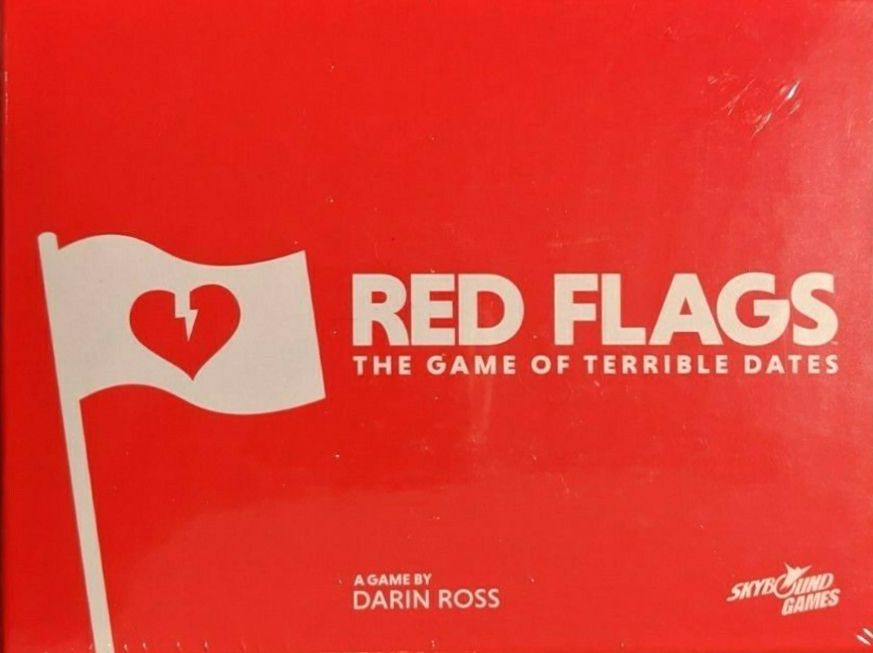
After several loud games with friends, this review looks at Red Flags, the party game where every dream date comes with a nasty little catch. The game brings fast rounds and big reactions, though some cards feel dated and group taste matters a lot. Here is what worked, what flopped, and why someone always ends up defending a truly awful person.
How It Plays
Red Flags turns dating into a silly card battle, where every dream date comes with a catch. Think romance, but with more chaos and fewer sensible choices.
Setting up
Deal each player four Perk cards and three Red Flag cards. Choose one player to be the Single. The Single starts the round by playing one Perk card from their hand.
Gameplay
Everyone else plays one Perk card face down to build another date. The Single shuffles the cards, then adds one Red Flag to each date. Read the dates aloud and enjoy the table groaning. The Single picks the date they would most like to go on.
Winning the game
The player who played the chosen Perk card wins the round and becomes the new Single. Draw back up to four Perk cards and three Red Flag cards, then start another round. After everyone has had a turn as the Single, the player with the most wins takes the crown. It is a small crown, sadly, but still a crown.
Want to know more? Read our extensive strategy guide for Red Flags.
Funny Red Flags Perk and Flaw Pairings That Keep Everyone Laughing
Red Flags works best when a shiny perk crashes into a truly awful flaw.
The game rewards perks that create a clear picture and flaws that smash it with a frying pan. “Can talk to animals” paired with “they all hate you” creates instant drama. Nobody cares about winning when the animal voices start judging everyone’s snack choices. Another favorite gave a player “perfect memory,” but added “remembers every embarrassing thing you have ever done.” She used it to expose my 2014 karaoke solo. I still deny the duck costume existed.
Good pairings also let players build wild stories. “Can teleport anywhere” sounds powerful, but “only to places with a sad clown” turns every plan into a circus emergency. The perk “has a golden voice” becomes less useful when the flaw says “must sing all requests.” We begged for water and received a full opera about hydration. It was beautiful, annoying, and somehow catchy.
The best cards stay funny without feeling cruel. The flaws should poke fun at habits, not target real pain or personal limits. Still, some combinations depend on the judge’s sense of humor. A quiet group may skip a gag that makes my loudest friends snort like broken lawn mowers. That variety keeps each round fresh, though a few cards feel flat after several plays. I remove the weakest ones and add house rules for chaos. Next: Player judging and lively debate.
Player Judging Turns Red Flags Into Loud, Glorious Debate
Red Flags looks simple on the table: one player reads a setup card, everyone adds a red flag, and the judge chooses the worse date. That role turns the game into a tiny courtroom. One player defended a loud snorer as “a lovable foghorn.” Another argued that a vampire roommate offered useful pest control. We laughed, shouted, and treated each case like it could affect our rent.
Good Arguments Beat Fast Votes
The best moments came from judging, not card draw. A strong judge listens to each pitch, spots the sneaky detail, and explains the final choice. That explanation matters because players want to know why a masterpiece failed. If the judge simply points at a card, the table can feel flat. When the judge makes a case, losing players nod, then complain anyway. That is the proper Red Flags experience: fair enough to accept, silly enough to keep arguing.
Where the Debate Can Drag
Still, the judging system has one weak spot: some people love performance, while others prefer choices. A player who tells a story can steal the room before anyone else gets a shot. It kept the pace snappy without killing the jokes. The game also works best when judges avoid personal attacks. “Your date has three exes” feels funny; “you are undatable” lands like a damp sock.
That balance makes Red Flags shine for lively groups who enjoy defending nonsense. It gives quiet players a reason to speak and loud players a reason to listen. Keep the ruling kind, the timer nearby, and the snacks protected. Next comes replay value with different groups, from shy cousins to competitive gremlins.
Replay Value with Different Groups
Every Table Changes the Game
Red Flags earns its replay value from the people around the table. The same hand feels different with loud pals, quiet cousins, or friends who debate every choice. One group makes fast picks and big laughs. Another tells a five minute story before playing one card. That changing mood keeps the game from feeling stuck.
Friends, Family, and Fresh Chaos
Family kept things tame, choosing silly perks for pets, snacks, and pretend trips. My regular crew pushed cards into stranger territory, causing pauses, groans, and loud cheers. A two-player game felt more like a puzzle, since each choice carried extra weight. New players also refreshed old cards because they brought jokes my usual crew never sees.
Best at Four or More
The sweet spot sits at four to six players. Everyone gets enough turns without waiting so long. Bigger groups add surprise, but they can stretch a round when several people explain their choices. Smaller groups work for quick rematches, though they reveal the deck’s limits sooner. After many plays, you may recognize familiar cards and guess a few jokes. That never ruined our night, but fresh faces made old cards sparkle still.
Why It Stays on the Shelf
Red Flags stays handy because it needs no campaign, setup marathon, or perfect player count. It suits parties, holidays, and odd ten-minute gaps before dinner. Replay comes from changing tastes and company, not deep strategy or endless content. Next, we check Adult humor and content limits, where every laugh meets a tiny safety belt.
Adult Humor With a Safety Net
Red Flags has one main superpower: it turns a quiet room into a courtroom where everyone is laughing and someone is defending a date with a pet snake. The adult humor stays cheeky rather than graphic, but it can still wander into rude territory fast.
Yet the joke works best when players know where their group draws the line. That mix made the content limits clear without killing the fun.
Know Your Crowd
Red Flags gives players enough control to skip a card, but it does not provide a magic shield against one person who keeps pushing the joke too far. We used a simple house rule: if someone looks uncomfortable, the card goes back in the box. No debate, no courtroom drama, no tiny emotional hostage situation. That rule helped our shy players join in, and nobody had to explain their private life to earn a laugh.
Some Cards May Feel Dated
The game can also feel dated if your group expects gentle, family-friendly comedy. Some cards lean on stereotypes or suggestive ideas, and a few punchlines land with the grace of a pie hitting a window. I would love a broader set of options, perhaps with silly, flirty, and totally clean packs sold separately.
Still, the adult tone gives Red Flags its bite, and the players control the heat. I recommend it.
Conclusion
That concludes my review of Red Flags. The game works best with a relaxed group that enjoys cheeky adult humor and can agree on content limits before play. It offers good replay value, though the laughs depend on the cards and the people around the table. A few jokes feel dated, and luck can sometimes hand one player a very easy win. Still, Red Flags delivers a light, social experience that needs little setup and creates big reactions. I recommend it for grown-up game nights, provided nobody takes the fake dating advice too seriously.