If you’ve ever wondered what it feels like to sink into chaos with your closest friends, you’re in for a treat. This review peels back the layers of Quicksand, the game that’s tried to outwit me, out-luck me, and once made my buddy Sarah threaten to flip the board (she didn’t, but her glare was intense). Whether you’re in it for the laughs or just looking for your next game night hit, I’ve wrestled with the sand so you don’t have to risk your own furniture—or friendships.
How It Plays
Setting up
First, spread out the board and put the colored pawns on the matching spaces. Shuffle the sand cards and deal one to each player, face down. No peeking! Everyone keeps their pawn’s color secret. The rest of the cards make the draw pile. Put quicksand tiles on the board as shown in the rules. You’re ready to go.
Gameplay
On your turn, roll the die and move any pawn. Yep, not just yours. Try to help your color and mess with others, but keep your true identity secret. If a pawn lands on quicksand, flip the tile—it slows them down next round. Players can use their brains to bluff and guess who’s who. The rounds get tense with all the fake-out moves and sneaky plays.
Winning the game
The game ends when the first pawn reaches the finish. After that, everyone reveals their sand card. Whoever had that winning color snags the win (and gets bragging rights). If you fooled everyone, you can even do a little victory dance. Bonus points if you also sabotaged your friends along the way!
Want to know more? Read our extensive strategy guide for Quicksand.
Setting Up Quicksand and First Impressions With the Bits
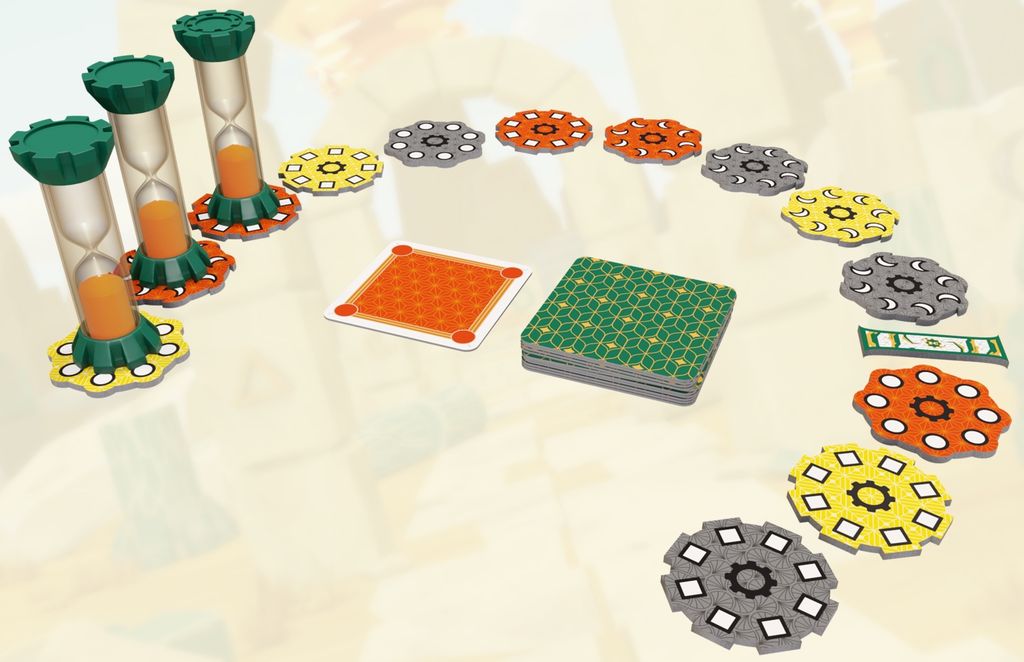
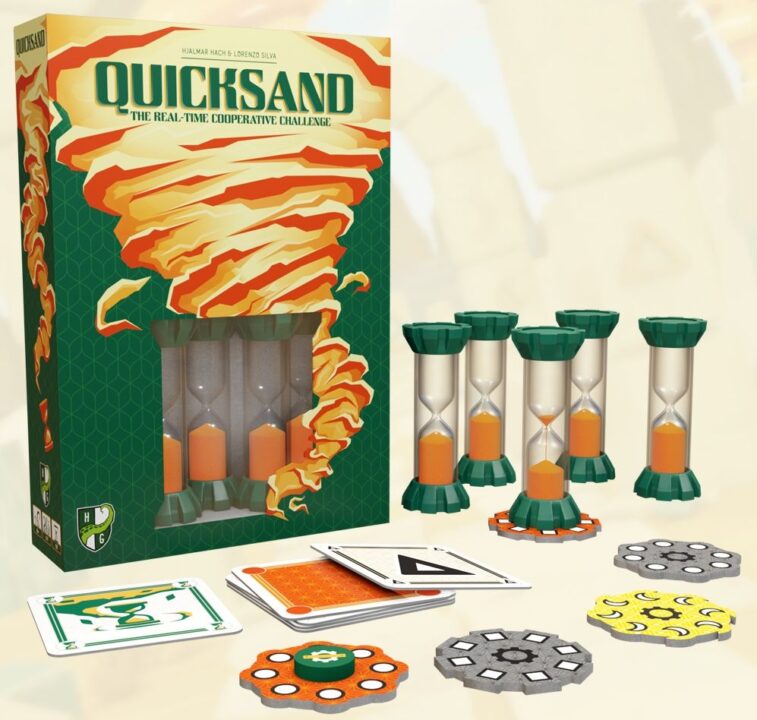
Let me tell you, opening up Quicksand for the first time is a little like opening a box of chocolates—if those chocolates were made of tiny plastic pieces and slightly confusing icons. The box itself is on the smaller side, so I didn’t need to clear off my whole coffee table, just the odd cup of tea and a half-finished bag of crisps. Inside, you get a colourful board, several chunky tokens, and a bunch of cards that feel sturdy enough to survive a spilled drink or two. The sand tiles are maybe my favorite bit—they look good and stack well, which is important because you’ll be moving them around a lot, especially if you play with my friend Tim, who has the hands of a walrus.
Snapping the standees into their bases was easy enough; no broken nails or tiny curses needed. Everything fits nicely into the insert, and we know how rare THAT is. You won’t need a degree in engineering to put it back in the box after, unlike some games I could mention (looking at you, Twilight Struggle). The rulebook’s paper feels solid, and the pages are thick enough that even my clumsy page flipping didn’t damage anything. Plus, it’s well laid-out so we weren’t stuck with thirty minutes of head-scratching before our first go. That’s a win for my attention span.
If you’re the kind of player who loves good components and a setup that doesn’t eat half your evening, then Quicksand is off to a great start. Up next, I’ll be tackling the tricky jungle of gameplay balance and strategy—will it be quick thrills or a slow crawl through the mud? Stay tuned!
Quicksand Game Balance and Strategy: Fair Play or Slip Hazard?
When it comes to the gameplay of Quicksand, one big question came up at my kitchen table: Is it fair for everyone, or does someone get swallowed up by the quicksand of bad luck? The answer is… mostly fair, with a side of unpredictability that kept us on our toes. The core mechanic, where players race their explorers across a shifting board of sand tiles, has a nice mix of planning and surprises. You can map out your move, but someone always seems to flip just the right tile to mess with your plan. My buddy Dave, who thinks five turns ahead, almost flipped the table after his explorer “sank” three times in a row. I laughed, but then it happened to me. Karma, huh?
Strategically, it’s not as deep as chess (unless you play chess in a sandbox, which I don’t recommend), but you do need to watch what other players are doing. Should you play it safe, or risk a shortcut that might drop you into—the name says it all—quicksand? Staying aware of which sand tiles have been revealed is key. A memory like a goldfish? Good luck! A few of my friends tried to form temporary alliances, but those crumbled faster than a sandcastle at high tide. Expect some laughs, groans, and the occasional evil glare across the table.
Next up, I’ll wade knee-deep into the whacky world of player interaction and see just how much Quicksand gets everyone talking—or shouting!
How Quicksand Keeps Everyone Talking: Player Interaction & Engagement
If you think Quicksand is one of those board games where everyone sits in silence thinking real hard, you’re in for a surprise. From my very first game (with four sleep-deprived friends and one cat who kept batting the hourglass), things got rowdy real fast. You don’t just play against the board—you play against each other, in the best way possible.
There are plenty of moments where you’ll want to glance suspiciously at your neighbor, especially when the quicksand markers start shifting faster than my attention span during a math lesson. You’re watching their moves, plotting, and probably holding a tiny grudge from the last round. I saw alliances form and crumble twice in one game, and someone managed to laugh so hard they sent half the sand onto the floor. (Note: quicksand in this game is slightly less messy than the real deal, but don’t tip the timer!)
The beauty of all this is how Quicksand keeps players invested. Nobody zones out waiting for their turn. Decisions come quick, players are always involved, and heck, sometimes you’re yelling at the clock. It’s very much a board game that rewards attention and, maybe, a little bit of trash talk. If you have friends who like to scheme and chuckle, prepare for a table full of energy.
But how much of your fate in Quicksand comes down to your skills, and how much is just luck running wild? Grab your virtual shovels—we’ll find out in the next section!
Luck vs Skill: Who Sinks and Who Swims in Quicksand?
Let’s talk about the elephant in the room—or rather, the python lurking in Quicksand’s murky waters: is it luck or skill that gets your explorer to safety? If you ever want to test a friendship, try playing Quicksand with folks who hate dice. I did, and I got to see some wild eyebrow gymnastics.
Skill in Quicksand matters—sort of. You’ll need a sharp memory and a knack for reading people. Every explorer is secretly assigned to a player, but no one knows who until halfway through the game, thanks to the sneaky hidden identity part. If you remember who is moving which color, you’ll get far. (I say this as someone who once moved my own meeple into a pit, so don’t get cocky).
But then comes the luck factor. Movement happens by drawing cards and those cards are not shy about wrecking your best plans. You might have big brain tactics, but all it takes is one unlucky draw and your adventurer is buried in sand up to their metaphorical belt. I’ve watched Tom, my most competitive friend, turn purple with rage as a sandstorm card undid three turns’ worth of plotting. Glorious for the rest of us. Not so much for Tom.
Quicksand isn’t all chaos, but it sure isn’t chess. The balance leans slightly to luck, which means sometimes you just have to laugh and accept fate.
Would I recommend Quicksand? If you want tense, lighthearted fun and can handle a mix of skill and shenanigans—absolutely. But if you want full control? Might as well toss your meeple in the nearest sandbox.
Conclusion
Alright, that wraps up my Quicksand review! I had a lot of good laughs with this one, even if luck jumped in more than I like. The pieces are sturdy and setup is painless, which is a big win for me (no one likes a twenty-minute setup, right?). The game keeps everyone engaged and plotting, but if you want all skill and no surprises, Quicksand might not be your best pick. If you just want fast, silly fun with friends or family, then yeah, you’ll have a blast! Ready for your own sand-filled rivalry?