
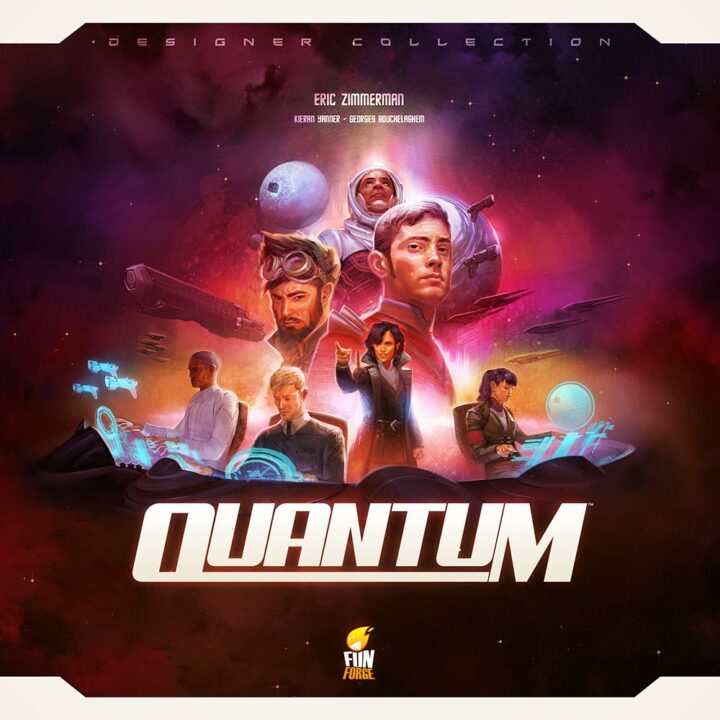
This review looks at Quantum, a smart space battle game where dice become ships, ships chase better positions, and every move can start a small table war. It mixes careful planning with sharp player interaction, while its learning curve may leave new captains staring at the board like it just insulted their mum. After playing it with friends, I found plenty of replay value, strong tactical choices, and just enough chaos to keep things lively without letting luck run the whole show.
How It Plays
Quantum turns your dice into a small space fleet. Each die shows a ship class, so every roll gives you a different mix of speed, power, and special skills.
Setting up
Build the space map with the planet tiles, then give each player a faction board, fleet dice, command cards, and Quantum Cubes. Place the starting ships and set the target number of cubes for the game.
Gameplay
On your turn, activate each ship once. Ships can move, attack rival ships, colonize planets, or use their special ability. You can also play command cards to bend the rules in clever ways. Colonizing planets lets you build Quantum Cubes, while dice placement and ship classes decide how well your fleet handles trouble.
Winning the game
The first player to build all of their required Quantum Cubes wins. You need to plan ahead, protect your planets, and avoid sending your best ship into a fight that looks suspiciously like space roadkill.
Want to know more? Read our extensive strategy guide for Quantum.
Quantum Dice Placement and Fleet Control Review
Placement
In Quantum, every die acts like a ship with a job to do. You roll dice showing numbers from one to six, then place them beside matching ships on your board. A high number gives a ship more power, while a low number can help if you use it in the right spot.
Placement matters because each ship needs room to move, attack, or build a quantum cube. Put a die in the wrong zone and your sleek warship sits there like a lost shopping trolley. Put it well and the die can block an enemy, protect a friend, or claim a system. I enjoy this puzzle most when I must choose between a useful action now and a better launch later. The rules stay clear, so players join in without needing a chart and a snack break.
Fleet control
Fleet control gives Quantum its bite. You do not control one flagship and call it a day. You manage ships, each with a role and a limit. Fast ships chase cubes and score points. Tough ships hold spots. Weak ships look for safe jobs before an opponent turns them into junk. Keeping your fleet together feels safe, but it also makes a target. Splitting up gains reach, yet leaves ships open to raids. Fair enough; it hurt less than blaming my driving in Mario Kart.
For now, Quantum makes dice placement feel like steering a tiny, navy at sea. The next section, Strategic depth and tactical choices, will weigh these fleet calls beyond the roll.
Strategic Depth and Tactical Choices in Quantum
Quantum looks like a space race with chunky ships, and the real test comes from choices hiding under each turn. My friend Sam smiled like a cartoon villain while he grabbed the easy points. Quantum rewards players who plan ahead, yet it never locks you into one path. A weak start can become a clever recovery if you spot the right opening.
Build a Plan, Then Break It
Spending a turn on a colony may delay research, movement, or a key attack. The clever part comes from linking these goals. You might grow to unlock better options, or push fast and accept a thinner economy. I like that neither route feels automatic. The board state changes so quickly that yesterday’s smart plan can look daft after one rival move.
Timing Beats Simple Point Chasing
The best turns often score less but open more choices later. Holding back can protect a useful position, while acting early can block an opponent’s plan. Quantum makes this tense without feeling random. You read the map, watch goals develop, and decide when to spend your actions. In one match, I misread the board quite badly.
Room for Different Minds
This depth gives Quantum a strong replay feel. A careful planner and a bold opportunist can both win, though each must respect the same tight limits. That is why I keep bringing it back to friends, even when Sam threatens to gloat before turn one ends. Next comes Player interaction and competition, where those plans crash into other people’s ambitions.
Quantum Player Interaction: A Sharp Space Race
Quantum looks like a space race, but the real battle happens around the table. Claiming a useful system can steal a plan from under your nose, while moving into a contested area forces everyone to rethink their star map.
Table Talk and Temporary Deals
The game creates a nice mix of quiet threats and loud reactions. You can promise not to block someone, then spot a better target and change your mind. That sounds mean, and it is, but Quantum keeps the deal temporary. No one can trust a friendly nod for more than a round.
Pressure Without a Pile-On
Still, the competition doesn’t feel like a pile on. The board gives each player enough room to build a plan, so one person rarely controls the whole game. When someone surges ahead, the table usually spots the danger and responds with pressure, not despair. That makes the race feel alive. I prefer this to games where the leader wears a crown for an hour while everyone else pretends to have fun.
Best With the Right Crowd
The main warning concerns player count. With four players, Quantum gets more social and more chaotic. You must watch three rivals, and their plans can collide in funny ways. With two, the contest feels sharper, but also more personal. A mistake can hand your opponent a big gift, which led to one long groan from me. Thankfully, the game lets you recover through smart positioning and careful timing, rather than pure luck.
Next, we’ll check replay value and learning curve.
Quantum Replay Value and Learning Curve Review
A game that keeps teaching
Quantum has a learning curve that feels steep at first, mostly because the game asks you to spot patterns before you fully understand their value. My first play with friends ended with three people staring at the board like it had just insulted our families. After another round, the fog lifted. We stopped asking, “What can I do?” and started asking, “What should I save for next time?” That shift matters.
Fresh ideas after every game
Quantum’s replay value comes from its changing setups and different ways each player approaches the game. A choice that looks clever in one match can feel painfully slow in the next, while a plan you ignored before suddenly becomes your new favorite. This keeps repeat games fresh without making them feel random. I also liked how early mistakes taught me something useful instead of simply wrecking the whole session. Still, new players may need a patient teacher nearby. The first game can feel busy, and Quantum does not always show why a choice failed until several turns later. Keep the first session friendly and skip serious tournament dreams.
Who will stick with it?
Once the basics click, the learning curve turns into a welcome hill rather than a brick wall. I found myself enjoying the fourth and fifth games more than the first, because I finally saw small choices connect across the match. That feeling gives Quantum strong staying power. It rewards curious players, but it does not punish beginners forever. The only catch: if your group hates learning through mistakes, the opening rounds may drag. I highly recommend Quantum.
Conclusion
This concludes my review of Quantum. The player interaction keeps every turn tense, while the changing board gives the game plenty of replay value. The learning curve feels a little steep at first, and a bad roll can still cause a few groans around the table. Still, good choices matter far more than luck. If you enjoy sharp strategy, noisy table talk, and ships with more personality than my last car, Quantum deserves a spot on your shelf.