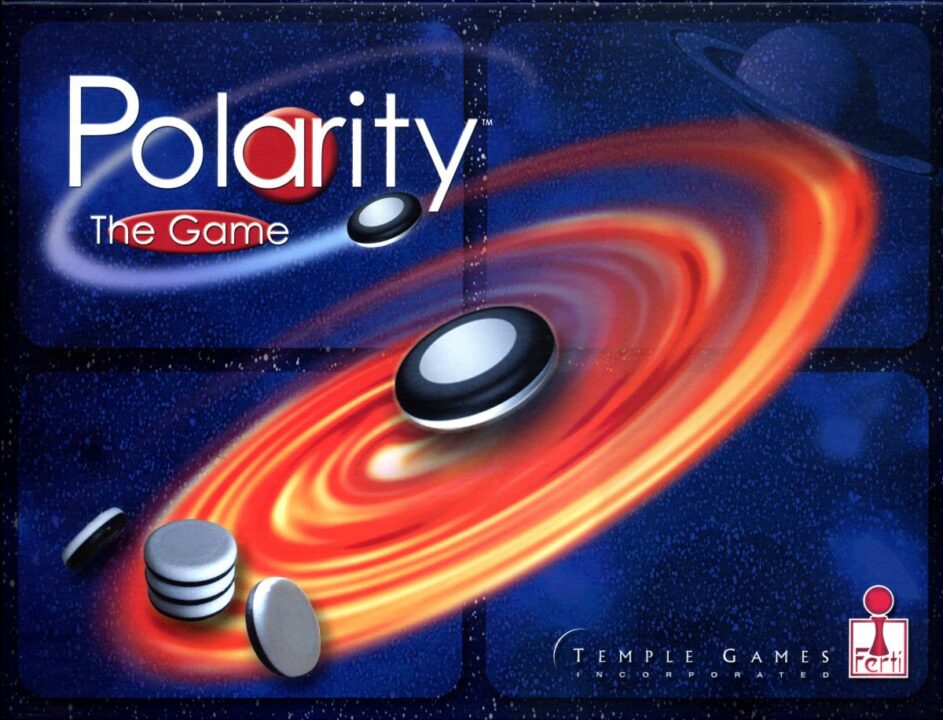

Ever wanted a board game that turns your shaky hands into the main villain? Welcome to my review of Polarity. This game took my friends and me from casual laughter to white-knuckle focus in seconds. I’ll break down what made us cheer, groan, and even develop a healthy respect for magnets. Get ready for a review that’s as balanced as those tiny discs on the mat—well, almost.
How It Plays
Setting up
First, lay out the circular mat on a good flat table. Each player grabs their set of magnetic pieces—these little guys snap together if you’re not careful, so keep them apart! Pick a color, and decide who goes first. That person starts with the “pivot” magnet placed in the center of the mat.
Gameplay
On your turn, you try to balance a magnet standing on its edge near another magnet without them sticking together. This is way trickier than it sounds! If magnets snap onto the mat or each other, your turn’s over and you might give points to your opponent. You keep going round the table, nervously balancing and holding your breath.
Winning the game
The game ends when every magnet’s been played or the tension melts your brain first. You count up your stacks and “standing” magnets. The player with the most points wins and gets to brag about their steady hands. Simple, but getting there is pure chaos and laughter!
Want to know more? Read our extensive strategy guide for Polarity.
Mastering Magnet Balancing: The Heart of Polarity
Let me tell you, nothing gets your heart pumping like balancing those pesky magnets in Polarity. The whole game is about placing magnetic discs in such a way that they float—yes, actually FLOAT—just above the playing surface, thanks to the magic of magnetic force. My first attempt ended with half the discs snapping together like they had romance in mind, but after a few games (and lots of laughter), my friends and I started to get the hang of it. The trick is all in the wrist and a bit of patience, which I usually lack, but somehow this game kept me going.
Each player gets a stack of black or white magnets, and you take turns placing them on the board. But here’s the twist: you can’t just slap them down. You have to nestle them right up to the edge of lots of other magnets already placed, balancing them so the opposing forces of polarity let them stand on their edge or even hover. When you manage it, it looks like you’ve just pulled off some sort of wizardry. If your magnet snaps to another, though, you hand points to your opponent. Cue the groans—or cheers, depending on who was watching.
What’s wild is how subtle movements impact the whole setup. Breathe too hard? Your careful balance might go kaboom. This adds tension and a weird kind of mindfulness, where everyone is holding their breath, praying for physics to be their buddy. Next, let’s see if skill or luck really decides who gets bragging rights in Polarity…
Skill vs. Luck: Who Really Wins in Polarity?
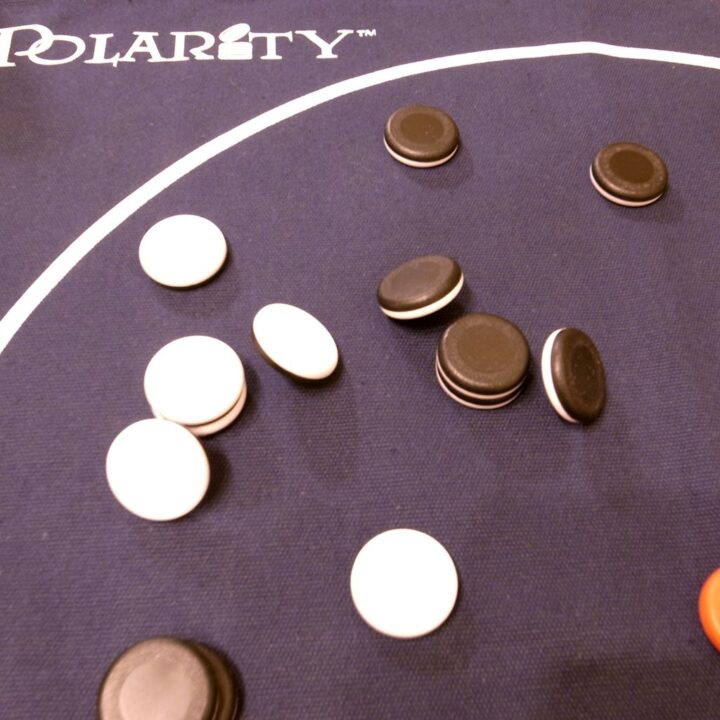
Let’s talk skill and luck in Polarity. If you’ve ever played a game with someone who thinks they’re the Magnet Whisperer, you know how wild things get. Some games are all luck – you roll a dice and hope for the best. Not Polarity. This game actually rewards steady hands and even steadier nerves. If your idea of skill is holding your breath like a goldfish while you hover magnets a millimeter above the board, then welcome to paradise.
Now, I’ve played Polarity with my mates – the ones who claim they have the reflexes of a ninja, and those who, well, should really stick to checkers. Every time we play, the player with the best focus (and the fewest cups of coffee) tends to win. Yes, there is a little bit of luck when it comes to how the magnets react, but it’s not the type that makes you want to flip the table and storm out of the room. Instead, it just keeps things interesting. You need skill to predict the magnetic fields and plot your next move, but you also need a touch of luck so the magnets don’t betray you at the last second.
For me, Polarity is way more about skill than luck, and as someone who’s not a fan of random dice-rolling victories, that’s a big win. It feels fair and competitive, which is how I like my games. If you want to win at Polarity, practice your magnet moves, not your dice throws.
Ready for the next bit? Let’s talk about the bits! Stay tuned for my adventures with Polarity’s component quality and how it turns every table into a scene from a sci-fi movie.
Polarity’s Components and Table Presence: Magnets, Mayhem, and a Whole Lotta Wow
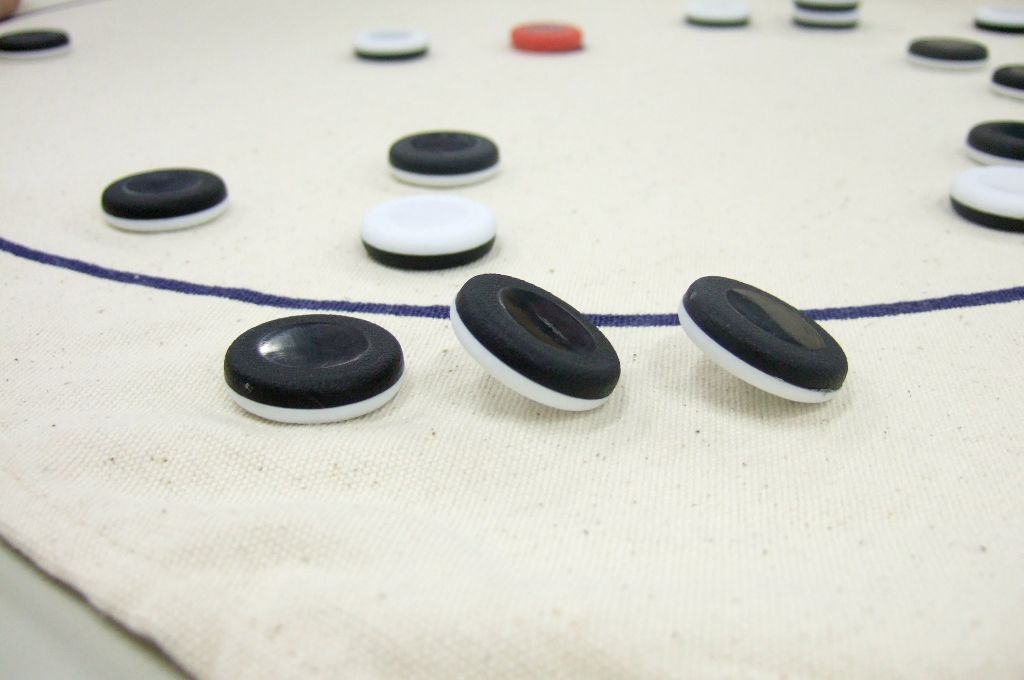
Let’s talk about what hits the table when you rip open Polarity’s box. If you expect just some limp cardboard and a few pity tokens, Polarity laughs in your face. This game brings out magnets—lots of ‘em. These little magnetic discs aren’t your dollar-store fridge magnets either. They feel solid, and they’ve got a satisfying weight. When you’re holding one, you know you’re about to make (or break) something cool.
The mat, which forms the arena for your magnetic shenanigans, is pretty simple but totally fits the vibe. It’s a circle, which means sneaky moves from every direction. Laying it flat is easy, and it doesn’t bunch up or slide like cheap mousepads. Props to that! Oh, and the black-and-white design? It makes the magnets pop visually, so even your aunt who doesn’t wear her glasses can see where the action is.
What really cranks Polarity’s table presence up to eleven is the game in progress. You end up with discs standing at weird, science-defying angles. People walk by, see the magnets floating and clinging by their magical powers, and suddenly you’re the most interesting person in the room. I’ve never seen a setup like this not get at least three bystanders stopping to gawk—or ask if they can try (spoiler: they can’t until it’s their turn next).
If you want a game that looks as cool as it plays, Polarity delivers. With magnets that literally stand up and beg for attention, it eats up table space in the best way. And just wait till you hear about how easy (or not) it is to actually learn and play Polarity…
Is Polarity Easy to Learn and Hard to Put Down?
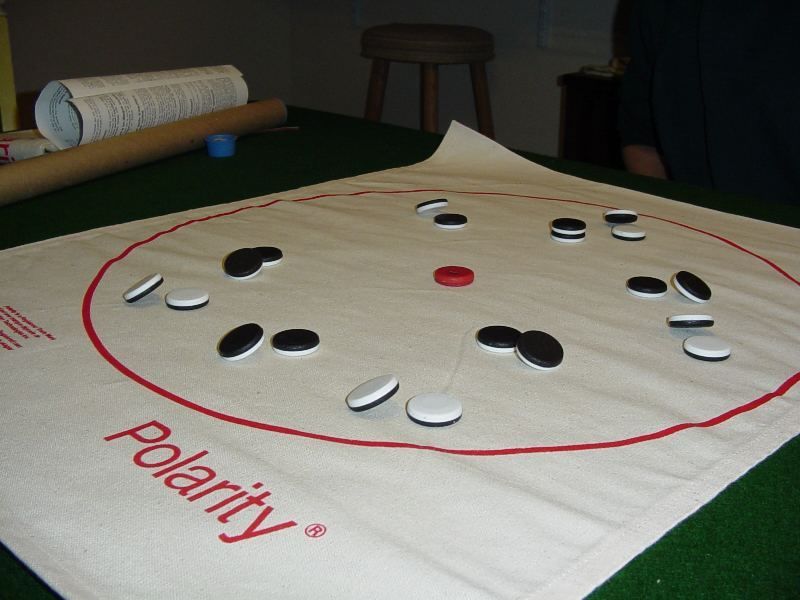
Let’s talk learning curve. My first encounter with Polarity looked easy—just balance a bunch of magnets, right? Wrong. Like teaching a cat to fetch, the rules are simple, but getting it right takes practice. Setup is a breeze: pop down the mat, grab your stack of magnets, and off you go. You only need to remember a couple of things: don’t knock things over, and try not to look like you’re sweating when it’s your turn.
But that first round? Oh boy. My friend Dave went all-in, stacking magnets with the confidence of a champion—and sent half of them tumbling like dominoes. That taught us fast: Polarity is easy to start but takes time to master. There’s a real sense of improvement game after game. Even my grandma got better after a few rounds, and that’s saying something because she once tried to play chess with a deck of cards.
When it comes to player engagement, Polarity keeps everyone glued to the table. There’s silent tension as you hover a magnet over the mat, wondering if you’ll pull off a slick move or cause chaos. Players lean in, whisper, or gasp as magnets wobble. No one checks their phone or goes for a snack mid-game—everyone wants to see who messes up next. The game moves quickly, so there’s no downtime. And it’s just as fun watching as it is playing, so nobody ever feels left out.
In short: Polarity brings out fierce focus and plenty of laughs. If you like games that reward practice and keep folks on the edge of their seats, then yes, I absolutely recommend Polarity. Just don’t blame me if your fridge magnets start disappearing.
Conclusion
Polarity stands out as a wild mix of magnets and steady nerves. My group had sweaty palms, plenty of laughs, and a few arguments about whose hand bumped the table. If you want a game where skill means more than luck, Polarity is a great choice. The magnets are high quality, the mat is big enough for epic battles, and people will stop and watch when you play. It’s easy to learn, hard to master, and always gets everyone involved. Not for the fidgety or the clumsy, but if you fancy yourself a magnet whisperer, give it a whirl. That wraps up my review—now excuse me while I try to rescue my last stack from collapsing (again).