
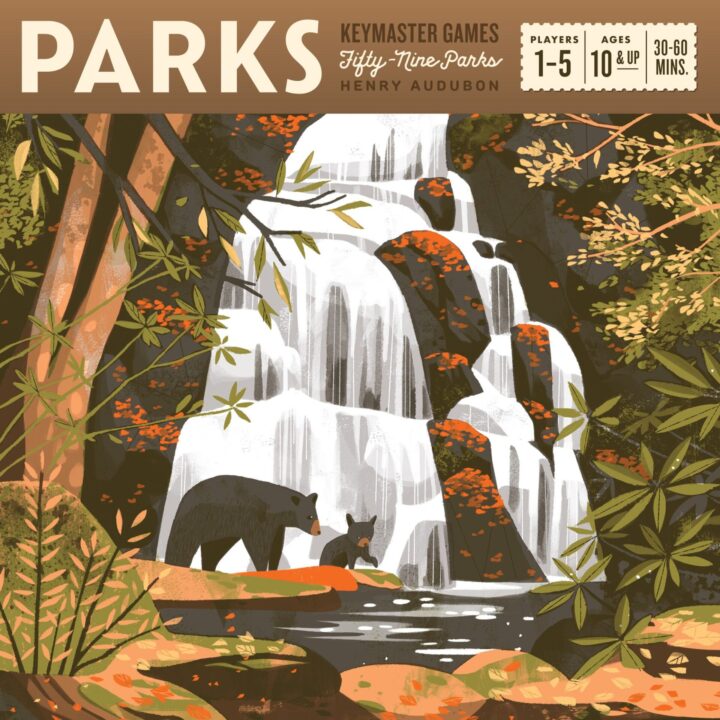
Parks is a calm, pretty trip through the great outdoors, unless your friend steals the trail space you needed. It offers a smooth mix of planning and set collection, with just enough fuss to keep everyone thinking without turning game night into a backpacking disaster.
How It Plays
In Parks, you guide two hikers along a trail, collect resources, and visit national parks. It sounds calm, but someone will steal the last forest token right before your nose.
Setting up
Build the trail with face-up trail sites, then place the sun marker and wildlife tokens. Each player takes two hikers, a canteen, and a campfire. Shuffle the Park cards and reveal a few for everyone to visit.
Gameplay
On your turn, move one hiker forward to any open trail site. Take the action there, such as collecting resources, gaining gear, filling your canteen, or taking a photo. You may also visit a Park by paying its resource cost. A campfire lets your hikers share a space, but you can use it only once each season.
When a hiker reaches the end of the trail, they can visit a Park, buy gear, or take a photo. Once both hikers reach the end, reset the trail, move the sun marker, and start the next season. The game lasts four seasons.
Winning the game
After the fourth season, players add points from visited Parks, photos, gear, and bonus goals. The player with the most points wins. In a tie, the player with the most remaining resources takes the win.
Want to know more? Read our extensive strategy guide for Parks.
Scenic Artwork and Theme in Parks
Parks gets its charm before anyone collects a single tree token. On the table, colorful cards show real American parks with bold shapes, soft colors, and tiny details that make each stop feel like a postcard. Nice. The art never screams for attention, yet it gives the game a warm, calm mood.
The theme works because it connects simple actions to a clear trip. You move along trails, gather resources, watch wildlife, take photos, and claim a park before the sun sets. Every resource feels useful without turning the game into a nature lecture. Sun tokens act like time passing, while canteens and gear suggest the choices campers make before heading uphill. When someone buys a park card, the table usually pauses for a quick look. We often read the short fact on the card aloud, even when nobody asked. That little habit adds a nice shared moment and helps the parks feel like more than a scoring tool.
Still, the artwork does have one small problem. Some cards look so lovely that players focus on collecting favorites instead of reading their points. A friend once grabbed a park because he liked the bear illustration, then discovered it gave him almost no help. We laughed, but the pretty pictures can hide what each card does at first. The icon design stays clear after a game or two, though new players may ask what every symbol means. I also wish the cards showed a more people enjoying these places; the landscapes sometimes feel more alive than the visitors. Even so, the look gives parks a strong identity. It turns a small box into a calm holiday, which feels welcome when games bring enough noise to wake the neighbors. Next, we will leave the postcards behind and follow the Trail movement and strategy section.
Trail Movement and Strategy in Parks: Every Step Counts
Plan Your Route
Trail movement looks simple in Parks, but every step asks a small question: where should I go next? Each player moves a hiker along a row of trail cards, collecting resources such as sun, water, forest, and wildlife. You can move forward, but the best spots often sit ahead, waiting for the right moment. If you rush, another hiker may grab the view you wanted, leaving you with a sad little puddle of water and wounded pride.
The clever bit is that you may not simply march to the final space. You need enough gear to visit a park, and the trail spaces offer useful tools. A short route can give you first choice, but a longer route may collect more supplies. I often planned one neat path, then watched my friend block it with a well-timed move. That forced me to change plans fast, rather than whine like a man who lost his favorite sandwich.
Timing Beats Luck
Strategy also changes with the player count. With two players, the trail feels tight and every move carries weight. With four or five, the board grows busier, and players can leave tempting spaces for later turns. Still, the game keeps luck on a short leash. You draw trail cards, but your choices decide how well those cards help. I like that balance because a lucky draw may open a chance, yet smart timing wins more often.
Next, Park cards and replayability will show whether these smart routes stay fresh after your group has memorised every sneaky shortcut.
Parks Park Cards and Replayability: A Fresh Take on Set Collection
Why the Cards Stay Interesting
They did not. Each card offers a reward, but the real trick comes from spotting how it fits your hand, can help next turn, or tempts you into a detour. One card may grant extra gear, another may boost a canteen, and a third rewards a tidy set of symbols. The effects stay simple enough for players, yet they create plenty of small puzzles for repeat visits.
That mix gives Parks a shelf life. In one game, I chased cards that matched my gear and ended with a scoring engine. It felt less like following a script and more like packing for a trip when the weather keeps changing. The deck never floods you with wild cards, so luck can wobble your plans, but it rarely steals the game.
Replay Value with a Small Warning
That balance matters to me. I dislike games where one lucky draw decides everything, and Parks avoids that trap. You can usually pivot, trade a little value, or wait for a better card. Still, the game can feel samey after many plays if your group always grabs the strongest options. I would love a few more oddball Park cards or a small expansion to shake up expert groups.
Next, we’ll leave the cards behind and watch player interaction and downtime decide whether the trail feels lively or sluggish together.
Parks Player Interaction and Downtime: Friendly Tension Around the Campfire
Parks handles player interaction with a gentle touch. Nobody can steal your whole turn, but everyone can quietly mess with your plans. That balance suits the game well. In one four-player game, I saved a useful campsite spot, only for my friend to grab the exact resource I needed. He called it “friendly gardening.” I called it rude and then stole his best spot next round. Friendship survived, barely.
Small Moves, Real Choices
Most interaction comes from claiming shared spaces before another hiker reaches them. The choice feels fair because the board shows the cost, and nobody gets a secret bonus from the dice. You watch the table, weigh your options, and sometimes make a tiny nuisance of yourself. It feels less like an attack and more like putting your shopping trolley in the checkout lane at the exact wrong moment.
The game also gives players reasons to chat. Someone may ask for a trade, point out a useful option, or groan when a rival takes the last token. These moments keep the table lively without turning Parks into a shouting match. I was happy without them. Parks works best when players can tease each other, not ruin each other’s afternoon.
Downtime Check
Downtime stays low with two or three players. Four players add pauses, especially when someone studies every choice like tax form. Still, turns move quickly, and I recommend Parks for groups who enjoy calm, cheeky interaction.
Conclusion
That concludes the review of Parks. The artwork makes every turn feel like a trip outdoors, while the Trail and Park cards give you enough choices to keep your brain busy without turning the table into a maths exam. It also offers good replay value, though the card draws can sometimes favour one player more than another. Player interaction stays friendly, and downtime rarely drags its feet. Parks works best for players who enjoy thoughtful choices, pretty components, and a relaxed pace. It will not satisfy anyone hunting for wild conflict or huge tactical swings, but it earns a strong recommendation for families, casual groups, and gamers who like their strategy served with a nice view. Just remember to bring snacks.