
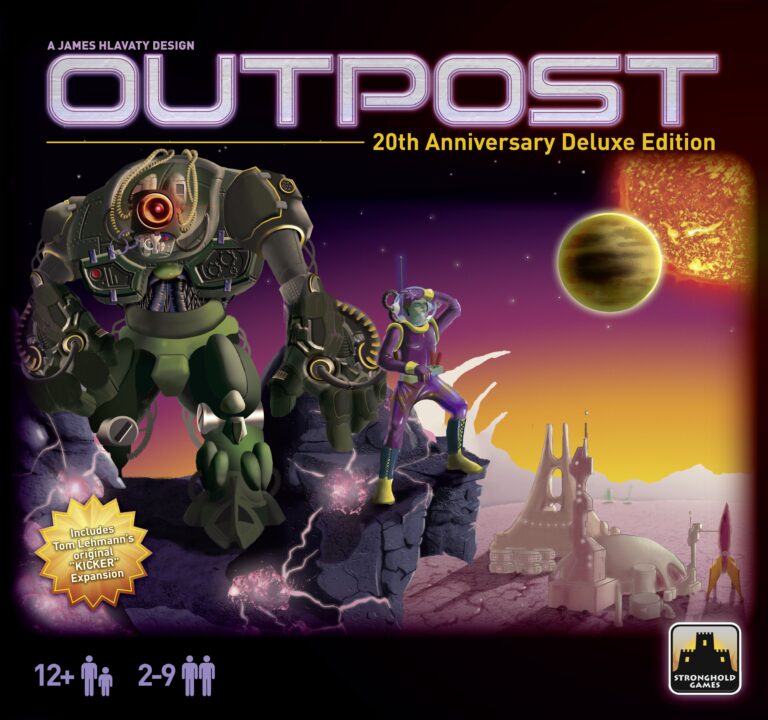
Welcome, fellow board game fans! In this review, I’ll share my honest thoughts after wrangling my pals through several tense (and sometimes loud) sessions of Outpost. We laughed, we auctioned, and we accused each other of ruining our space dreams. Want to know if you should add this classic to your shelf? Stay tuned for the real scoop—no glitter, just honest space mining tales.
How It Plays
Setting Up
First, lay out the board and sort all those tiny colored chits. Hand each player a player board, some starter money, and one tiny factory. Stack the upgrade cards and draw the starting hand. If you’ve lost more than three parts down the couch cushions, make a house rule or just blame the cat.
Gameplay
Each turn, players produce stuff in their factories and get cash. Then comes the real fun: everyone fights—I mean, bids—in auctions for fancy new factories and upgrades. Winners pay the bank, losers mutter about how they were just ‘testing the waters’. Repeat this: make money, spend money, grumble, repeat. Buying the right card at the right time is key. Hold onto your credits like they’re the last slice of pizza.
Winning the Game
The game ends when someone fills every empty spot with upgrades, or when the special “game end” card shows up (it never shows up early—just when someone’s about to win, of course). Everyone counts their victory points from upgrades and factories. Highest score wins, and gets to brag until next time—unless your group does rematches, then good luck keeping that crown.
Want to know more? Read our extensive strategy guide for Outpost.
How Outpost Keeps Players On Their Toes: Gameplay Flow and Player Interaction
Outpost is one of those board games where I never get bored watching people squirm over their decisions. The game has this wild auction system where you’re constantly jostling for the best items, and it’s clear that everyone is watching everyone else’s wallet like hawks. My friend Dave—who once tried to buy a titanium mine when he could barely afford a microwave—learned this the hard way. If you snooze, you literally lose.
The flow is pretty brisk for an economic game. You start with a bidding round. Tension rises as players raise the stakes, so if you’re bad at bluffing, prepare for a roast or two. Once the dust settles, players upgrade their Outposts and production lines, and then the cycle starts again. There’s a sweet rhythm here: auction, production, improve your stuff, then glare at your neighbor for snatching your dream tech. I love how you always have options, but there’s also enough info on the table for you to scheme and plan against real people—not just the game.
Outpost has a way of turning every deal into a rivalry by the last round. Player interaction is in-your-face, but not mean-spirited. You’ll remember the banter more than the numbers.
Next, I’m eyeing up the dicey subject of luck and strategy in Outpost—will it sink or soar under scrutiny?
Luck vs. Strategy: Who Actually Wins in Outpost?
Calculating every move and projecting my oxygen income made me feel like a true intergalactic economist. But then, my friend Dave bid all his cash on a single Factory and somehow got super rich by pure accident. It left me wondering – is Outpost about smart planning, or just hoping the card gods have your back?
The heart of Outpost pumps with strategic choices. You choose which production cards to buy, when to save or splurge, and how to outwit your rivals in auctions. Players who plan ahead and watch their opponents can build efficient engines and outpace the crowd. With limited upgrade cards and escalating prices, careful timing and shrewd decisions separate the okay players from the space moguls.
However, luck definitely has a ticket to ride here. The pool of available cards changes every round, so sometimes you’re stuck praying for a Laboratory while everyone else enjoys a shopping spree. A single lucky auction win can rocket a lagging player to the front. While skill matters, you can’t fully escape the randomness, especially if you’re battling a pack of wild freelancers who just want to buy all the Factories.
So, Outpost rewards sharp thinking, but don’t be shocked if a goofy gamble topples your perfect strategy. If you hate luck, this could get under your skin. If you’re okay with a surprise or two, you’ll still have plenty of chances to scheme and win.
Next up: I’ll share whether Outpost keeps things fresh game after game, or if it starts to feel longer than a space commute on a Monday.
Replayability and Game Length in Outpost: Will You Want to Play Again?
Now let’s talk about replayability and how long you’ll be stuck (or not) at the table with Outpost. If you’re like me and you enjoy games where the action can get tense and everyone’s quietly plotting each other’s doom, then Outpost does not wear out its welcome quickly.
The replay value in Outpost mostly comes from the wild mix of different technologies and resources you can chase. Every game, you end up with different combos, and it’s hard to predict who will win until the last few turns. Even if you tried a sneaky cash-hoarding plan one game and crashed harder than my first attempt at rollerblading, you’ll want to try again with another scheme. The changing market and the unpredictable player bidding does wonders for keeping things fresh.
Game length is… well, let’s call it comfortably chunky. If everyone knows what they’re doing, you’re in for ninety minutes, maybe up to two hours with lots of players or indecisive overthinkers (looking at you, Steve). It never feels like it drags, though—at least not until someone starts talking through every possible purchase out loud. That’s when the snacks come out.
Stick around, because next I’ll be talking about whether Outpost is easy on the eyes or just looks like it was designed in the Stone Age. Component quality and artwork design are coming up next!
Component Quality & Artwork Design: Is Outpost Stylish or Stuck in Space?
If you ever wondered what it would feel like to play a Soviet space program simulator, then Outpost delivers! And by delivers, I mean it ships you straight to 1991. The components are… well, let’s call them ‘vintage chic.’ The cards are thin and feel like a gust of wind could send your worker tokens into orbit. I half expected to find floppy disks in the box.
Now, don’t get me wrong—I love retro charm. Outpost has got it in spades, with artwork that is less ‘concept art’ and more ‘PowerPoint clipart after a long night.’ The color palette looks like the artist got the memo that space is gray… and then just stuck with it. I actually had to squint at times to tell which factory was which. (Maybe I need new glasses, but I like to blame the game!)
As for the board itself, well, there isn’t one! That’s right, it’s all card and token based. The factories and upgrades are functional, but don’t expect much to feast your eyes on. If you’re hoping to put this on Instagram for the likes, you’ll have to work some filter magic. And don’t even get me started on the player mats—plain and thin. My cat sat on mine and it almost disappeared for good.
So, would I recommend Outpost based on its component quality and artwork? Only if you measure quality in nostalgia and can forgive some visual flatness. For gameplay, yes. For showing off your fancy game shelf, maybe keep it in the back row.
Conclusion
Alright, that wraps up my epic Outpost review, folks. If you like classic, crunchy auctions and outsmarting your friends (or yelling at them for sniping your best factory), Outpost delivers. It’s not the prettiest box on the shelf, but it’s honest, tough, and gives you a solid brain workout. Luck can be a pain sometimes, and the art won’t win any beauty contests, but if you care about deep play and replay, this one’s worth adding to your collection. Unless you hate auctions. Or fun. Thanks for sticking with me—see you at the next game night (or in therapy after another brutal Outpost session)!