
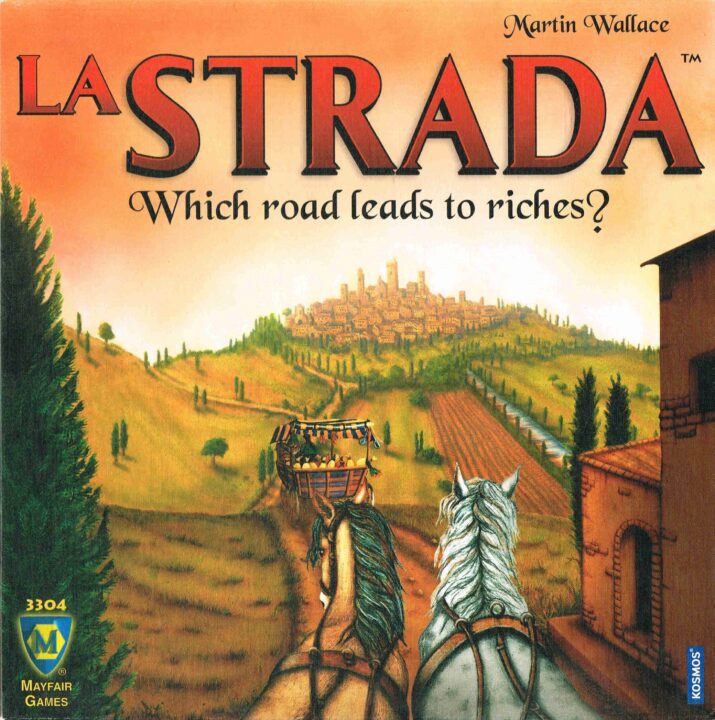
If you’ve ever wanted to build a little road empire with a dash of friendly sabotage, you might want to stick around for this review. In this review, I’ll walk you through what works, what squeaks, and whether you should put this one on your game night table—or leave it at the side of the road.
How It Plays
Setting up
First, pop open the board and toss the location tokens around like candy until each city and village gets one. Hand out a pile of road and path pieces to everyone. Your color is your destiny, so grab one and never look back. Everyone gets their explorer disc too. Put the scoring tiles nearby and start arguing over who is the real Marco Polo.
Gameplay
On your turn, you place a road or path, or move your explorer to a new spot on the map. The catch? You can’t just go anywhere—your pieces have to link up in a continuous line. It’s a race to connect your routes to valuable locations before your friends do. Block their plans, pretend it was unintentional, and try to keep your cool as the board fills up faster than a pizza buffet at a kid’s birthday party.
Winning the game
When the last road has been built, everyone counts up their connections to towns and cities. The more valuable the location, the more points you score. Whoever has the most points is crowned king of the ancient paths and gets bragging rights until the next game—or until someone flips the table.
Want to know more? Read our extensive strategy guide for La Strada.
Gameplay Flow and Player Interaction in La Strada
Let me tell you, the gameplay flow in La Strada feels smoother than my uncle Larry after three espressos. The game starts simple enough: you slap your little wooden roads down on the board, trying to connect your towns and villages before anyone else elbows their way in. No complicated setup or rulebook the size of a phonebook! Everyone gets going fast, and you only need about five minutes for your first round before the table turns into a heated debate about who stole whose route. Seriously, my friend Kelly still owes me an apology and a soda for cutting me off by the mountains last game.
The flow takes you through quick turns. Place a tile, move a bit, claim a spot, repeat. I love how you don’t wait ages before it’s your go again—unless someone insists on planning each move like they’re building the actual Autobahn. (You know who you are, Brad.) Players constantly block, jostle, and snake around each other like it’s rush hour. You absolutely need to keep an eye on your neighbor’s hands, or you’ll miss out on juicy connections and points. The interaction comes from more than just blocking, too. Sometimes it’s a cold, calculated stare as you both gun for the same juicy piece of the countryside. Other times, it’s the groan heard round the table when someone grabs the last open village before you get there. There’s just enough tension and sneaky rivalry to keep everyone talking, laughing, and maybe plotting mild revenge.
Overall, La Strada nails that blend of easy to learn, tough to master, and social chaos. But can you win on brains alone, or does luck mess up your brilliant plans? Stay tuned as we talk juicy details about Strategy vs. luck next!
Strategy vs. Luck in La Strada: How Much Control Do You Really Have?
Let me be very honest: I don’t like games where you win just because you picked the right rabbit’s foot that morning. Thankfully, La Strada does not shove you down the path of pure, wild chance. This is a game where strategy takes the wheel, and luck is mostly that weird backseat passenger who sometimes gives directions but mostly stays quiet.
Right from the start, you notice that every move in La Strada needs some thought. You choose where to lay your roads, which towns to link, and how to block your friends with the kind of week-ruining moves that test real friendships. You can see most of the map and the towns right out in the open, so you’re not flipping cards to see if you get lucky. If you lost, it’s probably your own fault. Unless you blame your cousin Jerry for blocking your route three turns in a row. Let’s face it, Jerry knew what he was doing.
Now, I won’t say there isn’t any luck at all. The initial setup, which tells you where the good towns are, adds a sliver of unpredictability. But once you see that, it’s all about clever planning and reading your opponents’ plans. There are no dice, no card draws, no lottery tickets. What you do matters – and if you lose, well, it might be time to read a strategy guide rather than your horoscope.
Next up, we’ll take a look at the component quality and board design of La Strada – and trust me, this box has a few surprises up its cardboard sleeves…
La Strada: An Honest Look at the Board and Components
Alright, let’s talk about the bits and bobs that make up La Strada. Maybe you get starry-eyed about wooden tokens or maybe you just want your money’s worth—either way, component quality is key. When I unboxed my copy of La Strada, the first thing I noticed: the board. It’s a chunky fold-out map with bright colors that somehow manage to be both cheerful and threatening at the same time. Is that possible? Apparently, yes.
The roads you build are neat little wooden sticks—none of that flimsy cardboard nonsense. They’re solid and have survived several heated games (and one accidental coffee spill—sorry, Sam). The town tokens feel decent in hand, even if I wish there were a tiny castle in there just for fun. Now, the cards—oh wait, there AREN’T any cards in La Strada! That’s right, it’s all about the board, the tokens, and that sweet, sweet feeling when you cut off your friend’s carefully planned route.
The art is simple but works well for this game. You can spot your options at a glance, and even my color-blind friend Mike didn’t complain for once—so, accessibility gets a plus from me. The box insert, though? It’s just a gaping cardboard expanse. Everything rattles around like dice in a Yahtzee cup. Good luck if you’re a neat freak.
So, in summary: la strada’s components are sturdy, the board pops, and the whole game looks inviting on your table. But will it keep you coming back, especially with different groups? Stick around as I test replayability with every friend I could bribe with snacks and promises of glory!
How Many People Should Ride the Road? Replayability and Player Count in La Strada
If you’re like me, you worry about whether a board game’s going to gather dust after the first few plays. Well, let’s talk replayability in La Strada, because this box of wooden road dreams gave my game group a good shake-up each time we busted it out.
First, the sweet spot is three players. Oh boy, does it get tense! There’s jostling, blocking, and many, many moments when someone mutters, “why did you do that?!” My friend Max still pretends he’s not mad after I cut him off from a city with what he calls “the rudest road in history.” Sorry, Max, only the strongest survive on these cardboard fields!
With two players, La Strada feels more like a quiet country drive. There’s space to breathe, fewer awkward traffic jams, and the mood is polite. That’s fine for a chill evening, but you lose that delicious chaos. Four players? Well, things get wild. The board fills up faster than my snack bowl at board game night, and if you don’t plan ahead, you’ll get boxed in quicker than you can say, “detour!” It works, but you’ll feel squished.
The map tiles always go down in a new way, so if you enjoy tactical planning, there’s plenty to keep you coming back. If your group likes some friendly (or not-so-friendly) blocking, this one’s a winner.
Would I recommend La Strada? If you love route-building and a bit of elbowing your friends (figuratively, I hope), grab it. Just keep your roads—and your friendships—intact!
Conclusion
Alright, that’s a wrap on my La Strada review! If you love outsmarting your pals with clever road building and just a pinch of sneaky blocking, you’ll have a blast here. The game is fast, tense, and rewards good planning way more than luck, which gets a solid thumbs up from me. Sure, the art won’t win any awards, and playing with four can get a bit wild, but it’s most fun with three anyway. La Strada earns a mighty spot on my shelf, especially when I want a strategy game that’s quick and punchy. If route-building games are your jam, I say give it a go. And if not…well, I hear Monopoly is always looking for new victims. Thanks for reading! Over and out.