
If you’ve ever wanted to test friendships without Monopoly flipping the table, you’re in the right place. This review covers the good, the bad, and the bits that had us yelling across the table—because, trust me, there’s plenty of all three!
How It Plays
Setting Up
Lay out the unique Kensington board in the middle of the table. Each player grabs their set of colored markers. Pick a color—no fighting! Shuffle the tiles, place them in a pile within reach, and you’re good to go.
Gameplay
Players take turns laying down tiles on the board, one at a time. The aim is to build pentagons using your markers. You can block, poke, and prod your opponents (figuratively, not physically!) by messing with their shapes. Expect a bit of scheming and a lot of sudden “Wait, that was my spot!” moments.
Winning the Game
The first player to complete a pentagon in their color wins. That’s it. Simple to learn, hard to master, and perfect for both casual and competitive groups—unless someone flips the board. Then it’s suddenly nobody’s game.
Want to know more? Read our extensive strategy guide for Kensington.
The Mechanics and Balance of Kensington: Where the Moves Matter
If you ever want to see grown adults turn into highly competitive, slightly suspicious tile-placing maniacs, just crack open Kensington. The main mechanic in Kensington is tile placement. You and your opponents take turns placing hexagonal tiles, trying to create a complete path—or as we say during games, a ‘hexagon hug’—from your corner of the board to the winning central hex. It sounds simple, but let me tell you, it feels like playing chess after three cups of coffee: every move counts, and mistakes haunt you.
Kensington doesn’t rely on dice rolls or spinning wheels of doom, which I love. Pure strategy rules the day. The only luck you get is maybe not spilling your drink onto the board and ruining everyone’s game. Every tile you place can mess with your opponent or help your own path, so there’s always something to plan for. I usually overthink my moves, which leads to a lot of silent, stare-down-the-board moments. My friend Dave however, just throws tiles down fast and somehow he wins more than he should. I don’t trust him.
Balance-wise, Kensington does a great job. Nobody has a real advantage, and the game doesn’t suddenly yank you out of the lead because someone drew the ‘super lucky magic tile.’ Sometimes it can feel like a bit of a stalemate if players are equally matched, but that just adds tension. The only negative is if someone zones out, it can slow down, but hey, that’s what coffee is for.
Get ready, because next we tackle the part of Kensington that has destroyed alliances and created lifelong board game grudges: player interaction and strategy!
Kensington: Player Interaction and Strategy Unleashed
I have witnessed friendships tested and alliances shattered over a game of Kensington. This is not your classic sit-and-think-in-silence board game. Players clash over space on the board, blocking and outmaneuvering each other in ways that would make even a seasoned chess master sweat. You’re always just one move away from either sweet victory or soul-crushing defeat, and it’s usually because someone decided your plans looked a little too clever.
Strategy in Kensington is all about positioning and foresight. One wrong placement and you can kiss your dreams of glory goodbye. I’ve seen players try to form secret alliances, only to be stabbed in the back by someone they thought was a friend. There’s a constant battle for control, and with every tile added, the tension ramps up. Talking smack is not just allowed, it’s basically required. If you’re not psychologically intimidating your opponents, you’re probably losing.
There’s no going solo in Kensington. Even if you think you’re playing your own game, that illusion breaks fast when two people start closing in on your masterpiece from both sides. I found myself constantly changing tactics depending on who was threatening me the most (spoiler: it was my very smug friend Dave, every time). If you like games where everyone minds their own business, Kensington may not be for you.
Now, let’s talk about what your eyes and hands will actually experience—the component quality and design. Hold onto your meeples!
Kensington Board Game: Component Quality and Design
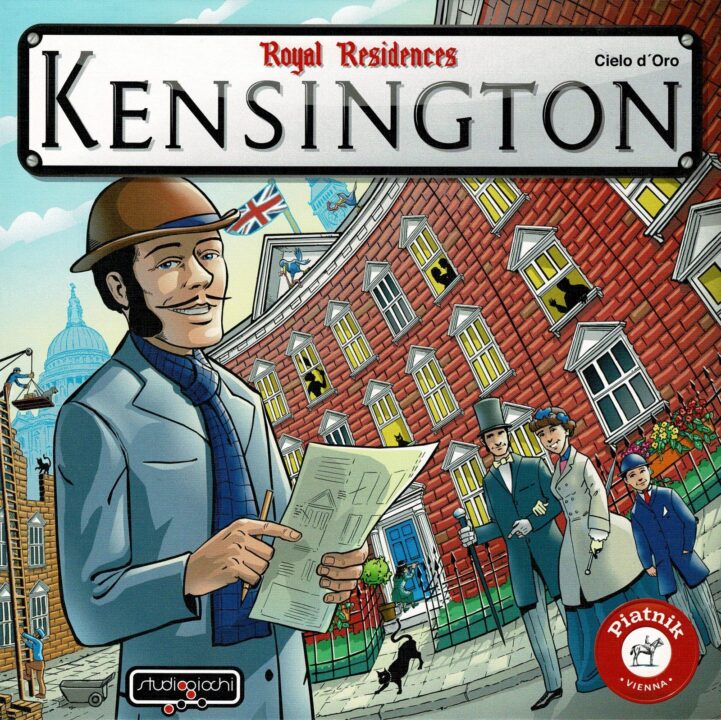
Okay, let’s talk about the stuff you actually touch and see—because honestly, the feel of a board game can make or break the whole thing for me. Kensington comes in a box that looks like it time-traveled from your dad’s attic in a good way. The artwork screams funky 70’s, which works if you want your game night to feel retro (and if you’re like me, you’ll enjoy claiming you found an antique at a thrift store, even if you bought it new).
The board itself is sturdy, which is a good thing, because I have friends who play board games like they’re wrestling crocodiles. The lines and paths are bold and clear, so you’re not squinting and poking the board like a confused chicken. All the tiles fit snugly. No wobbly tiles or weird misprints here—trust me, I’m picky, and I checked. No one wants to play with cardboard pieces that look like they came from a cereal box prize.
The player tokens feel solid. They’re chunky (but not too chunky), and they don’t slide around the board if someone sneezes. I will say though, if you’re colorblind, the bright color palette might be a mixed bag, so be ready for a little creative thinking or maybe just some squinting and arguing. The rulebook is…well, it’s a rulebook. Don’t expect it to win any awards, but you’ll get through it without needing a law degree.
All in all, Kensington’s design makes you want to play and keeps you in the mood for something a bit groovy. Now, let’s see if you’ll actually want to play again and again after a few rounds—next up is replayability and game length, so grab a snack and let’s roll on!
Replayability and Game Length in Kensington
When it comes to replayability, Kensington punches above its weight class. I’ve played this game with my motley crew of board game buddies more times than I can count, and every round has a different flavor. It’s like pizza—you know what you’re getting, but the toppings always surprise you. Sometimes it’s a close shave, sometimes it’s a crushing loss (usually mine, if I’m being honest), but it never feels tired or repetitive.
The main reason Kensington stays fresh: players keep learning new tricks. One time, my friend tried a wild strategy, and the rest of us spent the next three games trying to copy it. I’m still not sure how she pulled it off. You can mess with different approaches, try to outwit your rivals, or just cause chaos. No two sessions have been the same, even though the rules never change.
Now, about the game length. This is no epic saga. Kensington finishes up in 30–45 minutes. It’s perfect for a quick round before dinner or for squeezing in a rematch to settle scores. It doesn’t drag on, unless you play with that one friend who overthinks everything (you know who you are, Dave). There’s just enough time to plot, scheme, and try something new without needing an extra mug of coffee.
Would I recommend Kensington? Absolutely, yes! If you want a game that invites repeat plays, never overstays its welcome, and lets you outsmart your friends, it’s a winner in my book. Bonus: no fighting over complicated rules or waiting forever for your turn!
Conclusion
So, that’s my full review of Kensington. The game packs solid strategy and a heap of player drama into a quick playtime. The retro pieces add a funky charm, and setting up is a breeze. It’s balanced too—no lucky dice rolls to mess up your plans, only your own sneaky moves and maybe a grudge from last round. Sure, sometimes things slow down if players overthink, but overall, it keeps the tension high. I’d say Kensington is a fantastic pick for folks who want head-to-head action that won’t take all night. That’s it—review over! Go build some pentagons and try not to flip the table.