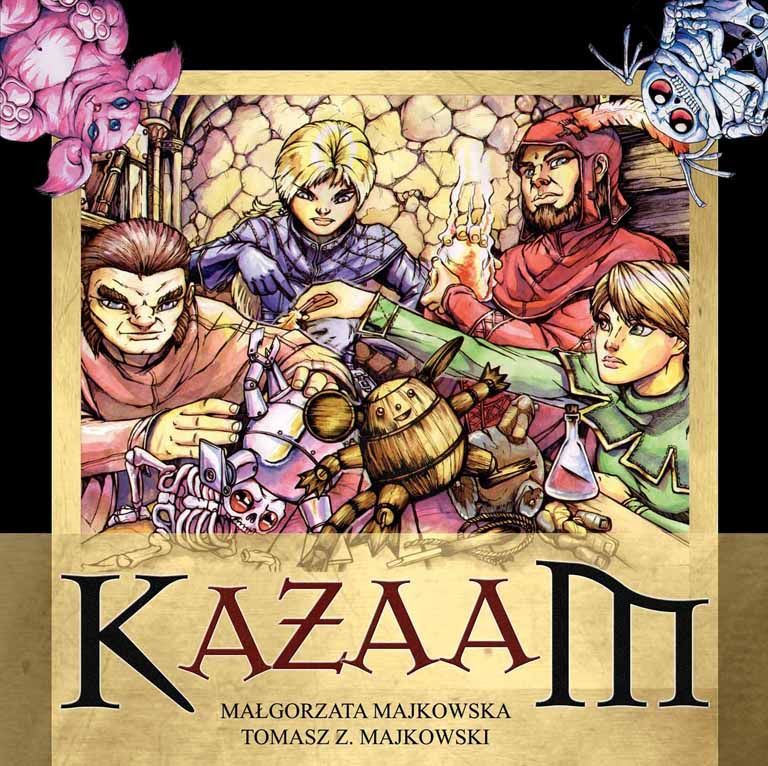

Ever laughed so hard during a board game that you nearly spat out your drink? That happened to me last week with my friends while playing Kazaam. Welcome to my review of a game that’s got sneaky strategies, loud yelling, and more wild moments than a reality show reunion. I’m here to give you the real scoop—what works, what doesn’t, and the stuff that made us threaten fake alliances at the kitchen table. Let me spill the beans before you spend your beans!
How It Plays
Setting up
Each player grabs a wizard hat (mine never fit, but you get the idea), some magic tokens, and a spell board. Shuffle the spell cards and put them in the middle of the table. Put the gold coins and chaos cubes nearby, out of reach of hungry pets or extremely clumsy relatives.
Gameplay
On your turn, cast a spell by playing a card from your hand, then collect the matching resources (gold, chaos cubes, or the mysterious glowing frog). Bluffing and trading are big here: you can swap spells with others or offer bribes, but don’t be surprised if someone tricks you into grabbing a frog that explodes. Each player can make one risky wish per round, hoping to score extra points, or lose their hat in shame (not kidding, that’s a real rule—sort of).
Winning the game
Play continues until someone collects twelve chaos cubes or someone runs out of patience (which isn’t an official rule, but really should be). At the end, the player with the most gold coins and chaos cubes wins. If there’s a tie, everyone agrees to have a dramatic wizard duel—or just play another round, because this game is a weirdly good time.
Want to know more? Read our extensive strategy guide for Kazaam.
Game Mechanics and Fairness in Kazaam: Is Magic Always Just?
Let’s talk about the nuts and bolts that make Kazaam tick—or fizzle, if you’re as unlucky as my cousin Steve, who managed to lose three games in a row by drawing the wrong spell cards. Kazaam is all about casting spells, gathering ingredients, and sabotaging your friends (with a sly grin, of course). The main mechanic is set collection, mixed with card drafting and a pinch of take-that action. You pick your ingredients, try to mix the right ones, and hope nobody curses your cauldron. Sounds clever, right? Well, mostly.
The problem for me, and I say this with a twitchy eyebrow, is that luck plays a bigger role than skill. I really wanted Kazaam to let me outwit my friends, but sometimes a roll of the die or a random card draw turns the whole game upside down. I’ve spent whole rounds planning my next big move, only to have a random spell undo all my progress. If you love unpredictable chaos, you’ll love this. But if you’re like me and want your choices to matter, it can get a bit frustrating.
Unfair moments do pop up. Sometimes the best player gets punished just because someone drew a bad-luck card. That makes Kazaam less balanced than I’d hoped. I give it 3 stars out of 5 for fairness. It’s fun and frantic, but randomness can squash strategy, and that’s a magical miss for me. Next up: we’ll see if plotting against your friends makes Kazaam more exciting or just makes your friendship group need therapy—yes, we’re talking player interaction and engagement next!
How Players Connect and Clash in Kazaam
If you want a game that gets people talking (and maybe yelling), Kazaam does a pretty good job. From the first round, you’re forced to pay attention to what others around the table are doing. My friend Steve tried to go full ninja with his moves, but I caught him every time because in Kazaam, you actually need to watch everyone’s choices or you’ll get burned faster than my last grilled cheese.
Kazaam gives each player a toolkit of actions—some are helpful, others make life miserable for your rivals. The game rewards sneaky plays, quick thinking, and calling people’s bluffs. I once tried to strike an alliance with my sister (that lasted about two turns before she turned on me with a Kazaam card—classic sibling move). The interaction here isn’t just tacked on; it’s the beating heart of the game. If you sit quiet, you might as well be playing solitaire. You have to talk, barter, and sometimes just annoy people into making the move you want.
Engagement in Kazaam doesn’t drop off as the game rolls on. On the contrary, my group found ourselves more invested with every turn, sweating over every tense stare and shifty grin. Nobody tuned out, even during other people’s turns, since sneaky players can often throw a wrench into your plans out of nowhere.
If you want a game night filled with actual interaction (and a bit of friendly betrayal), Kazaam will keep everyone in the game. And if you think that’s all—it’s not! Next, I’ll tell you if this magic carpet ride is worth jumping on more than once.
Replay Value and Variety in Kazaam: Will You Keep Reaching for the Box?
Kazaam is the kind of board game you pull off the shelf when you want a little chaos mixed with some clever thinking. After playing Kazaam at least a dozen times (my friends even made a scoreboard, which is now a shrine to my terrible luck), I can confirm the replay value is decent—but not legendary.
Each time you play Kazaam, the set-up doesn’t change all that much. Sure, the card draw order is random, and players all bring their own personalities to the table (looking at you, Sarah, with your never-failing poker face). But after a handful of games, you start to notice familiar patterns. That sneaky Genie card? Always gets snatched by the same person. The game’s magic powers feel cool at first, but after four or five plays, I found myself wishing for a few more twists. The core mechanics stay the same, so if your group likes consistency, Kazaam delivers. If your group needs surprises and wild moments every time you play, things might feel a little stale after a while.
On the plus side, Kazaam scales well with different player counts. It works with both small and big groups, although bigger games get a bit longer and rowdier. Don’t expect to find a brand new experience in every session, but you will get a reliably fun romp with the occasional surprise when someone pulls off a wild combo.
Next up, keep your lucky dice handy—I’m about to cast my critical eye on the component quality and artwork. Spoiler: there will be glitter.
How Does Kazaam Stack Up in the Looks and Feel Department?
When you bust open that Kazaam box for the first time, the first thing that hits you is the brilliant splash of colors. The designers went wild with the artwork, and honestly, I love it. The bright and cheeky illustrations are like a party for your eyeballs. Even my friend Dave, who owns more beige eurogames than good pairs of socks, actually smiled and said, “Wow, this is fun.” That’s high praise, trust me.
The components themselves feel sturdy. The cards didn’t bend the first time someone spilled a drink (I’m not naming names, but you know who you are, Sarah). The tokens aren’t flimsy either—thick enough to survive my cat deciding they looked tasty. Nothing worse than paper-thin bits that make you feel like you’re playing a print-and-play prototype, and thankfully, Kazaam avoids that trap.
One gripe, though: the insert inside the box is only slightly better than tossing everything in a ziplock bag. If you care about neat storage, invest in some baggies or just accept the chaos. Maybe it’s all part of the magic. Also, if you’re colorblind, some player pieces are a bit too close in shade. It’s a little oversight, but not a deal breaker unless you’re playing in a dark room (not recommended unless you’re into ambiance).
All in all, Kazaam brings impressive component quality and a playful art style to the table. If you like your board games to look as good as they play, this one’s a keeper. I absolutely recommend it for anyone who values sturdy bits and eye-popping visuals!
Conclusion
Kazaam brought plenty of laughs and a few arguments to our table, mainly from that wacky mix of luck and strategy. The components? Top-notch. The art? So charming even my grumpy roommate smiled. But, let’s be honest, if you don’t like luck steering your fate, you’ll want to think twice. Still, if you enjoy interaction and don’t mind the odd wild card ruining your plans, Kazaam packs enough fun for a good few nights. That wraps up my review—I need to go glue the game board back together after last night’s dramatic wizard duel!