


I never thought a bunch of cards could tie my brain into knots and still have me grinning like a goofball, but here we are. This is my review of Impulse, the board game that had my friends and me wondering if we were space geniuses or just cosmic fools. After hours of strategic backstabbing, odd alliances, and a few “oops, I meant to do that” moments, I’m finally ready to spill the beans. Buckle up, because this isn’t your usual space game—it’s got brains, speed, and even a few laughs (mostly at my expense). Let’s see if this game’s impulse control issues are worth the trip!
How It Plays
Setting up
First, shuffle the deck and lay out your 10 hex cards to form the galaxy. Each player picks a color and sets up their ships at their home base. Everyone grabs a reference card, because trust me, you’ll need it. Place the rest of the cards in a tidy draw pile nearby, and try not to lose any already (I speak from experience).
Gameplay
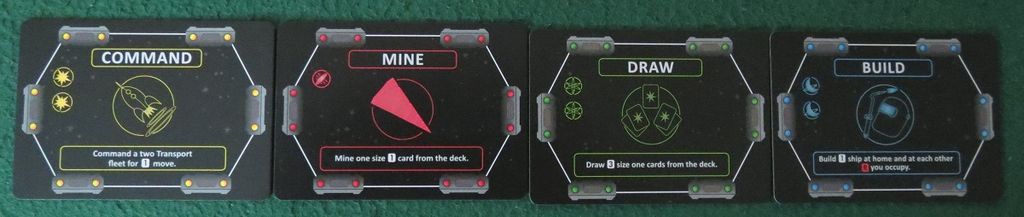
Every turn, you’ll pick a card to add to the Impulse row—think of this as a universal recipe that everyone cooks with. Then, you’ll play out all the actions in the Impulse row, starting left to right. This means you might get sabotaged by your own choices two turns later. Move ships, mine minerals, blow up stuff (including your friends’ grand plans), and try to outthink everyone else. Don’t forget: you can research cards, upgrade, or even sneakily dump an enemy ship, which always gets a laugh—except from the person dumped.
Winning the game
The first player to score 20 points wins. Victory points mostly come from hauling precious minerals back home. Of course, in my group, someone always gets one point away from winning and suddenly everyone gangs up on them. Classic. When someone reaches that magic 20, the game ends right away and cue the victory dance. Or a bitter rematch.
Want to know more? Read our extensive strategy guide for Impulse.
Gameplay Flow and Player Interaction in Impulse
If you’ve ever tried to play chess in a moving car, you’ll have a sense of what playing Impulse with my friends was like the first time. This game is fast, unpredictable, and heavily interactive. The thing that smacked us in the face right away was the way turns spiral. First, you play a card to the impulse line, then you can perform each card action in the impulse, including your new card. But—plot twist—so can everyone else on their turns! There’s a real merry-go-round feeling as the shared “impulse” area grows and changes what everyone does. It’s all communal chaos, and if you’re not careful, someone will swoop in and yoink the best combos right before your eyes. I learned this the hard way when my buddy Dave snatched a move I’d been setting up for three turns. I’m still not talking to him. (Okay, maybe for game night I will.)
The player interaction hits like a caffeine rush. You don’t play solitaire here—you’re always watching the table, trying to guess moves, and looking for loopholes in others’ plans. Trust me, if you ignore what your opponents are cooking up, you’ll be serving them victory on a silver (cardboard) platter. There’s also plenty of negotiation (some would call it petty squabbling). You can team up to slow a runaway leader, but alliances last about as long as my New Year’s resolutions. So, if you want a game where you just mind your own business, Impulse is not for you.
Next up, I’ll talk about the real brain-melter: how deep the strategy goes and whether Impulse rewards clever thinking or just wild card-flinging. Grab your thinking caps, folks!
Strategic Depth and Decision Making in Impulse
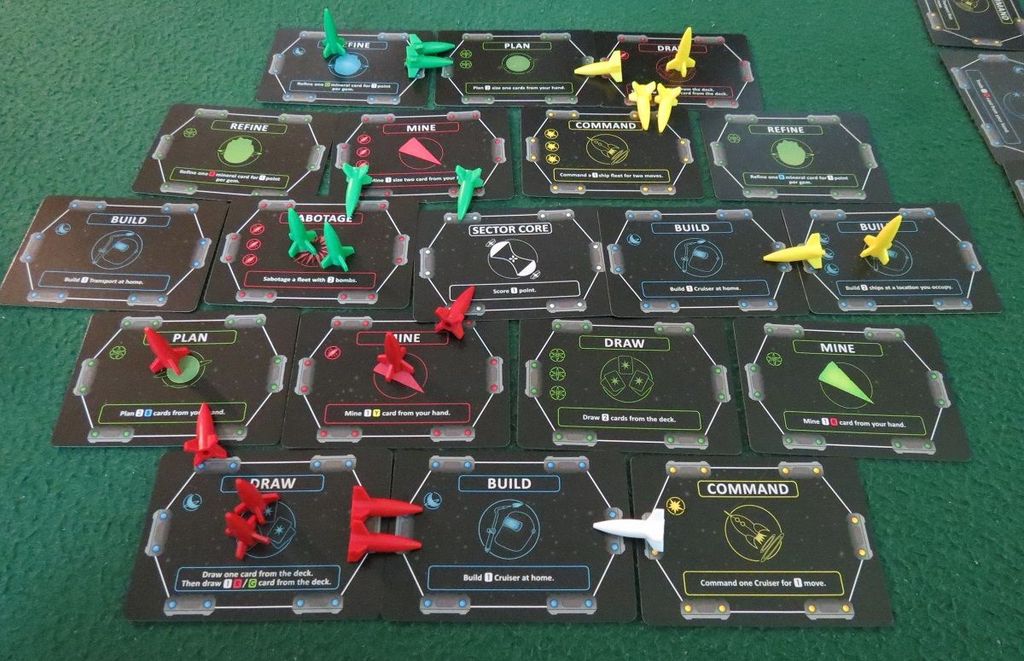
Impulse promises a wild ride for strategy lovers. If you think you can plan ten steps ahead, Impulse laughs in your face—and then throws your plans out the airlock. Every move counts because players share a common “impulse row” of cards that double as both actions and prizes. You can chain actions together, but so can your opponents, so you’d better be ready for some strategic gymnastics.
On every turn, I felt like a space captain who just spilled coffee on the navigation console. Do I play a powerful action now that might help my rival later, or do I stall and hope for a better opportunity? There’s a constant tug-of-war between playing for the moment and planning your endgame. Often, I found myself second-guessing every decision. My friend Jenna loved this part and called it “space chess for people with attention issues.” She’s not wrong—the best plans can fall apart in seconds if someone grabs a critical card or throws a sneaky combo your way.
Impulse rewards players who can adapt, watch other players closely, and aren’t afraid to take risks. It’s less about luck and more about outsmarting your opponents, reading the table, and pulling off galaxy-brained combos. That being said, if you blink, you might miss your window of opportunity and end up drifting in space—like I did, more than once.
If you love games that make you scratch your head and whisper, “Just one more turn,” then Impulse delivers. Next, let’s see if the components are as slick as your strategies, or if they’ve been lost in space!
Impulse Has Components With Personality: Quality & Setup Breakdown
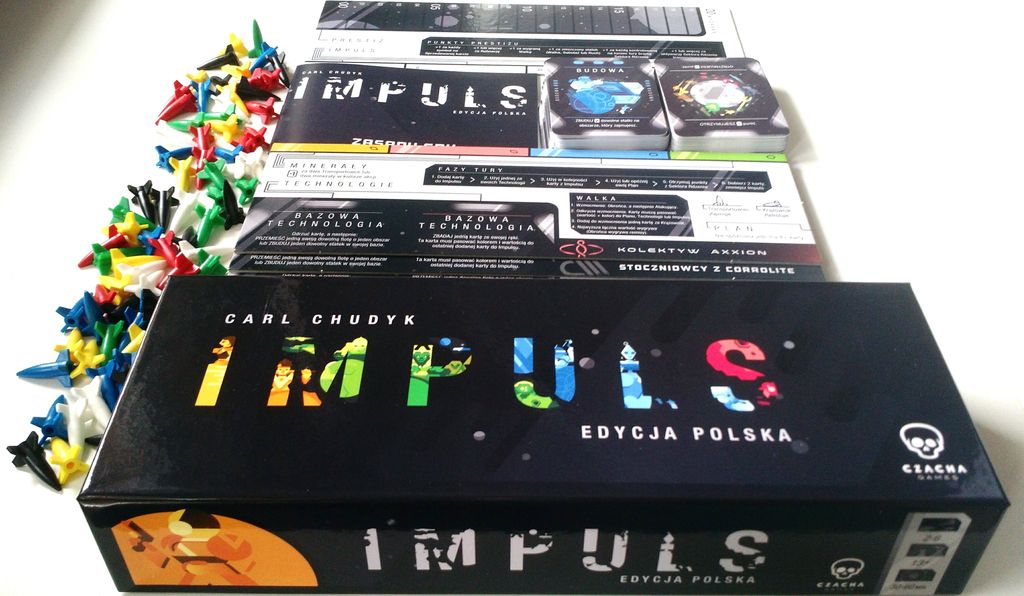
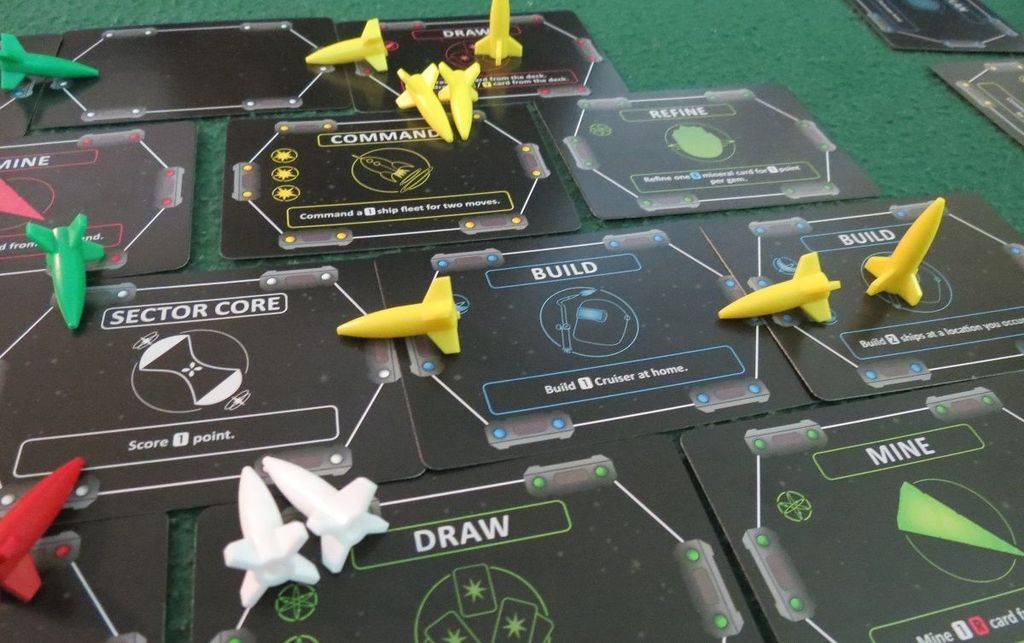
If you ever felt like shuffling a deck was missing a sprinkle of chaos, Impulse will fix that for you. The game’s components are basically the backbone of the experience—and let me tell you, they’ve got character. You’ll get a hefty pile of square cards, each with slick, colorful art that looks like they were drawn by a caffeinated future robot. The print quality is sharp, and thankfully, the text isn’t at the ‘squint and pray’ size I’ve seen in other space-themed games. Each card has multiple uses, meaning you’ll be poking, flipping, and tucking them all game.
Card thickness hits that sweet spot: not too flimsy, not so chunky they’d block a laser beam. I’ve had games where half the deck was bent after the second round, but Impulse’s cards actually hold up, even after a night with my most reckless snack-eaters. The iconography is clear—except for the occasional icon that left us gazing into the cosmos, silently wondering if we missed a secret hand signal in the rulebook. But usually, everyone catches on pretty quick.
Setup is speedy, once you get the hang of the galaxy layout. You just sort out some objective markers, shuffle up, deal a hunk of space, and you’re off. The rules do a good job of making sure even first-timers don’t spend half the evening stacking cards in the wrong formation. Be warned: if you’re the type who loses sleep over perfect card alignment, you’ll need nerves of steel. The shifting board layout means things get wobbly!
And speaking of things getting wobbly—next up, we talk about Impulse’s balance and randomness. Hold onto your space helmets, folks.
Does Impulse Deliver a Fair and Balanced Experience?
Let’s be real — nothing grinds my gears like a board game that throws my plans in the trash thanks to a dice roll. But here’s the thing. Impulse does something interesting with how it blends player skill and a pinch of luck. The cards you use have multiple purposes, so you need to make choices that matter. Every move is a gamble, but not a total shot in the dark.
Players shape the action row together. That means you can mess up your opponents’ plans on purpose, or just by being a little too clever for your own good. I once thought I was setting up the perfect combo, but my friend tossed in a card that forced me to rethink everything. There’s luck when you draw new cards, but the core of the game lives in how you turn those random draws into unstoppable moves. You can’t plan forever, but you’re not at the mercy of a bad shuffle, either.
Here’s what I like: nobody ever feels out of the running just because of bad luck. If you mess up, it’s usually your own doing (or, let’s be honest, your rival flipping the table with a sly move). If you like the kind of game where brains win, not the dice, Impulse deserves a spot on your shelf.
So, do I recommend Impulse? Absolutely, as long as you prefer brains over blind luck. Get ready for sweet victories and maybe one dramatic, table-slapping defeat.
Conclusion
So, that wraps up my wild ride with Impulse. After losing miserably to Mark (who gloated for days), I can say this game’s a thinky treat. If you love tactical choices, neat card play, and player-driven chaos, you’ll find tons to enjoy here. The component quality is solid, setup is quick, and luck almost never ruins your plan—unless you count Mark showing up. Sure, there’s a learning curve, and things can get a bit chaotic with new folks, but it keeps getting better every time for our group.
If you want a clever space game where brains beat dice, Impulse deserves a spot on your shelf. Thanks for reading—review over, snacks out!