
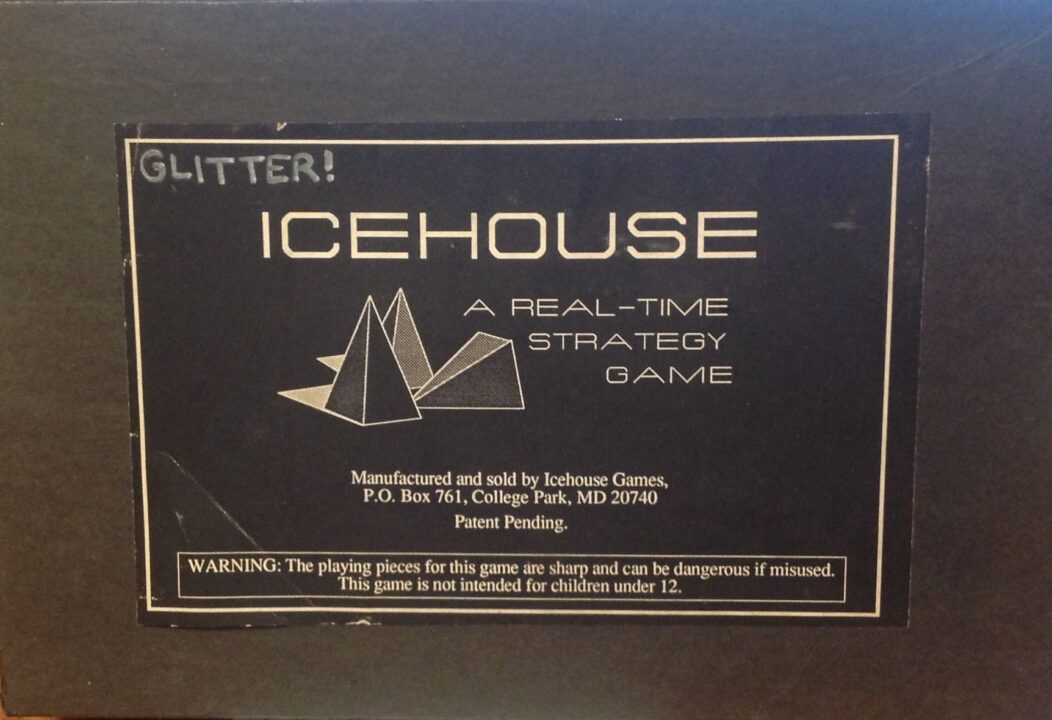
Alright, so here I am with another review and this time we’re talking Icehouse. If you’ve ever looked at a table full of colorful pyramids and thought, “What in the world?”—yeah, me too. Let’s see if this strange classic is worth your time, or if it belongs back in the freezer.
How It Plays
Setting up
Each player grabs a set of colored pyramid pieces. You don’t need a board—just some flat space and a bit of ego. Decide who goes first. Avoid knocking over your drink onto the table. That’s it, you’re ready.
Gameplay
Players take turns placing or moving their pyramids. The trick is, you9re trying to control space and trap opponents, but you can only move certain pieces at certain times. It19s kind of like chess, if chess was weirder and more pointy. Watch what others are up to, and don19t trust your best friend—they19ll stab you with a pyramid move the second you look away.
Winning the game
The round ends when nobody wants to move anymore or someone runs out of legal moves. Count up who has the most points from their pyramids. Winner gets bragging rights, and probably has the steadiest hands.
Want to know more? Read our extensive strategy guide for Icehouse.
The Pyramid Pieces in Icehouse: Beauty and Baffling Balance
Alright, let’s talk about the big draw of Icehouse: those wild, pointy pyramid pieces. When you open the box, it almost feels like you’re unleashing a tiny alien invasion—bright, sharp, and totally unlike any other board game hardware I own. You get a rainbow of translucent plastic pyramids, and I’ll tell ya, they look cool enough to eat. Don’t do it.
The build quality is top notch. These pyramids are practically indestructible—mine have survived not just spilled drinks, but also a tragic dice avalanche. They’ve only picked up a couple tiny marks, and those actually add some well-earned character. The set comes with three different pyramid sizes, and each color is bold enough that even my color-blind friend, Steve, had no trouble telling them apart during our last epic match. Steve still lost, but you can’t blame that on the pieces.
Stacking the pyramids feels satisfying, like snapping Lego bricks together, except with way more potential for poking unsuspecting fingers. Sometimes we use them as table fidget toys between rounds, and honestly, they’re the most fun to play with outside the game since my pet rock collection. The only downside? They slide around on slick tables, so you’ll want a grippy playmat if you’re serious about stable structures. Still, I’d score bonus points just for how eye-catching these pyramids look mid-game.
If you think these pieces are a puzzle, wait until you hear about the game rules and just how easy (or not!) they are to master…
How Easy is Icehouse to Learn? Let’s Talk Rules (and Maybe a Little Confusion)
Alright, so you’ve got your Icehouse pyramids ready and you’re all pumped to start. Then someone pulls out the rulebook, and suddenly everyone gets that look—like they’re reading IKEA instructions but with more triangles. Let’s be clear: Icehouse is not your classic roll-and-move party game. Instead, it’s an “abstract strategy” game, which is a fancy way to say you’ll be scratching your head and wishing you’d paid attention in geometry class.
The official rules have changed a bit over time, but the basics boil down to this: players place their pyramids and try to claim territory on the table. You can play pyramids upright or lying down, which does different things. Oh, and there’s no board—just a smooth surface and a lot of hopes and dreams getting squashed as pieces pile up. Everyone places pieces in turn, and the goal is to control areas or block your friends (who are no longer your friends by the end of the round, trust me).
Icehouse encourages clever thinking. The rules are detailed, but not impossible to follow. Still, for newbies, expect at least one person to say, “Wait, are we playing this right?” at least five times in the first game. Once you get it, though, it moves fast, and you’ll enjoy the odd tactics that pop up. I’d compare the learning curve to a stack of ice cubes: not Himalayan, but don’t expect to slide to the top on your first go, either.
If you’re still reading, stay tuned—next, we’ll slip and slide our way through strategy versus luck in Icehouse, and see which one leaves you cold.
Strategy vs. Luck: How Brainy is Icehouse, Really?
I’ll be honest—if you hate games where victory slips through your fingers because someone else rolled better, you might want to shake my hand for recommending Icehouse. There are no dice. There are no cards. The only thing in your way? Your own brain (and, ok, maybe that one sneaky friend who seems to predict every move). Icehouse rewards careful planning and a watchful eye. You get to control where you place your pyramid pieces, when to attack, and when to stand your ground. Every choice matters, and the person who pays attention and thinks ahead will usually win.
That’s not to say it’s a stress-free stroll in the park. Icehouse keeps you on your toes because everyone’s actions can mess with your clever plans. It’s kind of like chess’s wild, artistic cousin. You have to be sneaky, but also ready to change your tactics if someone’s gunning for you. I never felt cheated by luck. When I lost—and yes, that happened a lot—it was because I made a bad move or got outwitted, not because of some random factor.
So, if you crave a game where brains beat luck, Icehouse delivers the goods. But let’s not put all our pyramids on one base just yet! Next up, I’ll look at replay value and how much fun you’ll have interacting with the rest of the table… and trust me, things can get spicy!
Replay Value and Player Interaction in Icehouse: Why You’ll Want to Play Again (and Again)
The big reason? Every session feels unique. The open ruleset means you’re not just following a script—you’re making your own story on the ice fields every time. I’ve seen people develop new tactics, double-cross their buddies, and even invent extra mini-rules in the middle of a game. It’s like a choose-your-own-adventure, only with more plastic and slightly fewer dragons.
Now, let’s talk about player interaction because, buddy, Icehouse has plenty of it. There’s no rolling dice and hoping for magic—if you mess up, you can blame yourself (and maybe glare at Steve for blocking your last pyramid). You’ll watch your friends’ moves like a hawk, try to anticipate what that suspicious hand gesture means, and occasionally shout, “No way!” across the table. This is not a game for quiet types who dislike a little back-and-forth. The direct interaction is where the fun (and the grudge-holding) lives.
But is this a game I recommend? If you love high player interaction and want a game you’ll never play the same way twice, definitely give Icehouse a shot. Just don’t blame me if your friendships get a little frostier in the process—competition can be cold!
Conclusion
Well, that’s my take on Icehouse! This game really surprised me. Those colorful pyramids grab attention, and you get tons of gameplay packed inside a tiny box. If you love thinking ahead and messing with your friends’ plans, you’ll have a blast. It’s a bit tricky to teach at first, but once everyone gets it, play moves fast and feels clever. There’s basically zero luck, just brainy moves, so no blaming the dice here! If you want a portable, replayable game that rewards smart play, Icehouse is a cool pick. Thanks for reading my review—now go freeze your friends out and see who melts under pressure!