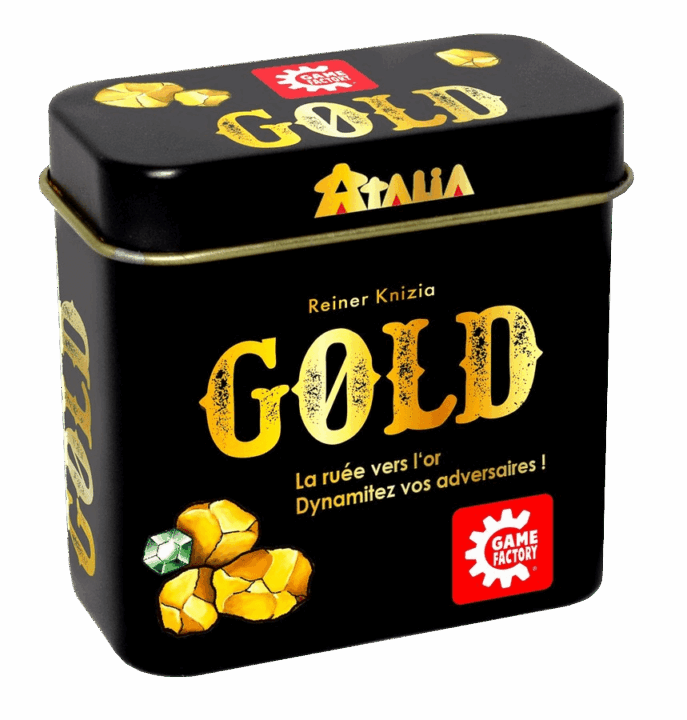

Welcome to my review of Gold, the card game that had my friends hoarding coins and calling each other sneaky bandits for a whole evening. If you like your games quick, loud, and with a pinch of wild, this one’s worth a look. I played it so many times I started dreaming in gold bars—though I wish my wallet was as full as my imaginary stash. Before you buy, let’s see if this shiny little game is actual treasure, or just fool’s gold from the bottom of the board game barrel.
How It Plays
Setting up
First, shuffle all the Gold cards and lay them face down in a grid. Hand each player their miner cards. Give everyone a moment to sniff their cards suspiciously. (Optional, but fun!)
Gameplay
On your turn, flip over two cards, hoping to find a pair of matching gold nuggets. If you do, take them and claim your shiny victory! If you find a sneaky bandit, watch out—someone might steal your loot. Memory helps, but my brain is more Swiss cheese than steel trap, so don’t expect miracles.
Winning the game
The game ends when all cards have been claimed. Count your gold nuggets. Whoever has the most wins! If you’re me, you just hope to not finish last (again).
Want to know more? Read our extensive strategy guide for GOLD.
Gameplay Mechanics and Balance in Gold
Gold claims the spotlight with gameplay that’s as simple as flipping a coin (seriously, it almost feels like that sometimes). The rules are easy to pick up, even after a long week when my brain feels like mashed potatoes. You dig for gold in the card deck by flipping over cards, claiming nuggets, and trying to outwit your friends. It sounds strategic, but let me tell you, the only real strategy here is to hold your cards close and your friends closer.
My group of board game addicts, including Steve who can’t shuffle to save his life, all noticed the same thing—the game relies heavily on memory and a bit of bluffing. If you can remember where the shiny gold nuggets are hiding (and avoid picking up dynamite), you’re golden. But, here’s the kicker: there’s not much room for clever tactics or long-term planning. Sure, you can try to guess what your friends will do, but half the time, it comes down to who got lucky with their picks.
Balance-wise, Gold tries to keep things even by making sure everyone starts with the same number of cards and chances. But the ‘steal’ action lets players swipe gold right out of your hand, which caused more than one table argument in my house. This can feel harsh if you’re on the losing side, and it’s especially rough if you just pulled a big score. If you dislike ‘take that’ mechanics, be ready for a little chaos and some grumpy faces.
So, Gold is best for those who don’t mind the odd wild swing in fortunes. Next up, I’ll talk about just how much luck or skill matters in this treasure hunt—hold onto your pickaxes!
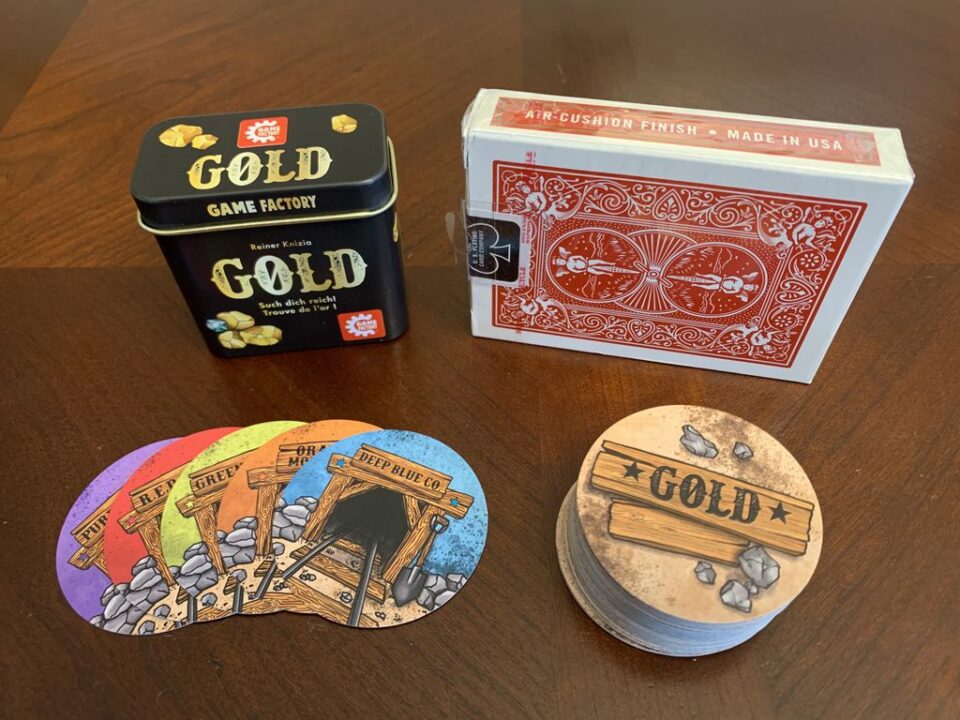
Luck vs Skill: Can You Outsmart Gold?
Let’s talk about the heart of every board game battle: luck versus skill. If you’ve ever played Gold with your friends, you’ll know right away, this is not Chess. In Gold, you spend a lot of time flipping cards and hoping the right ones turn up in your favour. Sometimes it feels like you’re mining for treasure, and sometimes it feels like you’ve just landed another old boot. That wild swing between triumph and disaster? That comes from luck holding your hand, not skill.
Sure, memory helps a bit. If you’ve got the memory of an elephant (or, let’s be honest, if you just haven’t refilled your glass in a while), you might remember where the big gold nuggets are hiding. But most of the time, the game is a glorious lottery. I watched my friend Dave win twice in a row just by flipping cards and laughing maniacally, while my careful, skillful strategy amounted to… well, very few points and a bruised ego.
This isn’t a game where cunning plans or clever tactics win the day. If you crave the satisfaction of outwitting everyone at the table, you might want to look elsewhere. But if you love shouting, cheering, and giving the deck a good shake, Gold delivers. It’s great for families or casual nights, but more competitive players will find that skill hardly stands a chance when random chance rules the mine.
If you think your luck’s better than mine (trust me, it probably is), Gold will give you a thrill. But next, let’s shine a light on Gold’s artwork and see if the components are worth their weight in… well, gold!
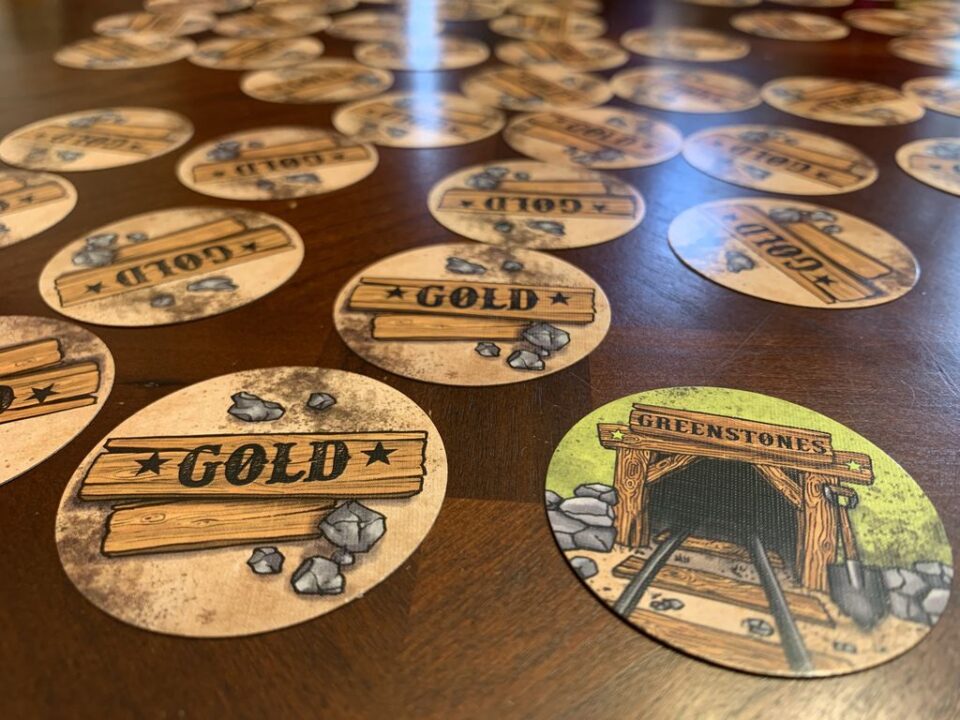
Shiny Bits and Cardboard: Artwork and Component Quality in Gold
If you like games that flash a bit of bling, Gold tries its best to look the part. The cards are covered in rich browns and yellows that scream, “We couldn’t afford real gold foil, but we sure wish we could!” Every nugget and pickaxe on the cards pops with cartoon style, kind of like a classic Saturday morning show, but with less cereal and more claim jumping. I wish the cards were a little thicker – one night with my snack-happy buddy Dave left a few looking like they’d been dug up from an actual gold mine. I get that budgets aren’t endless, but a little bit of lamination would have made my heart (and my thumb) happier.
The game box is small, which I love because my shelves are already sagging under the weight of board games that think they’re moving in for life. Gold’s compact design makes it perfect for tossing into your backpack for a gaming night on the go. The tokens are simple, but let’s be honest: nobody is buying Gold just for the tokens. They’re fine, but you won’t mistake them for real treasure unless you haven’t seen a real coin since childhood.
If you’re after a game that looks like it cost a small fortune, Gold isn’t quite the jackpot. Still, for a quick card game, the visuals hit the mark well enough. Next up, I’ll talk about player interaction and replay value—because playing with friends is where Gold truly tries to shine, or sometimes just gets tarnished!
Player Interaction & Replayability in Gold: Friend or Foe?
If you like keeping your friends on their toes, Gold has a way of turning a game night into a memory contest and a minor grudge-fest. Player interaction comes from that classic feeling of “Hey, I saw you nab that nugget last turn!” and then promptly forgetting where you just put your own. The game is all about sneaky card grabs and snickering when you outfox someone, which leads to a whole lot of table talk, good-natured groans, and, occasionally, a very loud “Noooooo!” as a prized gold card gets swiped from under your nose.
But let’s talk replay value. Is Gold the new Monopoly for your group? Eh, not quite. I’ve played Gold about eight times now—each round fast, frantic, and full of silly laughs. But after a while, the memory mechanic can feel a bit thin. There’s not much new to discover once you’ve played a couple times, unless your group introduces house rules like, “Slap the table if you forget who has what” or, my personal favorite, “Winner has to do their best gold prospector accent for the next round.” (Yeehaw!)
Gold is best for short bursts—a quick filler while you wait for the pizza or as a warm-up before a meatier game. If your group loves light games that don’t overstay their welcome, Gold is a safe bet. But if you want a rich, deep experience, you’ll have to keep digging elsewhere.
My verdict: Fun in short stints, but don’t build your game night around Gold. Recommended as a warm-up, not the main event!
Conclusion
That wraps up my wild journey through Gold! If you’re looking for a fast and silly memory game that’ll make your friends yell, “Wait, where’d the bandit go?”—this is it. The art is cartoony and the rules are dead simple. But if you want strategy or deep thinking, Gold won’t give it to you. Luck and chaos rule here. The thin cards can feel a bit cheap and it’s not the game for folks who hate random twists. Still, it’s a decent filler for game night laughs before the real heavy stuff comes out. Thanks for reading, and don’t blame me when your grandma becomes a gold-hoarding bandit! Review over. Now go shuffle something.